Security Door Latch Guide for Safer Door Hardware Selection
This security door latch guide explains latch types, door and frame compatibility, egress responsibilities, installation checks, maintenance routines, and practical procurement decisions for controlled openings.
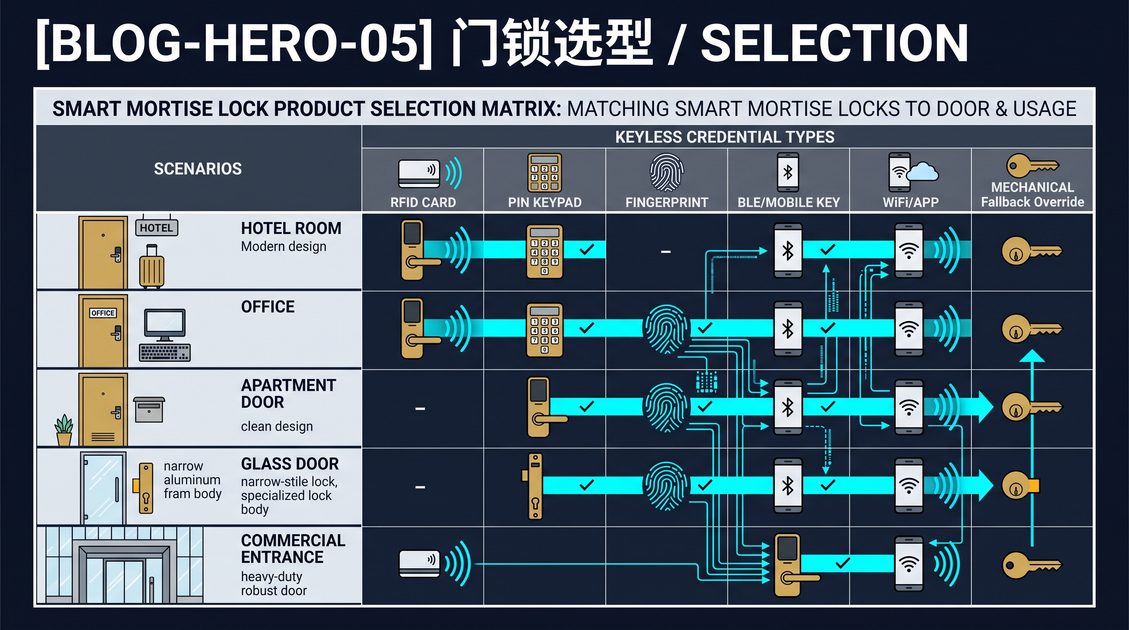
A security door latch guide is a practical framework for choosing, installing, and maintaining the component that holds a closed door against its strike. The latch is only one part of an opening: hinges, frame, closer, lock case, access-control device, seals, and release hardware determine whether it engages reliably. A suitable choice depends on door material, thickness, backset, handing, traffic, environment, fire rating, accessibility, and emergency egress. A latch does not by itself make a door attack-resistant, fire compliant, or secure against every threat. Measure the complete assembly, compare the exact hardware configuration with manufacturer documentation, and involve a qualified locksmith or code professional where required. This guide focuses on sound selection and verification rather than unsupported strength claims.
Security door latch guide: how the mechanism works
A security door latch guide begins with the distinction between holding a door closed and providing a deeper locking projection. A spring latch bevels into the strike as the door closes, then extends into the frame-side opening to resist ordinary pullback. A deadlatch may prevent manipulation of the latch bolt when the door is closed, while a deadbolt projects separately and normally requires an intentional key, thumb turn, or motor action. A mortise lock case can combine latch, deadbolt, lever control, and monitoring in one body. An electric strike changes the keeper at the frame; an electrified mortise lock changes the lock case. These mechanisms have different dimensional, electrical, and egress implications. Identify the actual function needed before selecting a product by marketing label.
Match the latch to the threat and use case
Start by describing the opening rather than naming hardware. An interior office door with moderate traffic may need dependable latch engagement and controlled access. A perimeter door may also face weather, tampering, door distortion, and longer operating cycles. A plant room may prioritize service access and resistance to dust, while a residential entrance may require quiet operation and simple mechanical override. Consider who needs entry, who must exit, how access is authorized, and what happens during a power or network interruption.
Do not treat a latch as a substitute for a complete security design. The frame, strike reinforcement, hinges, fasteners, glazing, and surrounding wall can become the weak point. Document the threat model and have the appropriate professional validate the complete opening.
Security door latch guide: dimensions and compatibility
A security door latch guide is also a measurement checklist because small dimensional errors can cause incomplete engagement, rubbing, noise, or premature wear. Record the door thickness, backset, faceplate dimensions, latch projection, case depth, strike geometry, handing, and distance from the door edge to adjacent hardware. Confirm whether the door is wood, hollow metal, aluminum, composite, or a rated assembly, and check the frame material, available reinforcement, hinge condition, closer type, weather seals, access reader, and exit hardware. The latch must travel into the strike along the door’s natural closing path. Exact dimensions vary by manufacturer, so use the installation template and technical drawing for the chosen model rather than assuming nominal sizes are interchangeable.
A practical survey sequence
- Observe the door at rest. Look for sag, twist, gaps, rubbing, loose hinges, and failed seals.
- Measure the existing lock and strike before removing anything. Photograph the faceplate, edge, frame pocket, and wiring route.
- Close the door slowly and note whether the latch centers naturally in the strike. Test with normal closer force, not a shove.
- Check clearances around levers, cylinders, readers, exit devices, and door contacts.
- Confirm that replacement work will not cut through concealed services or compromise a fire-rated door and frame.
A replacement latch may fit the door edge yet fail to suit the frame, trim, access controller, or release sequence. Compatibility is an assembly decision.
Security door latch guide: egress, fire, and power behavior
A security door latch guide must place life safety ahead of convenience. Occupants generally need a predictable way to leave from the egress side without an unreasonable search for credentials, a hidden release, or a working network connection. Fire doors, panic-exit doors, accessible routes, and sleeping accommodations can have specific requirements that vary by jurisdiction and occupancy. An electric strike or electrified lock also requires a documented power-loss behavior: fail-secure may preserve exterior control while requiring a permitted mechanical exit method; fail-safe may release a controlled side when power is removed. Neither label alone proves compliance, so a qualified authority must review the door, occupancy, fire strategy, and local rules. Never block or delay an emergency release to increase security, and never modify a rated assembly without approved instructions.
Test the complete release path
Test normal entry, authorized release, inside egress, mechanical override, fire-alarm interaction where applicable, and power loss. Confirm that a reader, request-to-exit device, handle, and latch monitor agree about the door’s state. Record who owns testing and how faults are escalated. If the door serves people with mobility, vision, or hearing requirements, assess reach, force, timing, and feedback with the relevant accessibility rules in mind.
Security door latch guide: installation and commissioning
A security door latch guide is most useful when it turns installation into a repeatable verification process. Use the approved template, fasteners, spindle or cylinder arrangement, strike dimensions, and wiring method for the exact model. Protect the door finish and preserve reinforcement around the lock case and strike. Align the strike with the latch’s natural path rather than relying on a closer to slam a misaligned door into engagement. After fastening, cycle the door repeatedly and confirm full latch projection, smooth lever operation, correct reader response, and proper monitoring. Then test authorized release, inside egress, manual override, and the documented power-loss state. If the door requires lifting, pushing, or slamming, stop and correct the opening rather than accepting marginal engagement.
Commissioning records
Record the hardware model, configuration, door identifier, installer, date, wiring or controller settings, release behavior, and observed exceptions. Provide operators with a simple fault procedure: keep the opening safe, report incomplete engagement, and do not wedge or defeat the latch. A commissioning record makes later troubleshooting more precise and helps distinguish a hardware fault from a frame, closer, access-control, or user issue.
Security door latch guide: maintenance and troubleshooting
A security door latch guide should continue after handover because alignment and operating conditions change. Inspect latch movement, projection, strike engagement, screws, hinges, closer force, seals, trim, cables, and signs of tampering at an interval suited to traffic and consequence of failure; high-use doors may need more frequent checks than lightly used interior openings. Clean and lubricate only as the manufacturer permits. Repeated slamming, sticking, scraping, incomplete engagement, or a door that bounces open is a fault signal, not normal behavior. Check hinges, frame movement, seals, closer adjustment, strike wear, and user practices before replacing the latch. After any repair, repeat the closing, access, power-loss, and egress tests. Keep approved replacement parts and service contacts available so an urgent repair does not lead to a non-compliant substitution.
Procurement questions that reduce risk
Ask suppliers for the exact dimensional drawing, compatible door and frame types, environmental limits, cycle information, wiring requirements, release behavior, maintenance instructions, and applicable certification documentation. Treat evidence as configuration-specific: a claim for one trim, voltage, lock case, or test setup may not apply to another. Request samples or pilot a representative opening before broad deployment. Include the frame and installation method in acceptance criteria, not just the latch body. Define ownership for inspection, credential administration, emergency release testing, and replacement decisions.
Final selection checklist
Before approval, confirm:
- The latch, strike, door, frame, hinges, closer, and trim are dimensionally compatible.
- The opening’s threat model, traffic, environment, and access workflow are documented.
- Fire, accessibility, privacy, electrical, and egress reviews are complete where applicable.
- Normal operation, authorized release, unauthorized resistance, manual override, and power loss have been tested.
- Installation records, maintenance intervals, approved parts, and escalation contacts are available.
A reliable opening is the result of coordinated hardware, sound installation, lawful release behavior, and disciplined maintenance. Use this security door latch guide as a starting point for measured decisions, then confirm the final configuration with the relevant manufacturer and qualified local professionals.
Not sure which sensor fits your project?
Talk to our mmWave application engineers for a free consultation.
Specify your hotel project with our engineers
Send your room count, ceiling type, and protocol preference. We will return a sample plan and quote within 24 business hours.
- Move from general guidance into a product or application discussion.
- Use RFQ when pricing, drawings, MOQ, or launch timing needs structure.
- Keep a direct contact path visible for fast clarifications and handoff.