Privacy Lockset Guide for Interior and Bathroom Doors
A practical privacy lockset guide covering privacy vs lock functions, smart options, interior fit, security, and choosing a lockset for bathroom and bedroom doors.
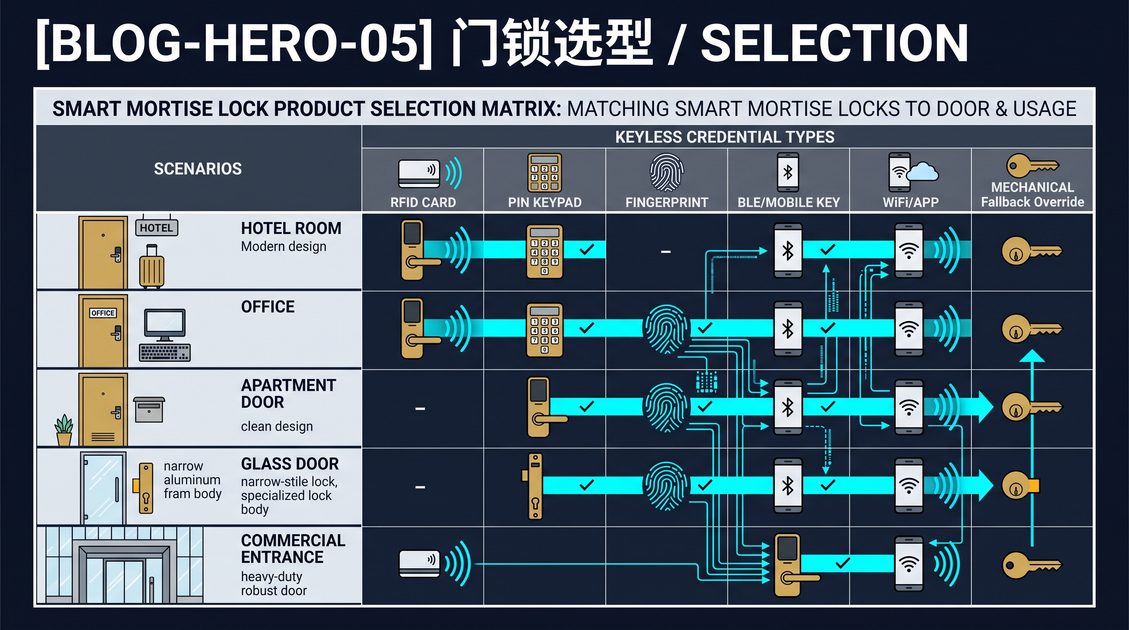
A privacy lockset is a door lock that secures an interior door from the inside for privacy rather than for security, typically on a bathroom or bedroom door, and is opened from the outside by a simple emergency release or a small tool. Unlike a keyed lock, a privacy lockset is not designed to stop a determined intruder; it signals that the room is occupied and prevents accidental entry. This privacy lockset guide explains the difference between privacy and locking functions, how a smart or electronic privacy option works, how to choose one that fits an interior door, and how to keep the emergency release reliable.
Privacy Lockset Guide: Privacy vs Locking Function
The purpose of a privacy lockset is to give a person inside the room a moment of privacy, not to provide security against an attack. A bathroom or bedroom privacy lock is engaged from the inside, holds the door closed against casual entry, and can be opened from the outside with an emergency release, a coin, or a small tool. A true locking lockset, by contrast, uses a key or credential and is meant to secure the door against unauthorized entry. Choosing the right type depends on whether the door needs privacy or actual security.
This distinction matters for smart options. An electronic privacy lockset can add convenience, such as keyless entry or a schedule, but it should preserve the privacy function and the emergency release. If the door must actually secure valuables or a person, a privacy lockset is the wrong tool and a keyed or electronic locking lockset is required. The name and the mechanism, not the marketing, determine the function.
A privacy lockset secures an interior door for privacy rather than security, typically on a bathroom or bedroom door, engaging from the inside and opened from the outside by an emergency release, coin, or small tool. It is designed to signal occupancy and prevent accidental entry, not to stop a determined intruder, so it is different from a keyed or electronic locking lockset that provides real security. An electronic privacy lockset can add keyless convenience or a schedule but must preserve the privacy function and the emergency release. If the door must secure valuables or a person, a privacy lockset is the wrong tool and a locking lockset is required.
Privacy Lockset Guide: Smart and Electronic Options
An electronic privacy lockset replaces the thumb turn or button with a keypad, card, fingerprint, or mobile credential, allowing keyless locking and, where fitted, an audit or schedule. The convenience is real for a shared bathroom, a bedroom, or an interior door used by several people. The privacy function remains: the occupant engages it from the inside, and the emergency release stays accessible from the outside.
Choose a smart privacy lockset that does not compromise the emergency release. If the electronics fail, the occupant inside must still be able to exit, and someone outside must still be able to open a locked door in an emergency. Confirm the battery warning, the power and network behavior, and that the lock does not require an app for the basic privacy function. A privacy lockset is a simple device, and its smart version should not make the simple case complicated.
Privacy Lockset Guide: Fit, Security, and Installation
Interior doors are typically thinner than exterior doors and may use a cylindrical or mortise lockset, so confirm the door thickness, backset, and the existing hole pattern before ordering. A smart privacy lockset must fit the interior door without requiring an exterior-rated mechanism. For a mortise interior door, a privacy mortise lock with a thumb turn can be upgraded while preserving the handle set.
Because a privacy lockset is not a security device, use an appropriately low security expectation and focus on the privacy function, the fit, and the emergency release. Test that the inside release is immediate, that the emergency opening works with the specified tool, and that the lock does not stick or bind. This privacy lockset guide is general information; confirm local building, accessibility, and fire requirements for the specific interior opening with qualified professionals.
Not sure which sensor fits your project?
Talk to our mmWave application engineers for a free consultation.
Specify your hotel project with our engineers
Send your room count, ceiling type, and protocol preference. We will return a sample plan and quote within 24 business hours.
- Move from general guidance into a product or application discussion.
- Use RFQ when pricing, drawings, MOQ, or launch timing needs structure.
- Keep a direct contact path visible for fast clarifications and handoff.