Hotel Room Door Latch Guide for Extra Guest Security
A practical hotel room door latch guide covering latch types, travel-friendly options, installation, and how an extra latch adds guest security beyond the main lock.
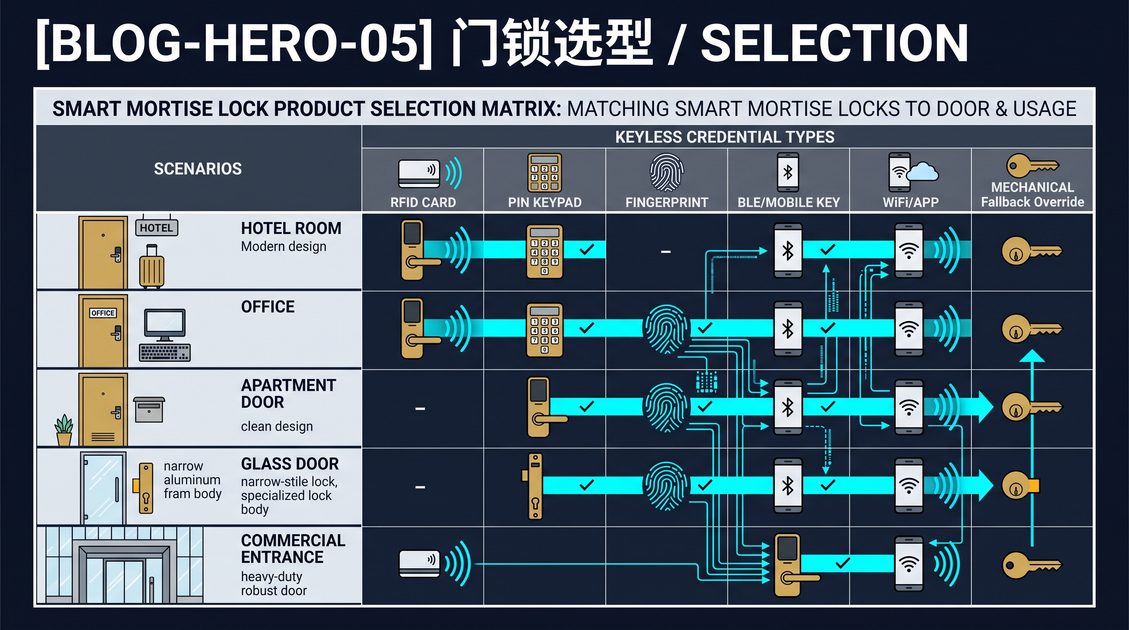
A hotel room door latch is a supplemental locking device that a guest engages from inside the room to add security beyond the main electronic hotel lock, such as a security latch, a swing bar, or a portable travel lock. It is part of the layered security that protects a guest inside a room, especially when the main lock is electronic and managed by staff. This hotel room door latch guide explains the common types, how a travel-friendly option differs, how to install a permanent latch correctly, and how these devices combine with the hotel door lock for genuine protection.
Hotel Room Door Latch Guide: Types of Supplemental Latches
A permanent hotel room door latch is a small mechanism fitted to the door and frame, such as a chain latch, a swing bar, or a flip-over latch, that the guest engages from inside. It prevents the door from opening from outside unless the latch is released, providing security that does not depend on the electronic lock. A portable travel lock is a device the guest carries and fits to the door without permanent installation, such as a wedge, an alarm lock, or a strap that jams the door. Both add a physical layer beyond the keyless main lock.
The choice depends on whether the guest owns the room or is traveling. A permanent latch suits a guest room that will be used repeatedly and is installed by the property. A travel lock suits a guest who wants security in any hotel and carries the device. A permanent latch is more robust but fixed to one room; a travel lock is flexible but must be fitted correctly each time. Both are valuable additions to the electronic hotel lock.
A hotel room door latch is a supplemental locking device engaged from inside the room to add security beyond the main electronic hotel lock. A permanent latch, such as a chain, swing bar, or flip-over, is fitted to the door and frame and prevents the door from opening unless released, while a portable travel lock, such as a wedge, alarm, or strap, is carried by the guest and fitted without permanent installation. Both add a physical layer that does not depend on the staff-managed electronic lock. A permanent latch suits a room used repeatedly; a travel lock suits a guest wanting security in any hotel. Together with the main lock, they protect the guest inside the room.
Hotel Room Door Latch Guide: How It Adds Security
The value of a supplemental latch is that it works even if the main electronic lock is compromised, misused, or bypassed. Because a hotel room door lock is often opened by staff for housekeeping or maintenance, a guest who engages an interior latch regains control: the door cannot be opened from outside even with a valid staff credential. This is a meaningful privacy and safety feature for a guest inside the room.
A supplemental latch also deters casual intrusion and gives the guest a sense of control. It is not a substitute for the main lock, and it does not secure the room when the guest is away, but it is the correct second layer for the occupied room. Property managers should install a robust permanent latch that is easy to engage and release, and guests should understand how to use a travel latch correctly, because a poorly fitted travel lock can be defeated or jam the door.
Hotel Room Door Latch Guide: Installation and Use
For a permanent latch, choose hardware suited to the door and frame, mount it at a comfortable height, and confirm it engages and releases smoothly and cannot be manipulated from outside. A property should test the latch with the main electronic hotel lock and confirm it does not obstruct egress or fire-rating requirements. A travel lock should be simple to fit correctly and to remove, and should not rely on the door being in perfect condition.
This hotel room door latch guide is general information. A supplemental latch is one layer of a secure guest room, and it should be combined with the certified hotel lock, appropriate staff access control, and compliance with local fire, accessibility, and egress requirements. Confirm the correct hardware and installation for the specific door with qualified professionals.
Not sure which sensor fits your project?
Talk to our mmWave application engineers for a free consultation.
Specify your hotel project with our engineers
Send your room count, ceiling type, and protocol preference. We will return a sample plan and quote within 24 business hours.
- Move from general guidance into a product or application discussion.
- Use RFQ when pricing, drawings, MOQ, or launch timing needs structure.
- Keep a direct contact path visible for fast clarifications and handoff.