Hotel Door Stop Guide for Guest Room Safety and Privacy
A practical hotel door stop guide covering wedges, latches, door closers, guest privacy, emergency egress, and safe use alongside electronic hotel door locks.
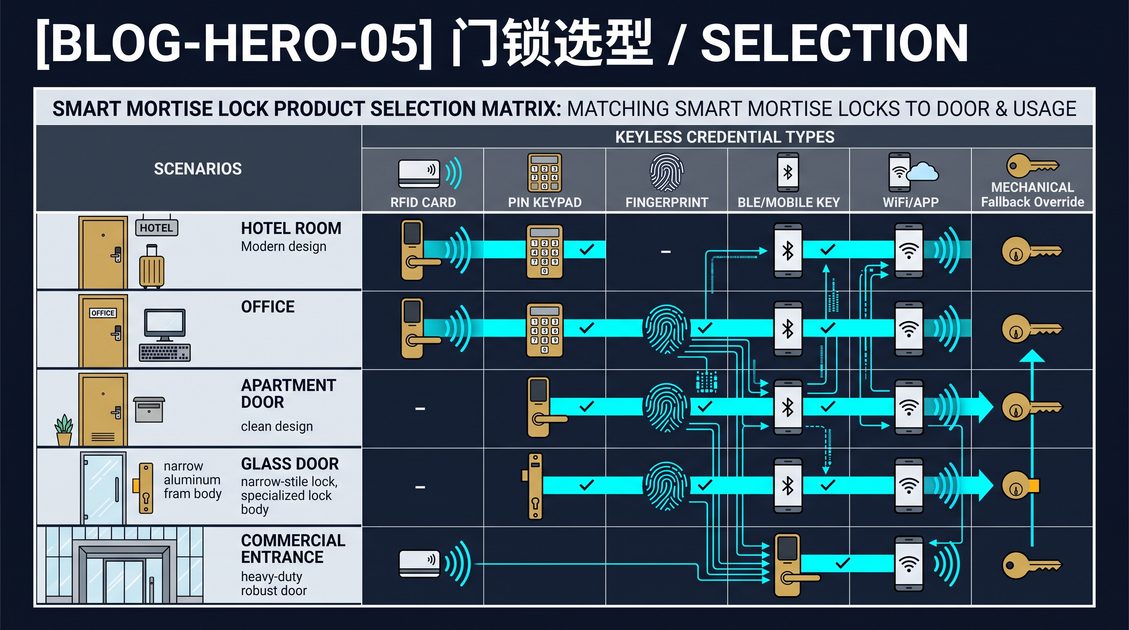
A hotel door stop is a wedge, stopper, or door-control device that limits door movement, helps protect privacy, or supports controlled closing in a guest room. A guest may use a portable door wedge for additional peace of mind, while a property may use a permanent stop or closer to protect walls and manage the opening. This hotel door stop guide explains the differences, how a stop interacts with an electronic hotel lock, and why privacy must never compromise emergency egress.
Hotel Door Stop Guide: Portable and Permanent Devices
A portable door stop is carried by a guest and placed between the door and floor or frame. It is flexible and needs no installation, but its effectiveness depends on the door gap, floor surface, and correct placement. A permanent door stop is fixed to the wall, floor, or frame and protects the wall and hardware from excessive travel. A closer controls the return movement and is not the same as a security wedge.
Choose by purpose. A guest using a portable wedge seeks privacy while inside, while a property installing a permanent stop seeks damage control and predictable operation. Neither should be described as a substitute for the main hotel door lock.
Hotel Door Stop Guide: Lock Interaction and Privacy
An electronic hotel lock secures the door through its latch and bolt, while a stop limits movement. Confirm that the stop does not prevent the latch from engaging, overload the closer, damage the seal, or obstruct the reader and handle. An interior privacy latch is a more appropriate security layer than a wedge when the room design requires a fixed device.
Staff should know when an interior device is engaged and follow the property’s room-entry policy. A guest should receive clear instructions without being encouraged to defeat the lock or block an emergency path.
Hotel Door Stop Guide: Egress and Maintenance
The door must open from inside promptly under the required emergency conditions. Do not install a stop or wedge that traps a guest, obstructs evacuation, or conflicts with a fire-door assembly. Inspect stops, closers, hinges, seals, latch engagement, and the electronic lock together. This hotel door stop guide is general information; confirm local fire, accessibility, building, and egress requirements with qualified professionals.
A property should distinguish a door stop that protects a wall from a device intended to prevent entry. Give housekeeping and engineering staff a clear inspection checklist, and remove portable wedges or damaged stops that create an obstruction. During a renovation, verify the stop location against the reader, handle, closer, latch, and furniture. A small change in swing can affect the electronic lock’s alignment, so test the complete opening after every hardware change. The safest hotel door stop is one that performs its intended function without creating a new egress or maintenance problem.
Select and maintain a door stop in the context of the full opening. Note the opening direction, hinge and closer action, floor and wall materials, and any staff- or housekeeping-driven wear that affects how the door behaves. For a portable wedge, provide a small holder or simple instruction so a guest uses it correctly without damaging the door or blocking its swing. Replace worn or broken wedges and stops promptly, and keep a consistent hardware standard across the property so guests find the same behavior from room to room.
The approved installation should be recorded with a photograph and a simple hardware identifier. This lets engineering staff distinguish a wall-protection stop from an interior security device during future repairs. It also prevents a well-intentioned replacement from changing the door swing, damaging the closer, or interfering with the electronic lock.
A clear procurement standard ensures that replacement stops match the original. Define the approved model, material, size, and mounting method, and keep it in the property’s hardware list. This prevents a mismatched replacement from creating an egress or maintenance problem later.
When in doubt, choose the simpler, proven solution and verify it on the actual door before scaling across the property.
Not sure which sensor fits your project?
Talk to our mmWave application engineers for a free consultation.
Specify your hotel project with our engineers
Send your room count, ceiling type, and protocol preference. We will return a sample plan and quote within 24 business hours.
- Move from general guidance into a product or application discussion.
- Use RFQ when pricing, drawings, MOQ, or launch timing needs structure.
- Keep a direct contact path visible for fast clarifications and handoff.