Hotel Door Safety Guide for Guest Rooms and Smart Locks
A practical hotel door safety guide covering electronic locks, privacy latches, fire egress, staff access, guest communication, inspections, and incident response.
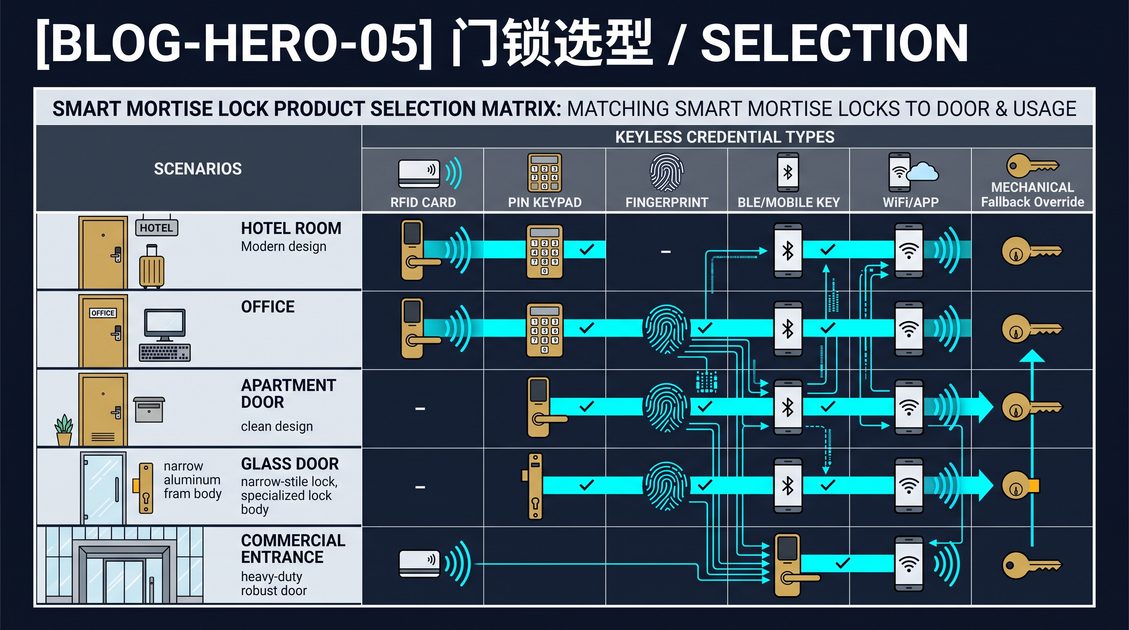
Hotel door safety is a layered operating practice that combines a reliable electronic door lock, an interior privacy or security latch, compliant emergency egress, controlled staff credentials, and regular inspections. The main hotel lock controls access when the guest is away, while an interior latch gives the guest additional control when occupied. This hotel door safety guide explains how to plan these layers, protect guests without obstructing evacuation, train staff, and test the complete opening.
Hotel Door Safety Guide: Main Lock and Interior Layer
An electronic mortise lock should authenticate guests and staff reliably, work offline when the network is unavailable, and provide a mechanical or backup-power recovery path. The guest room may also need a swing bar, chain, or other interior privacy device that prevents entry from outside while engaged. These functions are different: the main lock secures the room when vacant, while the interior device protects the guest while present.
Use hardware that is easy to engage and release from inside. A guest should not need an app, a key, or specialist knowledge to leave the room. Test that the privacy device does not prevent emergency egress and that authorized staff understand when it is engaged.
Hotel Door Safety Guide: Staff Access and Privacy
Staff credentials should be individual or role-based, limited by door and schedule, and revoked when a role ends. Housekeeping, maintenance, supervisors, and management may need different access levels. The hotel should record entries in a protected audit trail and limit visibility of guest-related records to authorized personnel.
A staff member should announce themselves and follow the property’s room-entry policy before using a valid credential. The electronic system supports the policy but cannot replace training, supervision, and respectful communication with guests.
Hotel Door Safety Guide: Egress and Inspection
Inside release must remain immediate and intuitive. Never add a device that traps a guest, defeats a fire door, or conflicts with the authority having jurisdiction. Inspect the lock, strike, closer, hinges, latch, privacy device, batteries, and signage on a documented schedule. Test representative doors after installation, firmware changes, and renovations.
This hotel door safety guide is general information. Confirm fire, accessibility, building, electrical, privacy, and emergency-egress requirements with qualified professionals before procurement or modification.
Safety communication is part of the hardware plan. Guest instructions should explain the electronic lock, the interior latch, the emergency release, and who to call without exposing sensitive staff procedures. Staff training should include a respectful knock and announcement policy, a method for checking whether an interior device is engaged, and an escalation route for a malfunctioning door. Review incident records for repeated lockouts or confusing controls, then improve the procedure or hardware instead of expecting guests to compensate for a poor design.
Review the guest safety program as part of a regular operational audit. Keep a log of lock resets, lock-out incidents, battery replacements, and guest complaints about access, and compare it over time. If a particular door or floor generates repeated issues, inspect the hardware and staff process rather than masking it. Share a concise emergency and reporting procedure with front desk and security, and rehearse it. A hotel door safety program succeeds when the electronic lock, the interior latch, the egress path, and the people responsible are reviewed together.
The safety review should include the guest journey from corridor to room and back again. Confirm that the reader, handle, latch, inside release, privacy device, and emergency signage are easy to understand without special training. Invite housekeeping, front-desk, and security staff to report confusing behavior, then correct the opening or procedure before a small usability issue becomes a safety incident.
Document who owns each safety task, from credential administration to lock inspection to incident response. Clear ownership prevents a valid alert from becoming nobody’s responsibility. Revisit the assignment whenever staff, firmware, or the property layout changes.
A simple, current safety record gives management and regulators confidence that the program is real and actively maintained.
Maintain the safety program as the property evolves, updating it whenever rooms, departments, or the access platform change.
Not sure which sensor fits your project?
Talk to our mmWave application engineers for a free consultation.
Specify your hotel project with our engineers
Send your room count, ceiling type, and protocol preference. We will return a sample plan and quote within 24 business hours.
- Move from general guidance into a product or application discussion.
- Use RFQ when pricing, drawings, MOQ, or launch timing needs structure.
- Keep a direct contact path visible for fast clarifications and handoff.