Doorbell Lock and Smart Door Lock with Camera: What to Know
How a doorbell lock and a smart door lock with camera work, what to compare, and whether a video camera on your electronic mortise lock is worth it for home or business.
A doorbell lock is a smart door lock that combines a video doorbell with the locking mechanism, letting you see who is at the door and unlock it from a phone or an app in a single device. It is one example of a broader category, the smart door lock with camera, which adds video to an electronic lock so a resident or manager can verify a visitor before granting access. This guide explains how a doorbell lock works, what to compare when choosing one, and whether combining a camera with your electronic mortise lock is the right decision for your home or business.
How a Doorbell Lock Works
A doorbell lock merges three functions into one door unit: a video camera that shows who is at the door, a doorbell that notifies the owner, and an electronic lock that can be unlocked remotely. When a visitor presses the doorbell, the camera captures the person at the door and the owner receives a notification on a phone; the owner can see and sometimes talk to the visitor, then choose to unlock or refuse. Because the camera and the lock share the same hardware and app, a doorbell lock avoids the need to manage a separate video doorbell and a separate lock.
A doorbell lock is one form of the smart door lock with camera, but the two are not identical. A smart door lock with camera may include a camera without functioning as a doorbell, or may record continuously or on motion rather than only when the bell is pressed. A doorbell lock specifically ties the camera to the doorbell event and usually includes two-way audio for speaking to the visitor. Both share the core value: remote verification before unlocking, which is the difference between unlocking for a known guest and unlocking for an unknown visitor.
What to Compare on a Doorbell Lock
When choosing a doorbell lock or a smart door lock with camera, compare the same criteria as any electronic lock plus the camera-specific dimensions. The lock criteria are door structure, opening method, connectivity, battery and emergency access, security, and management. The camera criteria are resolution and field of view, night vision, two-way audio, video storage and privacy, and the power draw of the camera, which is significant because a camera consumes far more power than a lock alone.
The camera's power draw is the key trade-off. A smart door lock with camera that runs on batteries will drain them much faster than a lock without a camera, and may require more frequent charging or a wired power supply. A doorbell lock that is wired can support continuous recording and a richer camera, while a battery model typically records on motion or on the doorbell event to conserve power. A buyer should confirm the expected battery or power arrangement before choosing, because the convenience of a camera is quickly offset if the lock's batteries die every few weeks.
The camera also raises privacy and security questions. A video feed of who comes and goes is sensitive, so the camera should store footage securely, ideally on-device or in a controlled cloud, with encrypted transmission and clear access controls, and the storage should respect the expectations of residents, tenants, and visitors. A doorbell lock or smart lock with camera that exposes the feed through a weak interface is a privacy risk, so require encryption and a documented storage policy as part of the purchase.
Is a Doorbell Lock Right for You?
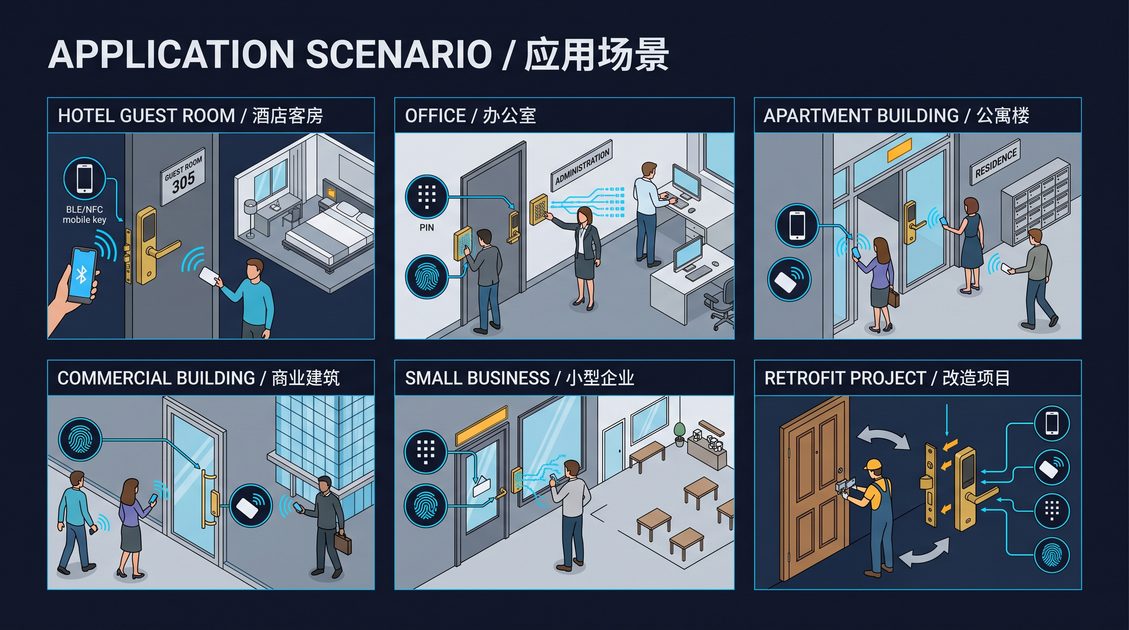
A doorbell lock is worth it when remote verification genuinely improves your security or convenience. For a home, the value is knowing who is at the door before opening it, and unlocking for a delivery or a known guest from anywhere. For a rental or short-term property, the value is monitoring who arrives and remotely granting access without a physical hand-off. For a small business, the value is a video record of who enters the front door and the ability to control access when no one is on site.
The trade-off is the added complexity, cost, and battery or power demand of the camera, and the privacy responsibility it creates. A doorbell lock is a strong pick for a single front door or a monitored entrance; it is less clearly the right pick for a multi-door deployment where cameras on every lock multiply cost and power demand and a separate camera plus a standard smart lock may serve better. Apply the same framework as any keyless entry decision, and add the camera dimensions, to decide whether a doorbell lock or a smart door lock with camera earns its place on your door.
Not sure which sensor fits your project?
Talk to our mmWave application engineers for a free consultation.
Specify your hotel project with our engineers
Send your room count, ceiling type, and protocol preference. We will return a sample plan and quote within 24 business hours.
- Move from general guidance into a product or application discussion.
- Use RFQ when pricing, drawings, MOQ, or launch timing needs structure.
- Keep a direct contact path visible for fast clarifications and handoff.