Door Cylinder Selection Guide for Secure Entry
This door cylinder selection guide explains how to match cylinder format, dimensions, key control, security, access integration, and service requirements to each opening.
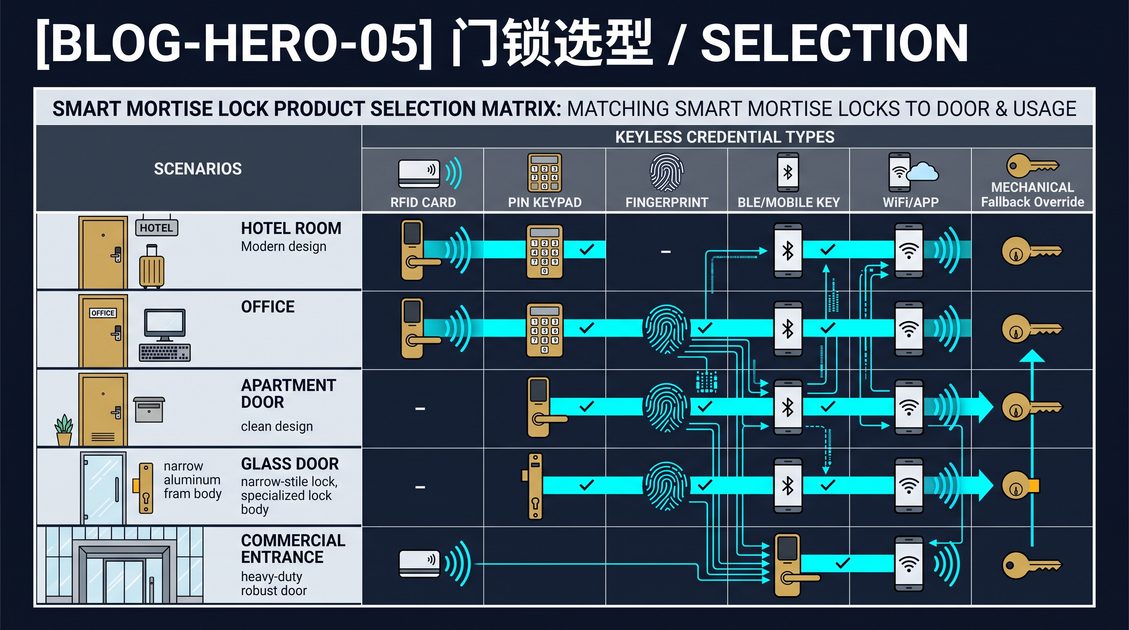
A door cylinder selection guide is a practical method for choosing the keyed or electronically controlled component that operates compatible lock hardware. Selection depends on cylinder profile, overall length, split dimensions, cam or tailpiece interface, door thickness, escutcheon clearance, key-control policy, security exposure, emergency function, and access-control requirements. A cylinder is not interchangeable merely because it looks similar: the wrong profile or cam can prevent the latch or deadbolt from moving, while incorrect projection can affect security and operation. Start with the existing lock case and door record, measure the opening accurately, and obtain the manufacturer’s drawing or compatibility confirmation before ordering. For fire-rated, accessible, electrically controlled, or emergency-exit doors, have the complete opening reviewed by a qualified locksmith, installer, or responsible professional.
Door Cylinder Selection Guide: Identify the Opening
A door cylinder selection guide begins with the opening, not the product catalogue. Record the door material, thickness, handing, lock case, bolt or latch type, escutcheon, strike, frame, and any closer or access device. Measure from the fixing-screw center to each face, noting different side lengths on asymmetric doors and clearance for a thumbturn. Confirm the profile, screw location, cam shape, cam position, keyway or credential interface, and the intended emergency function. Compare every measurement with the exact manufacturer drawing; a small dimensional error can leave the cylinder recessed, overprojecting, or unable to move the lock case. Photograph the hardware for identification, but do not use photographs as a substitute for measurements. Remove the cylinder only when a responsible installer can do so safely and without compromising security.
Measurement checklist
| Item | What to confirm |
|---|---|
| Cylinder profile | Euro, oval, rim, mortise, or another local format |
| Length | Exterior and interior dimensions from the fixing-screw center |
| Interface | Cam, tailpiece, spindle, or lock-case connection |
| Door assembly | Thickness, escutcheon, lock case, strike, and frame |
| Function | Single, double, thumbturn, half-cylinder, or emergency function |
Door Cylinder Selection Guide: Choose the Access Method
A door cylinder selection guide should distinguish mechanical key operation from electronic authorization before comparing models. A mechanical cylinder depends on its keyway, pin or disc design, master-key plan, and duplication controls. An electronic cylinder may use a credential, keypad, mobile device, or connected controller, but it still requires a mechanically compatible interface and a defined response to batteries, network loss, credential revocation, and emergency entry. The choice must support the users, schedules, audit expectations, and recovery process of the opening without weakening required egress or privacy controls. Define who can authorize duplicate keys, how lost keys are handled, and how electronic credentials are enrolled and revoked. Confirm the selected cylinder works with the intended lock case and access platform.
For mechanical installations, define who can authorize duplicate keys and how the organization handles lost, unreturned, or retired keys. A restricted key system may support tighter duplication governance, but confirm the actual policy, documentation, and service availability for the selected system. Avoid treating a product label as proof of a particular security grade; request evidence that applies to the exact cylinder and installation.
For electronic installations, document credential enrollment, revocation, administrator roles, event records, battery replacement, low-power warnings, offline decisions, and manual override. Confirm whether the cylinder works with the intended lock case and access platform. If the door is part of a larger hotel, office, or residential system, check reader technology, management software, credential format, and integration responsibilities before procurement.
Door Cylinder Selection Guide: Evaluate Security and Compliance
A door cylinder selection guide evaluates the cylinder as one part of the entire opening. Security performance depends on the cylinder, lock case, escutcheon, fixing method, door, frame, hinges, strike, and installation quality. Review exposure to unauthorized key possession, drilling, snapping, pulling, picking, forced separation, and credential misuse, but do not assign a resistance rating without evidence for the exact configuration. The opening must also preserve emergency egress and satisfy applicable fire, accessibility, electrical, privacy, and building requirements. For regulated doors, confirm local rules and product approvals with a qualified reviewer. Check what happens during low battery, power failure, controller failure, or communication loss, and document an authorized recovery method rather than an improvised bypass.
Check whether the door is fire-rated, smoke-controlled, accessible, or used on an emergency route. Verify that the selected cylinder does not obstruct required clearances or interfere with the lock’s release behavior. On double-cylinder arrangements, confirm that the inside function is permitted and that occupants can exit as required. For electronic products, identify what happens during low battery, power failure, controller failure, or communication loss. A secure design includes a documented, authorized recovery method rather than an improvised bypass.
Evidence to request
- Technical drawing showing dimensions and interface details.
- Compatibility statement for the lock case and escutcheon.
- Applicable test reports, certifications, or declarations for the exact model.
- Installation instructions and maintenance requirements.
- Documentation for keys, credentials, software, batteries, and emergency operation.
Door Cylinder Selection Guide: Plan Installation and Testing
A door cylinder selection guide should end in a controlled installation and commissioning plan. The installer must confirm that the fixing screw engages correctly, the cam or tailpiece aligns with the lock case, the cylinder sits at the intended depth, and the key or credential turns without binding. The test should cover the inside release, outside authorization, latch or bolt travel, door closing, strike alignment, manual override, and the documented power-loss behavior where electronics are present. Record exceptions before handover, because a cylinder that works on a bench can fail when the complete door assembly is misaligned or under load.
Use the manufacturer’s specified fasteners and procedures. Do not force a key, turnpiece, or electronic mechanism to compensate for a dragging door or displaced strike. Investigate hinges, frame alignment, weather seals, latch pressure, and lock-case condition when operation is stiff. The final record should identify the opening, cylinder format, side dimensions, serial or key identifiers where applicable, installer, date, test result, and responsible service owner.
Door Cylinder Selection Guide: Manage the Lifecycle
A door cylinder selection guide remains useful after installation because access risk changes over time. Include each cylinder in a recurring access audit and confirm that mechanical keys and electronic credentials belong to current users. Revoke credentials promptly when roles change, retrieve keys during offboarding, and document lost items with the action taken. For electronic cylinders, monitor battery condition, low-power alerts, firmware or software dependencies, and the availability of approved replacement parts. For mechanical systems, maintain the key hierarchy and record authorized rekeying or replacement decisions.
When operation becomes rough, inspect alignment and the lock case before applying an unspecified lubricant. Use only maintenance products and procedures approved for the exact hardware. Replace or rekey a cylinder only after confirming the new interface, dimensions, emergency function, and impact on master-key or access-control plans. Keep the service history with the door record so future installers can understand what was fitted and why.
Door Cylinder Selection Guide: Procurement Checklist
A door cylinder selection guide supports accountable procurement when every claim is tied to a specific opening and operating context. Before accepting a proposal, document the door schedule, hardware interface, dimensions, user groups, access method, schedules, emergency procedure, maintenance owner, expected environment, and recovery path. Compare proposals using the same technical fields rather than relying on names such as high security or smart cylinder. Request clarification for every unverified compatibility or performance statement.
For a multi-door project, pilot representative openings, including the most common door type and any unusual or regulated opening. Record installation time, fit, user operation, credential behavior, battery or service needs, and exceptions. Have qualified professionals review fire, accessibility, electrical, privacy, and egress implications. This disciplined process reduces ordering errors and creates a defensible record for maintenance, audits, and future upgrades.
Not sure which sensor fits your project?
Talk to our mmWave application engineers for a free consultation.
Specify your hotel project with our engineers
Send your room count, ceiling type, and protocol preference. We will return a sample plan and quote within 24 business hours.
- Move from general guidance into a product or application discussion.
- Use RFQ when pricing, drawings, MOQ, or launch timing needs structure.
- Keep a direct contact path visible for fast clarifications and handoff.