Key Fob System for Apartments: Access and Management Guide
A practical key fob system for apartments guide covering readers, fobs, resident access, visitor credentials, lost fobs, privacy, installation, and property management.
A key fob system for apartments uses contactless fobs and electronic readers to give residents, staff, and visitors controlled access to building entrances and shared doors. The management platform links each fob to a person or unit, assigns permitted doors and schedules, revokes lost credentials, and records access events. This key fob system for apartments guide explains how to plan readers and doors, manage resident and visitor access, respond to lost fobs, protect privacy, and operate the system through tenant turnover.
Key Fob System for Apartments Guide: Map Doors and Users
Start with a door map that includes the main entrance, side entrances, garages, amenity rooms, mail or package rooms, service areas, and emergency exits. Record the hardware and the access level required at each opening. Then define user groups: residents, household members, property staff, maintenance contractors, visitors, and emergency personnel. A resident may need the lobby, garage, and their floor, while a cleaner may need a schedule-limited route to selected areas.
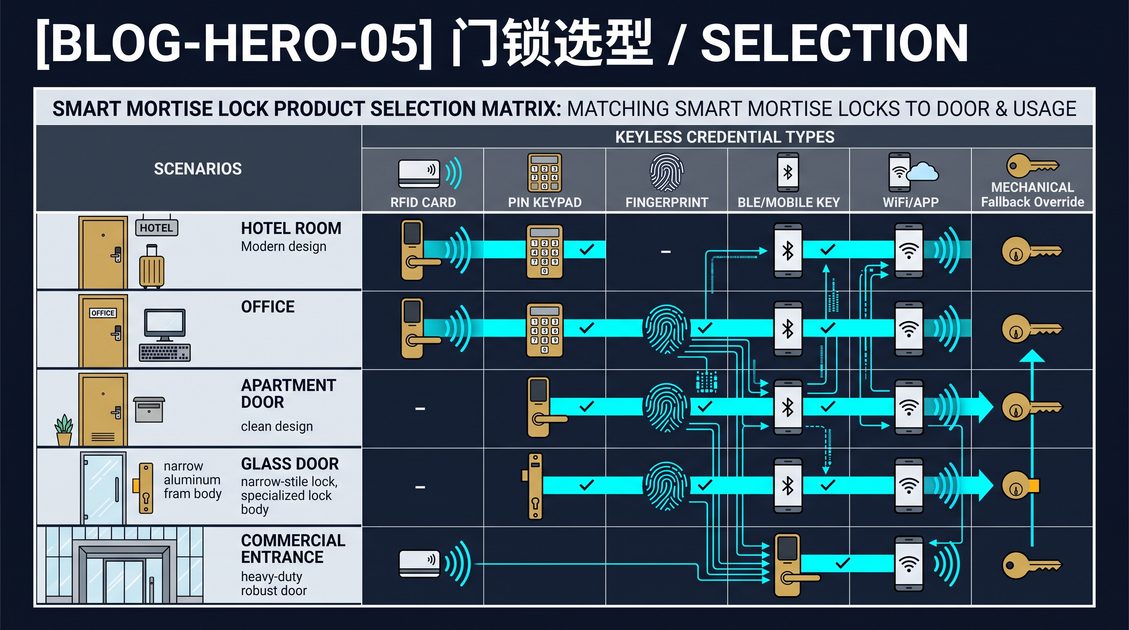
The fob system should reflect the building’s physical and operating model. A shared building reader may be wired to a central controller, while a unit door may use a smart mortise lock or another standalone electronic lock. Confirm that the reader, fob technology, controller, and management software are compatible before ordering a property-wide set.
Key Fob System for Apartments Guide: Credentials and Visitors
A fob is convenient because it is fast, durable, and simple for residents to use, but it is also a credential that can be lost or shared. Issue individual fobs rather than one shared fob per household when accountability matters. Record the fob identifier against the resident or authorized user, define which doors it can open, and apply an expiry or review date where appropriate.
Visitor access should be temporary and limited. A property team may issue a temporary fob, mobile credential, or entry code linked to the resident and a defined time window. When the visit ends, the credential should expire automatically or be revoked by the authorized operator. Staff and contractor credentials need the same discipline, with schedules and immediate offboarding when a role changes.
Key Fob System for Apartments Guide: Lost Fobs and Privacy
Lost fobs should be revoked immediately, not only after a replacement is issued. A good system makes revocation a simple administrator action and records who performed it. Keep spare fobs available, but do not leave active spares unassigned. Test the replacement process and confirm that the old fob remains invalid after the new one is issued.
Access events can reveal when residents enter and leave, so the property should limit log visibility, protect stored and transmitted data, define retention, and publish a clear policy. Only authorized staff should see resident-linked events. The system should also provide a documented emergency procedure for a dead battery, controller outage, network loss, or a resident who cannot use a fob.
Key Fob System for Apartments Guide: Installation and Operations
Before installation, survey the door, frame, strike, power route, controller location, and emergency egress. Test representative openings with valid, expired, revoked, and invalid fobs, inside release, door position, power interruption, network loss, and visitor expiry. Confirm that alerts reach the responsible property team and that the system continues its approved local behavior when communication is unavailable.
Maintain readers, controllers, batteries, locks, permissions, and spare parts on a documented schedule. Review access after every move-in, move-out, staff change, and contractor engagement. This key fob system for apartments guide is general information; confirm local fire, accessibility, electrical, privacy, building, and emergency-egress requirements with qualified professionals.
Before signing off, confirm how new residents are enrolled on move-in day and how a departing resident is removed the same day they leave, because these two events define whether the system stays trustworthy. A key fob system for apartments is only as strong as its credential lifecycle, so make revocation a documented habit rather than an occasional task, and keep a spare set of readers and fobs available for routine turnover.
Part of this article content is generated by AI and optimized for professional accuracy and readability.
Not sure which sensor fits your project?
Talk to our mmWave application engineers for a free consultation.
Specify your hotel project with our engineers
Send your room count, ceiling type, and protocol preference. We will return a sample plan and quote within 24 business hours.
- Move from general guidance into a product or application discussion.
- Use RFQ when pricing, drawings, MOQ, or launch timing needs structure.
- Keep a direct contact path visible for fast clarifications and handoff.