指纹门锁选购指南:如何选择生物识别门锁
面向买家的指纹门锁选购指南:传感器类型、识别速度、精度、安全性、电池、认证,以及如何为家庭和商业场景选择合适的生物识别门锁。
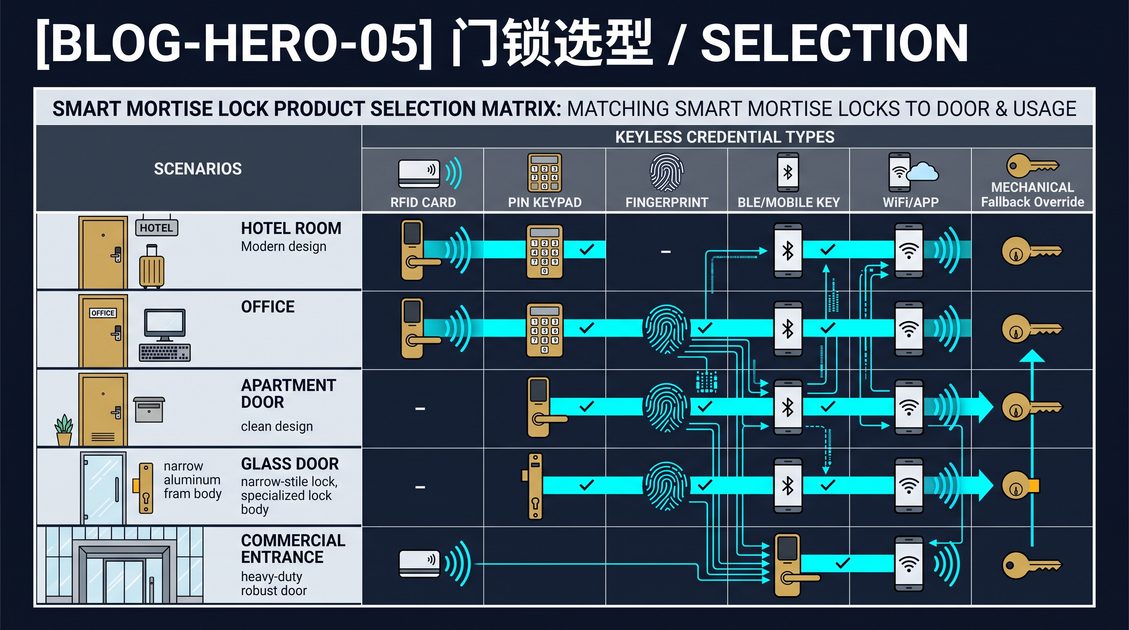
指纹门锁是一种在识别已录入指纹后开锁的电子锁,它用生物识别凭证取代钥匙或密码,这种凭证无法丢失、复制,也不易被随意分享。门锁外侧的指纹传感器采集指纹的脊线与谷线图案,将其转换为模板,并与锁内存储的模板进行比对,在验证用户身份后驱动锁舌开锁。本指纹门锁选购指南面向需要基于技术标准而非营销宣传来对比生物识别门锁的房主、房东、酒店及办公场所运营者以及进口商。指纹门锁已从高端新奇产品演进为主流选择,并日益成为电子插芯锁的标准配置;当前的购买决策取决于传感器质量、识别速度与精度、存储容量、电池表现以及安全认证。本指南将逐项拆解这些标准,并最终给出可执行的对比与实用检查清单。
什么是指纹门锁,为什么生物识别很重要
指纹门锁是一种以指纹为主要凭证的机电锁。锁体包含指纹传感器、微控制器、模板数据库、电机或电磁铁执行器以及电源。当用户将手指放在传感器上时,设备采集指纹、提取特征,并与已录入模板进行比对;匹配成功即授权执行器开锁。由于指纹是个人独有的,不会像钥匙或密码那样被遗落在家中或交给陌生人,生物识别门锁从根本上解决了丢钥匙、忘密码和钥匙被非法复制等经典问题。
生物识别在最需要验证“某个具体的人”而非“其所携带或记住的某样东西”的场景中最为关键。在家庭中,这意味着家庭成员用手指即可开锁,无需翻找钥匙。在租赁住房或托管建筑中,指纹与住户身份绑定,简化了“谁有权进入”的管理问题,并降低了密码被非住户获知的风险。在办公场所或设施中,指纹门禁可配合访问审计记录,显示哪个个体在什么时间进入了哪扇门。因此,指纹门锁将门禁控制从“你拥有的”或“你知道的”转变为“你本身就是的”——在实施得当的情况下,这是三种认证因素中最强的一种。
生物识别凭证的实际意义在于,指纹门锁对高频使用者极为便利,因为无需携带、记忆或输入任何东西。其代价是:生物识别传感器比密码键盘或读卡器成本更高,可能受到脏污、潮湿或磨损手指的影响,并且需要仔细录入以及设计良好的备用方案,以防手指受伤或传感器故障。一款好的指纹门锁会将生物识别与备用方式(如密码键盘、刷卡或机械钥匙)结合使用,确保用户永远不会因为手指干燥或受损而被拒之门外。本指南将这种冗余设计视为核心要求,而非可选附加项。
指纹门锁使用指纹这一生物识别凭证替代钥匙或密码,因此门禁权限与特定个人绑定,不会丢失、复制,也不易被随意分享。门锁在传感器上采集指纹,将特征提取为模板,并与已录入模板比对,从而授权电机或电磁铁开锁。生物识别在需要验证个体身份的场景中至关重要,例如住户、租客、员工或访客,以及需要“谁在何时进入”审计记录的场景。其优势在于高频用户使用便捷,并消除了丢钥匙和密码共享问题;代价是比密码键盘成本更高、对脏污或磨损手指较为敏感,并且需要可靠的备用方式(如密码键盘、刷卡或机械钥匙),确保用户不会因手指干燥或传感器故障而被锁在门外。
指纹传感器技术:光学 vs 半导体
指纹门锁的核心是传感器,目前两大主流技术是光学与半导体。光学传感器通过棱镜将光线照射到手指上,拍摄脊线与谷线图案;这是较早、成本较低的技术,常见于门禁终端和预算型门锁。半导体传感器又称电容式或主动式传感器,当手指接触传感器芯片时,测量脊线与谷线之间的电容差异;它更加紧凑、精度更高,且更能抵御利用印刷图像进行的伪造攻击,因此主导了现代电子锁,尤其是推拉锁和插芯锁形态。
两者的差异在实际使用中体现得很明显。光学传感器对干性和磨损手指的容忍度更高,因为它采集的是视觉图像而非电学读数,同时成本低廉;但光学传感器体积较大,且更容易被高分辨率指纹照片欺骗。半导体传感器更小、更快、更难被欺骗,因为它需要活体皮肤的电气接触;但它对干燥、过湿或布满老茧的手指可能更敏感,且成本更高。一些先进传感器采用超声波或其他主动式方法,可穿透皮肤表层进行读取,在各种手指状态下都更可靠,甚至在某些手套环境下也能工作,但这些传感器通常更贵,在住宅门锁中较为少见。
传感器选型取决于你的用户群体和使用环境。对于人流量大的办公场所、酒店或商用插芯锁,如果速度和防伪造能力是关键考量,半导体或超声波传感器是更值得的投资。对于成本主导、用户手指状态正常的预算型家用门锁,一款优质光学传感器已完全够用。比传感器硬件本身更重要的是背后的识别算法,因为在优质传感器上运行平庸算法,其速度和精度可能还不如在廉价传感器上运行强大算法。本指南建议用真实用户在实测中检验开锁速度和可靠性,而不是仅凭传感器类型做决定,同时向供应商索取标称识别时间、误接受率和误拒绝率。
传感器是指纹门锁的核心,两大主流类型是光学与半导体。光学传感器通过棱镜拍摄脊线与谷线图案,技术较老、成本较低、对干性手指容忍度高,但体积较大,更容易被印刷图像欺骗。半导体或电容式传感器测量手指上的电容差异,更紧凑、更快、更精准、更防伪造,但对干燥、潮湿或长茧手指可能较敏感,且成本更高。先进的超声波传感器可穿透皮肤表层读取,在各种手指状态下均更可靠。对于人流量大的商用插芯锁,优先选择半导体或超声波传感器以获得速度和防伪造能力;对于预算型家用锁,优质光学传感器已足够。识别算法比传感器硬件类型更重要,因此应实测真实开锁速度,并要求供应商提供标称识别时间、误接受率和误拒绝率。
识别速度、精度与存储容量
三项技术指标决定了一把指纹门锁在日常使用中的实际表现:识别速度、精度和存储容量。识别速度是指从手指放上到锁具授权开锁的时间,通常以毫秒为单位;快的锁让人感觉毫不费力,慢的锁则成了每天的烦恼。现代指纹门锁的标称识别时间大约在 300 到 500 毫秒之间,最快的声称低于 200 毫秒。精度用两个错误率来表述:误接受率是指未录入的指纹被错误接受的概率;误拒绝率是指已录入的指纹被错误拒绝的概率。一款好的生物识别门锁应将误接受率控制在 0.001% 以下,误拒绝率也应低到合法用户极少验证失败。
存储容量是指门锁能录入多少枚指纹,这一点比大多数买家预期的更重要。单户家庭可能只需要录入几枚指纹,但办公室、酒店或共享建筑可能需要录入大量住户、员工或访客的指纹,而且每位用户可能希望录入不止一根手指。消费级门锁的容量通常约为 50 到数百个模板,而商用和企业级生物识别读头支持数千个。如果你的部署需要录入多人,请选择容量在预估用户数之上留有充足余量的门锁,并确认容量是按单锁计算还是集中管理。
精度和容量与传感器质量和算法密不可分。搭载强大算法的半导体传感器在相同速度下比弱配置的光学方案精度更高,而将模板存储在安全元件中的门锁能有效抵御模板提取。对于物业管理者或 OEM 买家,应向供应商索取数据手册中的标称误接受率、误拒绝率和识别时间,并将异常偏低的存储容量视为所谓“商用锁”的危险信号。在实际使用中,真实精度取决于录入质量和手指状态,因此允许每根手指录入多个模板的门锁能显著提升可靠性。
三项指标决定日常使用体验:速度、精度和容量。识别速度即从手指放上到授权开锁的时间,通常为 300 到 500 毫秒,最快的低于 200 毫秒。精度用误接受率(未录入指纹被错误接受的概率,理想值低于 0.001%)和误拒绝率(已录入指纹被错误拒绝的概率,必须保持在低水平,让合法用户极少验证失败)来表述。存储容量是能录入的指纹数量,消费级门锁约 50 到数百个模板,企业级读头可达数千个;选择容量时需在预估用户数之上留有富余。搭载强大算法的半导体传感器在相同速度下比弱配置光学方案精度更高,安全元件中的模板存储可有效抵御提取。向供应商索取数据手册中的标称值,并将宣传为商用但容量偏低的锁视为危险信号。
安全性:防伪造能力与模板保护
指纹门锁的安全性取决于它对两种攻击的抵御能力:伪造传感器和提取模板。伪造是指通过呈现假指纹(如印刷图像、模具翻版或高分辨率窃取指纹)来欺骗传感器。门锁的防伪造能力由传感器类型和活体检测决定。半导体和超声波传感器天然比光学传感器更难被伪造,因为它们需要活体皮肤的电气或声学特性;最优秀的传感器还加入了活体检测功能,可检查血流或皮肤弹性等特征。没有活体检测的低成本光学传感器可能被一张高质量照片攻破,因此不推荐用于高安全性门体。
模板保护是第二个维度,却常常被忽视。指纹不像密码那样可以更改;一旦生物识别模板泄露,用户无法重新领取一枚新指纹。因此,安全系统应使用加密形式将模板存储在安全元件中,绝不能明文保存,也绝不能传输原始指纹图像。建议询问模板的存储方式以及门锁是否支持完全离线运行而无需将生物识别数据上传至云服务,因为将指纹上传到非自主可控的服务器会带来隐私和安全暴露。对于受数据保护法规约束的商业部署,模板保护与设备端存储正日益成为合规要求。
安全声明必须核实,而非想当然。一款指纹门锁可能宣传“生物识别安全”,实际上却使用弱传感器和明文存储;买家应要求提供传感器类型、活体检测方法、模板加密方案,并在可用时要求提供符合 ISO/IEC 30107 等生物识别标准(针对呈现攻击检测)的认证。本指南将防伪造能力和模板保护视为保护贵重物品、人身安全或受监管数据的任何门体的不可妥协条件,并建议将生物识别与备用凭证及机械钥匙应急开启相结合,形成纵深防御。生物识别门锁只有在安全性经过工程化设计而非仅仅口头宣称时,才是真正的便利倍增器。
指纹门锁的安全性建立在抵御伪造攻击和模板提取之上。伪造是指通过印刷图像、模具翻版或窃取指纹等假指纹来欺骗传感器;抵御能力取决于传感器类型和活体检测。半导体和超声波传感器更难被欺骗,因为它们读取活体皮肤的电气或声学特性;最优秀的型号还加入血流检测等活体识别功能,而没有活体检测的低成本光学传感器可能被一张照片攻破。模板保护同样关键,因为指纹不像密码那样可以更改:模板应以加密形式存储在安全元件中,绝不明文保存,也绝不传输到不可控的云端。买家应核实传感器类型、活体检测方法、模板加密方案以及 ISO/IEC 30107(针对呈现攻击检测)等认证,并将生物识别与备用凭证和机械应急开启相结合,形成纵深防御。
生物识别门锁的电池续航、电源与应急开启
指纹传感器每次读取手指都会消耗电量,因此生物识别门锁的电池规划尤为重要。每次识别事件都会驱动传感器、处理器和执行器工作,配备主动式传感器的门锁比被动式密码键盘耗电更大。指纹门锁的预期电池续航通常为六个月到一年半,具体取决于开锁频率、传感器类型、无线电使用和温度,每天频繁开锁会加快耗电。能够通过 App 上报电量并在设定阈值时发出警告的门锁,可让业主提前数周知晓;如果没有这种警告,生物识别门锁可能突然失效,而且由于没有密码键盘,一旦电池耗尽、传感器停止工作,用户将没有备用凭证可用。
因此,应急开启是指纹门锁的设计要求。常见解决方案包括备用凭证(如密码键盘或刷卡)、机械钥匙应急开启,以及锁体外侧的备用供电接口(如 USB 或 9V 端子)。最优秀的生物识别门锁将指纹与密码键盘或刷卡以及机械钥匙结合,确保干燥的手指、传感器故障或电池耗尽永远不会让用户陷入困境。只有指纹验证而无任何备用方案的门锁即便传感器再出色也存在风险,因为生物识别本身具有不确定性:手会弄湿、弄脏、长老茧或受伤,而且如果主用手指失效,用户无法当场重新录入。
在商业和租赁部署中,电池管理会上升为运营层面的问题。管理多把生物识别门锁的物业经理需要集中式电池上报,以便维护团队按计划更换电池,而不是在租客因没有密码键盘而被锁在门外时被动响应。联网指纹门锁可集中上报电池状态,部分型号还支持热插拔电池以避免任何停机。本指南建议,对于任何多门部署,应选择配备备用凭证、有明确电池阈值、在可用时支持集中电池上报、并有清晰应急开启路径的指纹门锁,同时将电池更换作为经常性运营成本纳入预算规划,而不是当作意外支出。
指纹传感器每次读取都会耗电,因此生物识别门锁的电池规划有其特殊性:预期续航为六个月到一年半,具体取决于开锁频率、传感器类型、无线电使用和温度,频繁开锁会加快耗电。如果没有电量不足警告,生物识别门锁可能突然失效,而且没有密码键盘意味着用户没有备用凭证。因此,应急开启是设计要求:应将指纹与密码键盘或刷卡配合,加上机械钥匙应急开启,以及锁体外侧的备用供电接口(如 USB 或 9V)。只有指纹而无任何备用方案的门锁存在风险,因为手会弄湿、弄脏、长老茧或受伤。对于商业和租赁部署,应选择配备集中电池上报和热插拔电池的联网门锁,并将电池更换作为经常性运营成本纳入预算。
指纹插芯锁 vs 圆柱锁与呆锁
指纹门锁的结构形态与传感器同样重要,主流选择是插芯锁和圆柱锁或呆锁。指纹插芯锁将生物识别读头和电子元件封装在长方形锁体内,嵌入开在门边上的锁槽中,是商用、酒店和欧洲住宅门的标准配置。指纹呆锁或圆柱锁采用北美门常见的两件式圆柱锁体结构,指纹读头位于外侧面板上。两种方案都可以非常出色,但它们不可互换,选择由门体决定,而非个人偏好。
插芯结构在生物识别方面具有明显优势。更大的锁体为传感器、处理器、执行器以及密码键盘或读卡器等附加凭证读头提供了更多空间,并支持完整执手门锁套装,这对无障碍设计和需要执手的门型非常重要。插芯锁还将呆锁和斜舌整合在同一组件中,在入户门、通道门和室内门之间更安全、更通用。代价是插芯锁比圆柱锁更复杂、更昂贵,也更难改造,因为锁槽由各地区标准决定,且不易扩大。
对于大多数在指纹插芯锁和指纹呆锁之间做选择的买家而言,这本质上是一个建筑结构问题。如果门体已有插芯锁槽,最干净的升级方案是直接装入电子指纹插芯锁,保留原有执手套装。如果门体使用标准美式呆锁,更换式指纹呆锁安装更简单、成本更低。对于新建项目,指定配置指纹读头的插芯锁可解锁最丰富的功能。本指南指出,在商业、酒店和物业管理项目中,指纹插芯锁通常是正确的骨干选择;而在独户住宅改造中,指纹呆锁可能是更务实的选择;两者的选型标准相同。
结构形态与传感器同样重要:主流选择是插芯锁和圆柱锁或呆锁。指纹插芯锁将读头和电子元件封装在嵌入开在门边锁槽中的长方形锁体内,是商用、酒店和欧洲门的标准配置,为传感器、处理器、执行器以及密码键盘或刷卡等附加读头提供了空间。指纹呆锁采用北美圆柱锁体结构,读头位于外侧面板。插芯锁的优势包括为生物识别模块提供更多空间、支持完整执手套装,以及将呆锁和斜舌整合在同一组件中;但结构更复杂、成本更高,改造也更困难。选择取决于门体:指纹插芯锁可直接装入现有锁槽,是最干净的升级方案;更换式指纹呆锁在标准美式门上安装更简单;新建项目则应优先指定插芯锁以获得最丰富的功能。
如何为家庭、商业及多户住宅选择指纹门锁
合适的指纹门锁在很大程度上取决于谁拥有并运营这扇门,因此本指南按部署类型分别给出建议。对于独户家庭,优先考虑可靠传感器、备用凭证、家庭成员便捷录入以及与业主手机的集成。配备密码键盘和机械钥匙、容量适中并支持 App 控制的指纹入户门锁通常是理想选择,在正常家庭开锁频率下一年以上的电池续航是现实的。房主通常不需要联网管理,可以选择独立门锁。
对于商业或办公场所,需求重心转向容量、审计和管理。办公室指纹门锁应能录入大量员工、支持分时段权限方案、提供审计记录,并允许管理员在人员离职时立即撤销其访问权限。这通常意味着需要配备管理平台的联网门锁而非独立设备,同时需要具备强防伪造能力的传感器,因为门后可能保护着设备、数据或现金。对于小型企业,基于轻型网关的系统往往是在成本和控制之间的最佳平衡。
对于多户住宅和物业管理,指纹门锁必须能够扩展和集成。物业经理需要录入大量住户、集中发放和撤销门禁权限,并将单元门锁与大楼门禁系统对接。指纹与住户身份绑定,简化了“谁有权进入”的问题,联网平台则提供运营所需的审计和排程功能。涵盖多扇门的总拥有成本(包括管理软件订阅)是决策的主导因素。在这三种场景中,本指南都建议将指纹与密码键盘或刷卡配合使用,选择获得认证的门锁,并在正式部署前让真实用户实测识别效果。
合适的指纹门锁取决于谁在运营这扇门。对于独户家庭,优先考虑可靠传感器、备用凭证(如密码键盘和机械钥匙)、便捷录入和 App 控制;具备一年以上电池续航的独立门锁通常是理想选择。对于商业或办公场所,优先考虑容量、审计和管理:应选择能录入大量员工、支持分时段权限、提供审计记录并支持即时撤销权限的联网门锁,并配备强防伪造能力的传感器。对于多户住宅和物业管理,门锁必须能够扩展和集成:应能录入大量住户、集中发放和撤销门禁权限,并将单元门锁与大楼门禁系统对接;包括软件订阅在内的总拥有成本是决策的主导因素。在所有场景中,都应将指纹与密码键盘或刷卡配合使用,选择获得认证的门锁,并在正式部署前进行真实环境测试。
指纹门锁的认证与合规
保护建筑安全的指纹门锁应满足公认的认证与合规要求,本指南将其视为核实项而非营销话术。最常见的包括面向欧洲市场的 CE、面向美国市场的 FCC,以及针对限制物质的 RoHS。CE 标志表明产品符合欧洲安全与电磁兼容要求,包括锁内无线模块的无线电要求;FCC 涵盖美国市场的无线电发射限值。RoHS 限制电子元件中的有害物质;对于有包装和电池法规要求的市场,可能还适用 REACH 或电池法规等额外合规要求。进口商应索取证书,并核实证书编号与具体型号一致。
具体到生物识别门锁,数据保护和隐私合规日益重要。许多司法管辖区对指纹的存储和处理有专门规定;将模板以加密形式保存在设备端、而非将原始生物识别数据上传至不可控云端的门锁,既更安全,也更可能满足数据保护要求。本指南建议询问指纹数据的存储位置、是否加密、谁可以访问,以及设备是否支持离线运行,因为这些答案同时决定了安全性和合规风险敞口。
对于更高的机械和安全性能声明,应关注 UL 或 ANSI/BHMA 分级(或同等国家标准),这些标准对锁具的强度、循环寿命和抗攻击能力进行评级;同时关注 ISO/IEC 30107 等针对呈现攻击检测的生物识别专项标准。通过认证的门锁经过独立测试,而仅声称合规的门锁并未经过测试。规模化部署的买家应索取证书文件,确认型号和固件版本;在标准为可选要求的情况下,应将其视为竞争差异化因素而非想当然的默认项。
认证与合规是对指纹门锁的核实而非营销。常见要求包括面向欧洲市场的 CE、面向美国市场的 FCC,以及针对限制物质的 RoHS,涵盖安全、电磁兼容、无线电限值和有害物质;进口商应索取证书并核实编号与具体型号一致。对于生物识别门锁,数据保护和隐私合规至关重要,因为指纹属于受监管数据:应优先选择将模板加密存储在设备端、绝不上传原始数据至不可控云端、且支持离线运行的门锁。对于更高的机械和安全性能声明,应关注 UL 或 ANSI/BHMA 分级以及 ISO/IEC 30107 等针对呈现攻击检测的生物识别专项标准。通过认证的门锁经过独立测试;应索取证书文件并确认型号和固件版本,而非假设其合规。
成本、MOQ 与从制造商或进口商采购
对于房主而言,指纹门锁是一次性购买;但对于企业、物业经理或进口商,经济逻辑完全不同,本指南专门面向批量买家。指纹门锁的单价随采购量增长显著下降,决策标准也从“选哪款型号”转变为“选哪家制造商”。评估指纹插芯锁供应商的进口商或 OEM 应核实认证、传感器质量及标称识别和精度指标、MOQ、交货期、付款条款,以及品牌定制、表面处理和执手套装等定制化选项的可用性。这些维度是数据手册很少完整呈现的,需要通过工厂审核来了解。
MOQ(最低起订量)是批量买家的准入门槛。指纹插芯锁通常比简单密码键盘锁的 MOQ 更高,原因是传感器和生物识别模块的校准成本;MOQ 也往往随定制化程度上升。买家应分别确认标准型号和定制型号的 MOQ,因为定制 MOQ 通常更高。交货期(从下单到交货的时间)取决于库存和定制程度,应以书面形式确认。付款条款通常包括定金加发货前付清余款,这能保护跨境交易各方的利益。
对于任何批量买家,本指南建议将制造商关系视为采购的一部分。要求进行工厂审核或视频验厂,索取参考部署案例,并确认售后支持模式(包括保修、备件和技术文档)。指纹门锁是工程化产品,可靠供应商与不可靠供应商之间的差异会在多年的运营中显现出来,而不是在第一笔订单上。直接从智能插芯锁制造商采购,而非通过身份不明的中间商,让买家在硬件、认证和支持方面拥有单一可问责来源。
对于房主来说,指纹门锁是一次性购买;但对于企业、物业经理或进口商,经济逻辑转向单价、MOQ 和供应商可靠性。评估指纹插芯锁的进口商应核实认证、传感器质量、标称识别和精度指标、MOQ、交货期、付款条款,以及品牌、表面处理和执手套装等定制化选项。MOQ 是准入门槛,由于传感器和生物识别模块校准成本,指纹门锁的 MOQ 通常高于简单密码锁,且往往随定制化程度上升;应分别确认标准型号和定制型号的 MOQ。交货期应以书面形式确认,付款条款通常包括定金加发货前付清余款。应将制造商关系视为采购的一部分:要求工厂审核或视频验厂,索取参考部署案例,确认保修、备件和售后支持,因为可靠性在多年运营中显现,而非第一笔订单上。
常见问题解答:指纹门锁选购指南
指纹门锁安全吗?
安全性取决于传感器类型、活体检测和模板保护。配备活体检测的半导体和超声波传感器很难被伪造;模板应加密存储在设备端,绝不明文保存或上传至不可控云端。应索取传感器类型、活体检测方法以及 ISO/IEC 30107、CE、FCC、RoHS 等认证信息。
如果传感器识别不了我的手指怎么办?
干燥、潮湿、脏污或长茧的手指可能导致误拒绝。应选择配备备用凭证(如密码键盘或刷卡)和机械钥匙应急开启的门锁,并为每根手指录入多个模板以提高可靠性。没有备用方案的门锁存在风险。
电池耗尽怎么办?
好的门锁会提前预警,并通过密码键盘、刷卡、机械钥匙或锁体外侧备用供电接口(如 USB 或 9V)提供应急开启。永远不要选择没有清晰应急开启路径的生物识别门锁。
门锁能存储多少枚指纹?
消费级门锁通常可存储约 50 到数百个模板,商用读头支持数千个。选择容量时应在预估用户数之上留有富余,并在门锁支持的情况下为每位用户录入多根手指。
指纹门锁能装在我现有的门上吗?
取决于门体结构。指纹插芯锁可直接装入现有插芯锁槽并保留执手套装;指纹呆锁适用于标准美式门。应测量门的中心距、厚度和开门方向,并与门锁规格进行比对。
我需要 App 或联网控制吗?
家庭使用的话,配备 App 的独立门锁通常已经足够。对于商业或多户住宅,配备管理平台的联网门锁提供集中录入、排程、审计、即时撤销和集中电池上报功能。
结语:选择最适合你用户的指纹门锁
本指纹门锁选购指南涵盖了传感器技术、识别速度、精度、容量、安全性、电池、结构形态、部署类型、认证和成本。统一的建议是:将强大且经过认证的传感器与备用凭证及机械应急开启相结合,并根据用户的数量和类型匹配容量与管理方式。指纹门锁只有在生物识别路径可靠且安全性经过工程化设计而非口头宣称时,才是真正的便利和真正的安全升级。
将本指南作为检查清单来使用。测量门体并确认结构形态,核实传感器类型及标称识别和精度指标,要求模板保护和认证,规划电池与应急开启方案,并根据部署规模选择独立或联网管理。无论你是在保护一个家庭,还是跨多户住宅部署,一把精心选配并依托于认证电子插芯锁的指纹门锁,都是你能做出的最可靠的门禁决策之一。
指纹门锁选购指南还应当权衡所选硬件在购买后的支持情况,因为生物识别门锁的可靠性取决于其后期的持续管理。确认制造商会发布固件更新和安全公告,备用的读头、电池和更换组件可以获取,且安装商或集成商能为负责发放凭证和响应开锁问题的人员提供文档与培训。应在预期使用寿命内比较总拥有成本,包括租户或员工变动时的凭证重新录入成本,因为低廉的采购价可能被高昂的按用户管理成本所抵消。在涉及多扇门的部署中,应确认系统是集中管理模板存储和审计日志,还是需要逐台手动配置,因为这一选择既决定了日常工作量,也决定了发现未授权访问的能力。一个健全的购后计划能将指纹门锁选购指南从一份规格说明转变为可重复、可维护的门禁决策,让物业在数年内持续受益,而不是等第一次报修就失效。
本文部分内容由 AI 生成,并经优化以确保专业准确性和可读性。 A fingerprint door lock is an electronic lock that unlocks when it recognizes an enrolled fingerprint, replacing a key or code with a biometric credential that cannot be lost, copied, or easily shared. A fingerprint sensor on the outside of the lock captures a ridge-and-valley pattern, converts it into a template, and compares it against templates stored in the lock to authenticate the user before driving the bolt. This fingerprint door lock selection guide is written for homeowners, landlords, hotel and office operators, and importers who need to compare biometric locks on technical criteria rather than marketing claims. Fingerprint locks have moved from a premium novelty to a mainstream and increasingly standard option on electronic mortise locks, and the buying decision now turns on sensor quality, recognition speed and accuracy, storage capacity, battery behavior, and security certifications. This guide breaks those criteria down in detail and ends with an actionable comparison and a practical checklist.
What Is a Fingerprint Door Lock and Why Biometrics Matter
A fingerprint door lock is an electromechanical lock whose primary credential is a fingerprint. The lock body contains a fingerprint sensor, a micro-controller, a template database, a motor or solenoid actuator, and a power source. When a user places a finger on the sensor, the device captures the print, extracts distinguishing features, and compares them against enrolled templates; on a match it authorizes the actuator to unlock the door. Because a fingerprint is unique to an individual and cannot be left at home or handed to a stranger in the way a key or code can, biometric locking removes the classic problems of lost keys, forgotten codes, and unauthorized copies.
Biometrics matter most where you need to authenticate a specific person rather than something they carry or remember. In a home, this means a family member unlocks with a finger instead of hunting for keys. In a rental or a managed building, a fingerprint is tied to a resident, which simplifies who-has-access questions and reduces the risk that a code is shared with a non-resident. In an office or facility, fingerprint access can be paired with an audit trail that shows which individual entered which door at which time. A fingerprint door lock therefore shifts access control from something-you-have or something-you-know to something-you-are, which is the strongest of the three authentication factors when it is implemented well.
The practical consequence of a biometric credential is that a fingerprint door lock is extremely convenient for frequent users, because there is nothing to carry, remember, or type. The trade-offs are that biometric sensors cost more than keypads or card readers, they can be affected by dirty, wet, or worn fingers, and they require careful enrollment and a well-designed fallback path in case a finger is injured or the sensor fails. A good fingerprint door lock pairs the biometric with a secondary method, such as a keypad, card, or mechanical key, so that a user is never locked out by a dry or damaged finger. This guide treats that redundancy as a core requirement, not an optional extra.
A fingerprint door lock uses a biometric credential, a fingerprint, instead of a key or code, so access is tied to a specific person and cannot be lost, copied, or easily shared. The lock captures a finger on a sensor, extracts features into a template, and compares against enrolled templates to authorize a motor or solenoid to unlock. Biometrics matter where you must authenticate an individual, such as a resident, tenant, employee, or guest, and where an audit trail of who entered is useful. The strength is convenience for frequent users and elimination of lost keys and shared codes. The trade-offs are higher cost than keypads, sensitivity to dirty or worn fingers, and the need for a reliable secondary method, such as a keypad, card, or mechanical key, so a user is never locked out by a dry finger or sensor fault.
Fingerprint Sensor Technology: Optical vs Semiconductor
The heart of a fingerprint door lock is the sensor, and the two dominant technologies are optical and semiconductor. An optical sensor shines light through a prism onto the finger and photographs the ridge-and-valley pattern; it is the older, lower-cost technology and is commonly seen on access terminals and budget locks. A semiconductor sensor, also called capacitive or active, measures the electrical capacitance differences across the ridges and valleys when a finger touches the sensor chip; it is more compact, more accurate, and more resistant to spoofing with a printed image, which is why it dominates modern electronic locks, especially mobile and mortise form factors.
The differences show up in real use. Optical sensors are more tolerant of dry and worn fingers because they capture a visual image rather than an electrical reading, and they are inexpensive, but they are larger and can be spoofed more easily by a high-resolution photograph of a print. Semiconductor sensors are smaller, faster, and harder to fool because they require the electrical contact of living skin, but they can be more sensitive to dry, very wet, or calloused fingers, and they cost more. Some advanced sensors use ultrasonic or other active methods that read through the outer layer of skin, which is more reliable across finger conditions and even works with some gloves, but these are typically more expensive and less common in residential locks.
The right sensor choice depends on your users and your environment. For a high-traffic office, hotel, or commercial mortise lock where speed and resistance to spoofing matter, a semiconductor or ultrasonic sensor is the better investment. For a budget home lock where cost dominates and users have normal, dry fingers, a good optical sensor can be perfectly adequate. What matters more than the raw technology is the recognition algorithm behind it, because a mediocre algorithm on a good sensor can be slower and less accurate than a strong algorithm on a cheaper sensor. This guide recommends testing real unlock speed and reliability with actual users rather than choosing on sensor type alone, and asking the supplier for the specified recognition time, false-acceptance rate, and false-rejection rate.
The sensor is the heart of a fingerprint door lock, and the two dominant types are optical and semiconductor. An optical sensor photographs the ridge-and-valley pattern through a prism and is older, lower-cost, and tolerant of dry fingers but larger and more easily spoofed by a printed image. A semiconductor or capacitive sensor measures electrical capacitance across the finger and is more compact, faster, accurate, and spoof-resistant, but can be sensitive to dry, wet, or calloused fingers and costs more. Advanced ultrasonic sensors read through the outer skin for reliability across finger conditions. For high-traffic commercial mortise locks, prefer semiconductor or ultrasonic for speed and spoof resistance; for budget home locks, a good optical sensor suffices. The recognition algorithm matters more than raw sensor type, so test real unlock speed and ask for specified recognition time, false-acceptance, and false-rejection rates.
Recognition Speed, Accuracy, and Storage Capacity
Three technical specifications define how well a fingerprint door lock actually works in daily use: recognition speed, accuracy, and storage capacity. Recognition speed is the time from placing a finger to the lock authorizing, commonly specified in milliseconds; a fast lock feels effortless, while a slow lock becomes a daily annoyance. Most modern fingerprint door locks specify recognition in roughly 300 to 500 milliseconds, and the very fastest claim under 200 milliseconds. Accuracy is expressed by two error rates: the false-acceptance rate, the chance an unenrolled fingerprint is wrongly accepted, and the false-rejection rate, the chance an enrolled fingerprint is wrongly rejected. A good biometric lock targets a false-acceptance rate below 0.001 percent and a false-rejection rate low enough that legitimate users rarely fail.
Storage capacity is how many fingerprints the lock can enroll, which matters more than most buyers expect. A single-family lock may only need a handful of enrolled prints, but an office, hotel, or shared building may need to enroll many residents, staff, or guests, and each user may want more than one finger enrolled. Typical capacity ranges from about 50 to a few hundred templates on consumer locks, while commercial and enterprise biometric readers support thousands. If your deployment enrolls many people, choose a lock whose capacity comfortably exceeds your projected user count with headroom, and confirm whether capacity is per-lock or managed centrally.
Accuracy and capacity are not independent of sensor quality and algorithm. A semiconductor sensor with a strong algorithm achieves better accuracy at a given speed than a weak optical setup, and a lock that stores templates in a secure element resists template extraction. For a property manager or OEM buyer, it is worth asking the supplier for the specified false-acceptance and false-rejection rates and the recognition time in the datasheet, and to treat unusually low storage capacity as a red flag on a so-called commercial lock. In practice, real-world accuracy depends on enrollment quality and finger condition, so a lock that lets a user enroll multiple templates per finger improves reliability significantly.
Three specifications define daily usefulness: speed, accuracy, and capacity. Recognition speed, from finger placement to authorization, is typically 300 to 500 milliseconds, with the fastest under 200 milliseconds. Accuracy is expressed by false-acceptance rate, the chance an unenrolled fingerprint is wrongly accepted, ideally below 0.001 percent, and false-rejection rate, the chance an enrolled fingerprint is wrongly rejected, which must stay low so legitimate users rarely fail. Storage capacity is the number of enrolled fingerprints, from about 50 to a few hundred on consumer locks to thousands on enterprise readers; match it to projected users with headroom. A semiconductor sensor with a strong algorithm achieves better accuracy at a given speed than a weak optical setup, and secure-element template storage resists extraction. Ask suppliers for the datasheet values and treat low capacity on a commercial claim as a red flag.
Security: Spoofing Resistance and Template Protection
The security of a fingerprint door lock depends on how well it resists two attacks: spoofing the sensor and extracting the template. Spoofing is presenting a fake fingerprint, such as a printed image, a molded copy, or a high-resolution lifted print, to trick the sensor. A lock's spoof resistance is determined by its sensor type and its liveness detection. Semiconductor and ultrasonic sensors are inherently harder to spoof than optical because they require the electrical or acoustical properties of living skin, and the best sensors add liveness detection that checks for features such as blood flow or skin elasticity. A low-cost optical sensor with no liveness detection can be defeated by a good photograph, which is why it is not recommended for high-security doors.
Template protection is the second and often overlooked dimension. A fingerprint cannot be changed like a password; once a biometric template is compromised, the user cannot be issued a new fingerprint. A secure system therefore stores templates in an encrypted form in a secure element, never in plaintext, and never transmits raw fingerprint images. Ask how templates are stored and whether the lock can be used offline without transmitting biometric data to a cloud service, because a lock that uploads fingerprints to a server you do not control creates a privacy and security exposure. For commercial deployments subject to data-protection regulations, template protection and on-device storage are increasingly a compliance requirement.
Security claims must be verified, not assumed. A fingerprint door lock may advertise "biometric security" while using a weak sensor and plaintext storage, so the buyer should request the sensor type, the liveness-detection method, the template-encryption approach, and, where available, certification against a biometric standard such as ISO/IEC 30107 for presentation-attack detection. This guide treats spoof resistance and template protection as non-negotiable for any door protecting valuables, people, or regulated data, and recommends pairing the biometric with a secondary credential and a mechanical key override as defense in depth. A biometric lock is a convenience multiplier only when its security is engineered, not merely claimed.
Security of a fingerprint door lock rests on resisting spoofing and template extraction. Spoofing means presenting a fake fingerprint such as a printed image, molded copy, or lifted print; resistance depends on sensor type and liveness detection. Semiconductor and ultrasonic sensors are harder to fool because they read the electrical or acoustical properties of living skin, and the best add liveness detection such as blood-flow checks, while a low-cost optical sensor with no liveness check can be defeated by a photograph. Template protection matters because a fingerprint cannot be changed like a password: templates should be stored encrypted in a secure element, never in plaintext, and never uploaded to an uncontrolled cloud. Buyers should verify sensor type, liveness method, template encryption, and certification such as ISO/IEC 30107 for presentation-attack detection, and pair the biometric with a secondary credential and a mechanical override as defense in depth.
Battery Life, Power, and Emergency Access on Biometric Locks
A fingerprint sensor draws power every time it reads a finger, so battery planning is important and specific to biometric locks. Each recognition event energizes the sensor, the processing, and the actuator, and a lock with an active sensor will consume more than a passive keypad. Expected battery life for a fingerprint door lock typically ranges from six months to a year and a half depending on unlock frequency, sensor type, radio use, and temperature, with frequent daily unlocks draining faster. A lock that reports battery level to an app and warns at a defined threshold gives the owner weeks of notice; without that warning, a biometric lock can fail suddenly, and because there is no keypad, the user has no alternative credential if the battery dies and the sensor stops.
Emergency access is therefore a design requirement on a fingerprint door lock. The common solutions are a secondary credential, such as a keypad or card, a mechanical key override, and a backup power port such as a USB or 9V terminal on the outside of the lock. The best biometric locks combine a keypad or card with the fingerprint and a mechanical key, so that a dry finger, a sensor fault, or a dead battery never strands a user. A lock with only a fingerprint and no fallback is risky even if the sensor is excellent, because biometrics are inherently variable: hands get wet, dirty, calloused, or injured, and a user cannot re-enroll on the spot if the primary finger fails.
For commercial and rental deployments, battery management scales into an operational concern. A property manager with many biometric locks needs central battery reporting so maintenance replaces batteries on schedule rather than responding to a locked-out tenant with no keypad. Networked fingerprint locks report battery status centrally, and some support hot-swappable cells to avoid any downtime. This guide recommends, for any multi-door deployment, a fingerprint door lock with a secondary credential, a documented battery threshold, central battery reporting where available, and a clear emergency-access path, and to budget battery replacement as a recurring operating cost rather than a surprise.
A fingerprint sensor draws power on every read, so battery planning is specific to biometric locks: expected life ranges from six months to a year and a half depending on unlock frequency, sensor type, radio use, and temperature, with frequent unlocks draining faster. Without a battery-level warning, a biometric lock can fail suddenly, and with no keypad the user has no alternative credential. Emergency access is therefore a design requirement: combine the fingerprint with a keypad or card, a mechanical key override, and a backup power port such as USB or 9V on the outside. A lock with only a fingerprint and no fallback is risky because hands get wet, dirty, calloused, or injured. For commercial and rental deployments, choose networked locks with central battery reporting and hot-swappable cells, and budget replacement as a recurring operating cost.
Fingerprint Mortise Locks vs Cylindrical and Deadbolt Locks
The form factor of a fingerprint door lock is as important as the sensor, and the dominant choices are the mortise lock and the cylindrical or deadbolt lock. A fingerprint mortise lock houses the biometric reader and electronics in a rectangular lock body fitted into a pocket cut into the door edge, and it is the standard for commercial, hotel, and European residential doors. A fingerprint deadbolt or cylindrical lock uses the two-part cylindrical chassis typical of North American doors, with the fingerprint reader on the exterior trim. Both can be excellent, but they are not interchangeable, and the choice is dictated by the door, not by preference.
The mortise form factor carries distinct advantages for biometrics. The larger body provides more room for the sensor, the processor, the actuator, and additional credential readers such as a keypad or card reader, and it supports a full handle set, which matters for accessibility and for door designs that require a lever. A mortise lock also integrates a deadbolt and latch in one assembly, which is more secure and more versatile across entry, corridor, and interior doors. The trade-off is that mortise locks are more complex, more expensive, and harder to retrofit than a cylindrical lock because the pocket is standardized by regional norms and not easily enlarged.
For most buyers choosing between a fingerprint mortise lock and a fingerprint deadbolt, the decision is architectural. If the door already has a mortise pocket, the cleanest upgrade is an electronic fingerprint mortise lock that drops in and preserves the handle set. If the door uses a standard US deadbolt, a retrofit fingerprint deadbolt is simpler and cheaper to install. For new construction, specifying a mortise lock with a fingerprint reader opens the widest functionality. This guide notes that for commercial, hotel, and property-management projects, the fingerprint mortise lock is usually the right backbone, while for a single-family retrofit a fingerprint deadbolt may be the pragmatic choice; the same selection criteria apply to both.
The form factor is as important as the sensor: the dominant choices are mortise and cylindrical or deadbolt. A fingerprint mortise lock houses the reader and electronics in a rectangular body fitted into a pocket in the door edge, standard for commercial, hotel, and European doors, and provides room for the sensor, processor, actuator, and additional readers such as a keypad or card. A fingerprint deadbolt uses the North American cylindrical chassis with the reader on the exterior trim. Mortise advantages include more space for biometrics, a full handle set, and an integrated deadbolt and latch, but higher complexity and cost and harder retrofits. Choose by the door: a fingerprint mortise lock drops into an existing pocket for the cleanest upgrade, a retrofit fingerprint deadbolt is simpler on a standard US door, and new construction favors specifying a mortise lock for the widest functionality.
Choosing a Fingerprint Door Lock for Home, Business, and Multifamily
The right fingerprint door lock depends heavily on who owns and operates the door, so this guide separates the recommendation by deployment type. For a single-family home, the priorities are a reliable sensor, a fallback credential, easy enrollment for family members, and integration with the owner's phone. A fingerprint front door lock with a keypad and a mechanical key, moderate capacity, and app control is usually ideal, and battery life of a year or more is realistic at normal household unlock frequency. A homeowner rarely needs networked management and can choose a standalone lock.
For a business or office, the priorities shift to capacity, audit, and management. An office fingerprint door lock should enroll many employees, support time-based schedules, provide an audit trail, and allow an administrator to revoke access immediately when someone leaves. This usually means a networked lock with a management platform rather than a standalone device, and a sensor with strong spoof resistance because the door may protect equipment, data, or cash. For a small business, a lightweight gateway-based system is often the right balance between cost and control.
For multifamily and property management, the fingerprint door lock must scale and integrate. A property manager needs to enroll many residents, issue and revoke access centrally, and pair the unit lock with a building entry system. The fingerprint is tied to a resident, which simplifies who-has-access questions, and a networked platform provides the audit and scheduling the operation requires. Total cost of ownership across many doors, including the management software subscription, dominates the decision. In all three cases, this guide recommends pairing the fingerprint with a keypad or card, choosing a certified lock, and testing real-world recognition with actual users before committing to a deployment.
The right fingerprint door lock depends on who operates the door. For a single-family home, prioritize a reliable sensor, a fallback credential such as a keypad and mechanical key, easy enrollment, and app control; a standalone lock with a year or more of battery life is usually ideal. For a business or office, prioritize capacity, audit, and management: a networked lock that enrolls many employees, supports time schedules, provides an audit trail, and allows instant revocation, with strong spoof resistance for the door. For multifamily and property management, the lock must scale and integrate: enroll many residents, issue and revoke access centrally, and pair unit locks with a building entry system, with total cost of ownership including the software subscription dominating the decision. In all cases, pair the fingerprint with a keypad or card, choose a certified lock, and test real-world recognition before committing.
Certifications and Compliance for Fingerprint Door Locks
A fingerprint door lock that protects a building should meet recognized certification and compliance requirements, and this guide treats them as verification, not marketing. The most common are CE for the European market, FCC for the United States, and RoHS for restricted substances. CE indicates conformity with European safety and electromagnetic compatibility requirements, including the radio requirements of the wireless modules in the lock; FCC covers radio emission limits in the United States. RoHS restricts hazardous substances in the electronics, and, for markets with packaging and battery rules, additional compliance such as REACH or battery regulations may apply. An importer should request the certificates and verify the certificate number matches the exact model.
For biometric locks specifically, data protection and privacy compliance are increasingly relevant. Storing and processing fingerprints is regulated in many jurisdictions, and a lock that keeps templates on-device in encrypted form, rather than uploading raw biometric data to an uncontrolled cloud, is both more secure and more likely to comply with data-protection requirements. This guide recommends asking where the fingerprint data is stored, whether it is encrypted, who can access it, and whether the device operates offline, because these answers determine both security and regulatory exposure.
For higher mechanical and security claims, look for UL or ANSI/BHMA grading, or equivalent national standards, which grade the lock's strength, cycle life, and resistance to attack, and for biometric-specific standards such as ISO/IEC 30107 for presentation-attack detection. A lock that is certified to these standards has been independently tested, whereas a lock that merely claims compliance has not. A buyer deploying at scale should request the certificate files, confirm the model and firmware version, and, where the standard is optional, treat it as a competitive differentiator rather than an assumption.
Certification and compliance verify a fingerprint door lock rather than market it. Common requirements are CE for the European market, FCC for the United States, and RoHS for restricted substances, covering safety, electromagnetic compatibility, radio limits, and hazardous materials; an importer should request the certificates and verify the number matches the exact model. For biometric locks, data protection and privacy compliance matter because fingerprints are regulated data: prefer templates stored encrypted on-device, never uploaded raw to an uncontrolled cloud, and confirm the device operates offline. For higher mechanical and security claims, look for UL or ANSI/BHMA grades and biometric-specific standards such as ISO/IEC 30107 for presentation-attack detection. A certified lock has been independently tested; request certificate files and confirm the model and firmware version rather than assuming compliance.
Cost, MOQ, and Buying from a Manufacturer or Importer
For homeowners the fingerprint door lock is a one-time purchase, but for a business, a property manager, or an importer the economics are very different, and this guide addresses the volume buyer explicitly. The unit cost of a fingerprint door lock drops sharply with volume, and the decision criteria change from "which model" to "which manufacturer." An importer or OEM evaluating a fingerprint mortise lock supplier should verify the certifications, the sensor quality and the specified recognition and accuracy rates, the MOQ, the lead time, the payment terms, and the availability of customization such as branding, finishes, and handle sets. These are the dimensions a datasheet rarely fully captures and an audit of the factory reveals.
MOQ, minimum order quantity, is the entry barrier for volume buyers. Fingerprint mortise locks typically carry a higher MOQ than simpler keypad locks because of the sensor and the calibration of the biometric module, and the MOQ often scales with the level of customization. A buyer should confirm the MOQ for the standard model and for a customized model separately, because the custom MOQ is frequently higher. Lead time, the interval from order to delivery, depends on inventory and customization and should be committed in writing. Payment terms, commonly including a deposit with balance before shipment, protect both sides of a cross-border transaction.
For any volume buyer, this guide recommends treating the manufacturer relationship as part of the purchase. Ask for a factory audit or a video walkthrough, request reference deployments, and confirm the after-sales support model, including warranty, spare parts, and technical documentation. A fingerprint door lock is an engineered product, and the difference between a reliable supplier and an unreliable one shows up over years of operation, not on the first order. Buying directly from a manufacturer of smart mortise locks, rather than through an unnamed aggregator, gives the buyer a single accountable source for the hardware, the certification, and the support.
For a homeowner a fingerprint door lock is a one-time purchase, but for a business, property manager, or importer the economics shift to unit cost, MOQ, and supplier reliability. An importer evaluating a fingerprint mortise lock should verify certifications, sensor quality, specified recognition and accuracy rates, MOQ, lead time, payment terms, and customization such as branding, finishes, and handle sets. MOQ is the entry barrier and is typically higher for fingerprint locks because of the sensor and biometric-module calibration, and it often scales with customization; confirm the standard and custom MOQ separately. Lead time should be committed in writing, and payment terms commonly include a deposit with balance before shipment. Treat the manufacturer relationship as part of the purchase: request a factory audit or walkthrough, reference deployments, and confirm warranty, spare parts, and after-sales support, because reliability shows up over years, not on the first order.
FAQ: Fingerprint Door Lock Selection Guide
Are fingerprint door locks secure?
Security depends on sensor type, liveness detection, and template protection. Semiconductor and ultrasonic sensors with liveness detection are hard to spoof; templates should be stored encrypted on-device, never plaintext or uploaded to an uncontrolled cloud. Request the sensor type, liveness method, and certifications such as ISO/IEC 30107 and CE, FCC, RoHS.
What if the sensor does not recognize my finger?
Dry, wet, dirty, or calloused fingers can cause false rejections. Choose a lock with a secondary credential, such as a keypad or card, and a mechanical key override, and enroll multiple templates per finger to improve reliability. A lock with no fallback is risky.
What happens when the battery dies?
A good lock warns in advance and provides emergency access via a keypad, card, mechanical key, or backup power port such as USB or 9V on the outside. Never choose a biometric lock without a clear emergency-access path.
How many fingerprints can a lock store?
Consumer locks typically store about 50 to a few hundred templates, while commercial readers support thousands. Match capacity to projected users with headroom, and enroll multiple fingers per user where the lock allows.
Can a fingerprint lock be installed on my existing door?
It depends on the form factor. A fingerprint mortise lock drops into an existing mortise pocket and preserves the handle set; a fingerprint deadbolt fits a standard US door. Measure backset, thickness, and handedness and compare to the lock's specifications.
Do I need app or networked control?
For a home, a standalone lock with an app is usually enough. For a business or multifamily, a networked lock with a management platform provides central enrollment, scheduling, audit, and instant revocation, and central battery reporting.
Conclusion: Choose the Fingerprint Door Lock That Fits Your Users
This fingerprint door lock selection guide has covered sensor technology, recognition speed, accuracy, capacity, security, battery, form factor, deployment type, certification, and cost. The unifying recommendation is to pair a strong, certified sensor with a fallback credential and a mechanical override, and to match capacity and management to the number and type of users. A fingerprint door lock is a genuine convenience and a genuine security upgrade only when its biometric path is reliable and its security is engineered rather than claimed.
Apply this guide as a checklist. Measure the door and confirm the form factor, verify the sensor type and the specified recognition and accuracy rates, require template protection and certification, plan for battery and emergency access, and choose standalone or networked management by deployment size. Whether you are protecting a single home or deploying across a multifamily building, a well-chosen fingerprint door lock tied to a certified electronic mortise lock is one of the most reliable access-control decisions you can make.
A fingerprint door lock selection guide should also weigh how the chosen hardware will be supported after purchase, because a biometric lock is only as dependable as its ongoing management. Confirm the manufacturer publishes firmware updates and security advisories, that spare readers, batteries, and replacement components are available, and that the installer or integrator can provide documentation and training to the people who will issue credentials and respond to lockouts. Compare the total cost of ownership over the expected life, including credential re-enrollment when tenants or employees change, because a low purchase price can be erased by expensive per-user administration. Where the deployment spans multiple doors, confirm whether the system centralizes template storage and audit logs or requires manual setup per unit, since that choice drives both daily effort and the ability to detect unauthorized access. A robust post-purchase plan turns a fingerprint door lock selection guide from a specification exercise into a repeatable, maintainable access decision that serves the property for years rather than until the first service call.
Part of this article content is generated by AI and optimized for professional accuracy and readability.
不确定哪款传感器适合您的项目?
与我们的毫米波应用工程师免费咨询。
为您的酒店项目挑选合适的存在传感器
对比 3 种协议、查看酒店案例、下载安装指南
相关产品
1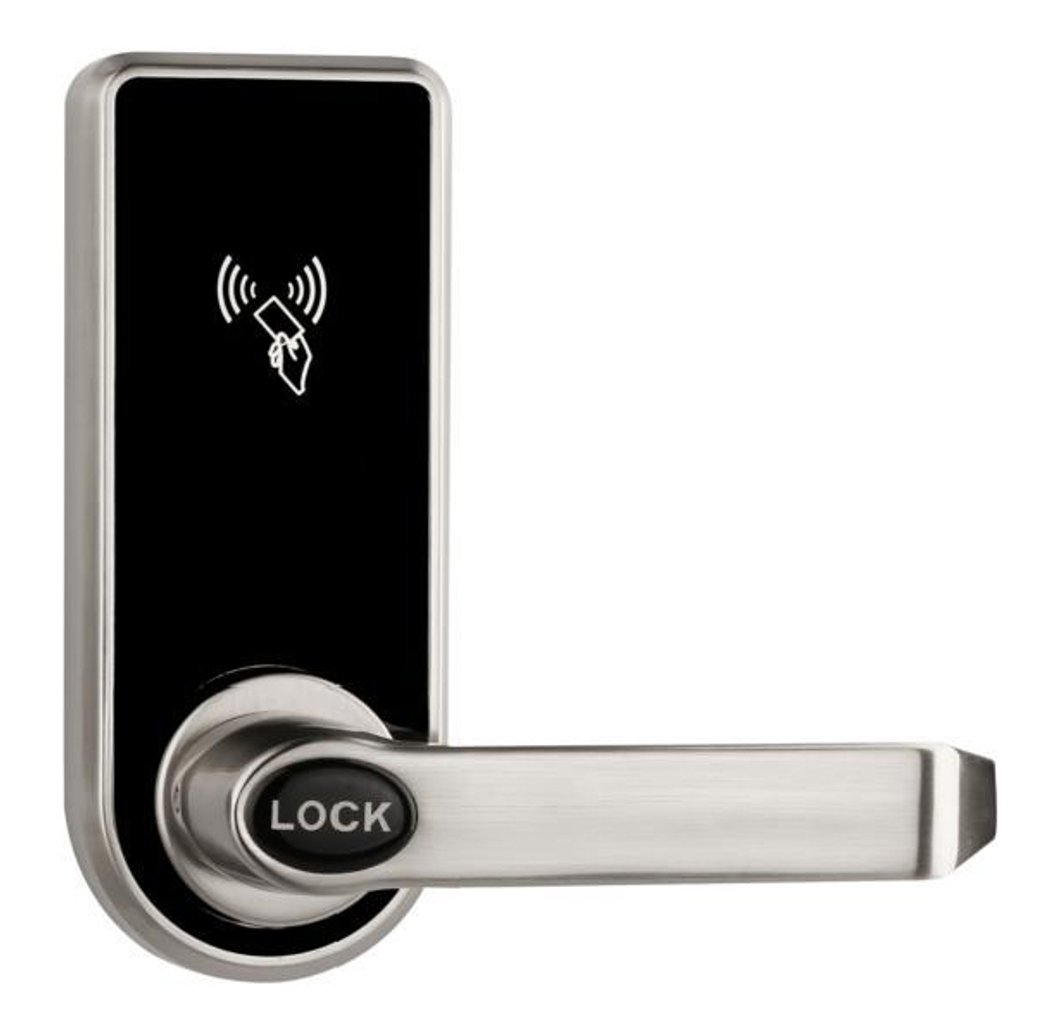
EK818 酒店智能锁 — 客房 RFID 卡式插芯锁,锌合金面板,单锁舌迷你锁体
EK818 酒店智能锁支持 RFID 房卡与机械钥匙开锁,配备锌合金银色面板与单锁舌迷你插芯锁体,可选酒店系统主板或单机主板,广泛适用于酒店客房门与公寓门。全系 270+ 款酒店锁型号可选,通过 CE、FCC、RoHS 认证,支持 OEM/ODM 定制,按项目报价,标准款起订量 500 把,样品 7-10 天交付。
当前页面已经把它作为下一步推荐内容直接指向。
相关文章
1
智能门锁选购指南:如何选择合适的电子门锁
完整的智能门锁选购指南,涵盖开锁方式、连接协议、电池、安全标准与改装适配,帮助家庭和商业用户选择合适的电子门锁。
它服务于同一产品语境:EK818 酒店智能锁 — 客房 RFID 卡式插芯锁,锌合金面板,单锁舌迷你锁体。