安全入户门锁芯选型指南:尺寸、钥匙控制、安防等级与门禁系统匹配方法
本门锁芯选型指南介绍如何根据锁芯规格、尺寸、钥匙控制、安全风险、门禁集成和维护要求,为每樘门选择合适的机械或电子锁芯,减少安装与使用问题。
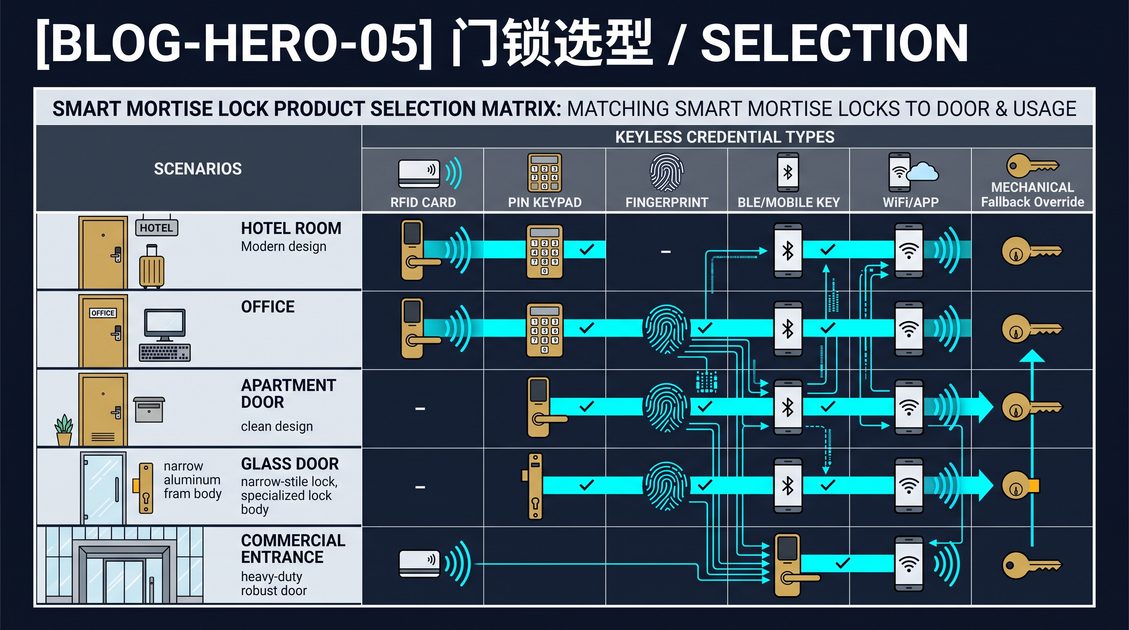
门锁芯选型指南是一种实用方法,用于选择操作兼容锁体的机械钥匙型或电子控制型部件。选型取决于锁芯轮廓、总长度、内外分段尺寸、凸轮或尾片接口、门厚、面板间隙、钥匙控制政策、安全风险、紧急功能和门禁控制要求。锁芯不能仅因外观相似就直接互换:错误的轮廓或凸轮可能导致锁舌或方舌无法动作,而错误的伸出长度也会影响安全性和正常操作。开始选型前,应先记录现有锁体和门体信息,准确测量门扇,并在下单前取得制造商图纸或兼容性确认。对于防火门、无障碍门、电子控制门或紧急出口门,应由合格的锁匠、安装人员或相关专业负责人对整套门组件进行审核。
门锁芯选型指南:识别门体与锁具条件
门锁芯选型指南应从门体和门洞开始,而不是从产品目录开始。记录门体材质、厚度、开启方向、锁体、方舌或斜舌类型、面板、门扣板、门框,以及闭门器或门禁设备信息。以固定螺钉中心为基准,分别测量至门体两侧的距离;对于非对称门体,要记录两侧不同的长度,并预留旋钮的操作间隙。确认锁芯轮廓、螺钉位置、凸轮形状、凸轮位置、钥匙槽或凭证接口,以及预期的紧急功能。将每一项测量结果与制造商的准确图纸进行对照;很小的尺寸误差也可能导致锁芯过度内凹、伸出过长,或无法带动锁体。可以拍摄五金件照片用于识别,但不能以照片代替测量。只有在负责安装的人员能够安全拆卸且不会损害现场安全时,才可拆下锁芯。
测量清单
| 项目 | 需要确认的内容 |
|---|---|
| 锁芯轮廓 | Euro、oval、rim、mortise 或其他当地规格 |
| 长度 | 从固定螺钉中心至外侧和内侧的尺寸 |
| 接口 | 凸轮、尾片、方轴或锁体连接方式 |
| 门体组件 | 门厚、面板、锁体、门扣板和门框 |
| 功能 | 单侧、双侧、旋钮、半锁芯或紧急功能 |
门锁芯选型指南:选择门禁方式
门锁芯选型指南应在比较型号前,先区分机械钥匙操作和电子授权方式。机械锁芯依赖钥匙槽、弹子或叶片结构、总钥匙方案以及钥匙复制控制。电子锁芯可能使用凭证、密码键盘、移动设备或联网控制器,但仍然需要机械接口适配,并且必须明确电池耗尽、网络中断、凭证注销和紧急进入时的应对方式。所选方案应满足门体使用者、时间计划、审计要求和故障恢复流程,同时不能削弱必要的疏散或隐私控制。应明确谁有权批准钥匙复制、遗失钥匙如何处理,以及电子凭证如何录入和注销。确认所选锁芯能够与目标锁体和门禁平台配套使用。
对于机械安装,应明确谁有权批准钥匙复制,以及组织如何处理遗失、未归还或已停用的钥匙。受限钥匙系统可能有助于加强复制管理,但仍应确认所选系统的实际政策、文件要求和服务可用性。不要把产品标签当作某一安全等级的证明;应要求提供适用于具体锁芯及其安装方式的证据。
对于电子安装,应记录凭证录入、注销、管理员角色、事件记录、电池更换、低电量警告、离线决策和手动覆盖方式。确认锁芯是否与目标锁体和门禁平台兼容。如果门体属于更大的酒店、办公或住宅系统,应在采购前检查读卡器技术、管理软件、凭证格式和集成责任。
门锁芯选型指南:评估安全性与合规要求
门锁芯选型指南应将锁芯视为整套门体系统的一部分进行评估。安全性能取决于锁芯、锁体、面板、固定方式、门扇、门框、铰链、门扣板和安装质量。应评估未经授权持有钥匙、钻孔、折断、拉拔、技术开锁、强行分离和凭证滥用等风险,但如果没有针对准确配置的证据,不要自行标注抗破坏等级。门体还必须保持紧急疏散功能,并满足适用的防火、无障碍、电气、隐私和建筑要求。对于受监管门体,应由合格审核人员确认当地法规和产品批准要求。检查低电量、断电、控制器故障或通信中断时的运行状态,并记录经授权的恢复方法,而不是临时采用未经批准的绕过方式。
确认门体是否为防火门、排烟控制门、无障碍门,或是否位于紧急疏散通道。验证所选锁芯不会阻挡规定的净空,也不会干扰锁具的释放行为。对于双锁芯配置,应确认内侧功能符合规定,并确保人员能够按要求疏散。对于电子产品,应明确低电量、断电、控制器故障或通信中断时的处理方式。安全设计应包含有文件记录且经过授权的恢复方法,而不是临时采用未经批准的绕过方式。
需要索取的证据
- 展示尺寸和接口细节的技术图纸。
- 针对锁体和面板的兼容性声明。
- 适用于准确型号的测试报告、认证或符合性声明。
- 安装说明和维护要求。
- 关于钥匙、凭证、软件、电池和紧急操作的文件。
门锁芯选型指南:规划安装与测试
门锁芯选型指南最终应落实为受控的安装和调试计划。安装人员必须确认固定螺钉正确咬合,凸轮或尾片与锁体准确对齐,锁芯位于预期深度,且钥匙或凭证转动时没有卡滞。测试应覆盖内侧释放、外侧授权、斜舌或方舌行程、门体闭合、门扣板对齐、手动覆盖,以及存在电子设备时记录在案的断电运行状态。交付前应记录所有异常,因为在工作台上运行正常的锁芯,当整套门体组件错位或承受负载时仍可能发生故障。
使用制造商规定的紧固件和操作步骤。不要通过强行转动钥匙、旋钮或电子机构来弥补门体拖滞或门扣板移位问题。如果操作阻力过大,应检查铰链、门框对齐情况、密封条、锁舌压力和锁体状态。最终记录应注明门体位置、锁芯规格、两侧尺寸、适用时的序列号或钥匙标识、安装人员、日期、测试结果以及负责维护的人员或部门。
门锁芯选型指南:管理全生命周期
门锁芯选型指南在安装完成后仍然有用,因为门禁风险会随着时间变化。应将每个锁芯纳入定期门禁审计,并确认机械钥匙和电子凭证仍归当前用户使用。人员职责发生变化时,应及时注销凭证;员工离岗时,应收回钥匙,并记录遗失物品及采取的处理措施。对于电子锁芯,应监测电池状态、低电量提醒、固件或软件依赖,以及经批准的替换部件是否可获得。对于机械系统,应维护总钥匙层级,并记录经过授权的重新配钥匙或更换决定。
当操作变得生涩时,应先检查对齐情况和锁体状态,再使用未明确规定的润滑剂。只能使用适用于准确五金件且经批准的维护产品和操作流程。只有确认新锁芯的接口、尺寸、紧急功能,以及其对总钥匙或门禁控制方案的影响后,才能更换或重新配钥匙。应将服务历史与门体记录一起保存,以便未来安装人员了解已安装的设备及其安装原因。
门锁芯选型指南:采购检查清单
当每项声明都与具体门体和使用环境相关联时,门锁芯选型指南能够支持可追溯的采购决策。在接受方案前,应记录门体清单、五金接口、尺寸、用户群体、门禁方式、时间计划、紧急流程、维护负责人、预期环境和恢复路径。应使用相同的技术字段比较不同方案,而不是仅凭高安全或智能锁芯等名称进行判断。对于任何未经验证的兼容性或性能声明,都应要求供应方说明。
对于多门项目,应先选择具有代表性的门体进行试装,包括最常见的门型,以及任何特殊或受监管的门体。记录安装时间、适配情况、用户操作、凭证行为、电池或服务需求以及异常情况。应由合格专业人员审核防火、无障碍、电气、隐私和疏散影响。这样的规范流程可以减少订货错误,并为维护、审计和未来升级建立有据可查的记录。
A door cylinder selection guide is a practical method for choosing the keyed or electronically controlled component that operates compatible lock hardware. Selection depends on cylinder profile, overall length, split dimensions, cam or tailpiece interface, door thickness, escutcheon clearance, key-control policy, security exposure, emergency function, and access-control requirements. A cylinder is not interchangeable merely because it looks similar: the wrong profile or cam can prevent the latch or deadbolt from moving, while incorrect projection can affect security and operation. Start with the existing lock case and door record, measure the opening accurately, and obtain the manufacturer’s drawing or compatibility confirmation before ordering. For fire-rated, accessible, electrically controlled, or emergency-exit doors, have the complete opening reviewed by a qualified locksmith, installer, or responsible professional.
Door Cylinder Selection Guide: Identify the Opening
A door cylinder selection guide begins with the opening, not the product catalogue. Record the door material, thickness, handing, lock case, bolt or latch type, escutcheon, strike, frame, and any closer or access device. Measure from the fixing-screw center to each face, noting different side lengths on asymmetric doors and clearance for a thumbturn. Confirm the profile, screw location, cam shape, cam position, keyway or credential interface, and the intended emergency function. Compare every measurement with the exact manufacturer drawing; a small dimensional error can leave the cylinder recessed, overprojecting, or unable to move the lock case. Photograph the hardware for identification, but do not use photographs as a substitute for measurements. Remove the cylinder only when a responsible installer can do so safely and without compromising security.
Measurement checklist
| Item | What to confirm |
|---|---|
| Cylinder profile | Euro, oval, rim, mortise, or another local format |
| Length | Exterior and interior dimensions from the fixing-screw center |
| Interface | Cam, tailpiece, spindle, or lock-case connection |
| Door assembly | Thickness, escutcheon, lock case, strike, and frame |
| Function | Single, double, thumbturn, half-cylinder, or emergency function |
Door Cylinder Selection Guide: Choose the Access Method
A door cylinder selection guide should distinguish mechanical key operation from electronic authorization before comparing models. A mechanical cylinder depends on its keyway, pin or disc design, master-key plan, and duplication controls. An electronic cylinder may use a credential, keypad, mobile device, or connected controller, but it still requires a mechanically compatible interface and a defined response to batteries, network loss, credential revocation, and emergency entry. The choice must support the users, schedules, audit expectations, and recovery process of the opening without weakening required egress or privacy controls. Define who can authorize duplicate keys, how lost keys are handled, and how electronic credentials are enrolled and revoked. Confirm the selected cylinder works with the intended lock case and access platform.
For mechanical installations, define who can authorize duplicate keys and how the organization handles lost, unreturned, or retired keys. A restricted key system may support tighter duplication governance, but confirm the actual policy, documentation, and service availability for the selected system. Avoid treating a product label as proof of a particular security grade; request evidence that applies to the exact cylinder and installation.
For electronic installations, document credential enrollment, revocation, administrator roles, event records, battery replacement, low-power warnings, offline decisions, and manual override. Confirm whether the cylinder works with the intended lock case and access platform. If the door is part of a larger hotel, office, or residential system, check reader technology, management software, credential format, and integration responsibilities before procurement.
Door Cylinder Selection Guide: Evaluate Security and Compliance
A door cylinder selection guide evaluates the cylinder as one part of the entire opening. Security performance depends on the cylinder, lock case, escutcheon, fixing method, door, frame, hinges, strike, and installation quality. Review exposure to unauthorized key possession, drilling, snapping, pulling, picking, forced separation, and credential misuse, but do not assign a resistance rating without evidence for the exact configuration. The opening must also preserve emergency egress and satisfy applicable fire, accessibility, electrical, privacy, and building requirements. For regulated doors, confirm local rules and product approvals with a qualified reviewer. Check what happens during low battery, power failure, controller failure, or communication loss, and document an authorized recovery method rather than an improvised bypass.
Check whether the door is fire-rated, smoke-controlled, accessible, or used on an emergency route. Verify that the selected cylinder does not obstruct required clearances or interfere with the lock’s release behavior. On double-cylinder arrangements, confirm that the inside function is permitted and that occupants can exit as required. For electronic products, identify what happens during low battery, power failure, controller failure, or communication loss. A secure design includes a documented, authorized recovery method rather than an improvised bypass.
Evidence to request
- Technical drawing showing dimensions and interface details.
- Compatibility statement for the lock case and escutcheon.
- Applicable test reports, certifications, or declarations for the exact model.
- Installation instructions and maintenance requirements.
- Documentation for keys, credentials, software, batteries, and emergency operation.
Door Cylinder Selection Guide: Plan Installation and Testing
A door cylinder selection guide should end in a controlled installation and commissioning plan. The installer must confirm that the fixing screw engages correctly, the cam or tailpiece aligns with the lock case, the cylinder sits at the intended depth, and the key or credential turns without binding. The test should cover the inside release, outside authorization, latch or bolt travel, door closing, strike alignment, manual override, and the documented power-loss behavior where electronics are present. Record exceptions before handover, because a cylinder that works on a bench can fail when the complete door assembly is misaligned or under load.
Use the manufacturer’s specified fasteners and procedures. Do not force a key, turnpiece, or electronic mechanism to compensate for a dragging door or displaced strike. Investigate hinges, frame alignment, weather seals, latch pressure, and lock-case condition when operation is stiff. The final record should identify the opening, cylinder format, side dimensions, serial or key identifiers where applicable, installer, date, test result, and responsible service owner.
Door Cylinder Selection Guide: Manage the Lifecycle
A door cylinder selection guide remains useful after installation because access risk changes over time. Include each cylinder in a recurring access audit and confirm that mechanical keys and electronic credentials belong to current users. Revoke credentials promptly when roles change, retrieve keys during offboarding, and document lost items with the action taken. For electronic cylinders, monitor battery condition, low-power alerts, firmware or software dependencies, and the availability of approved replacement parts. For mechanical systems, maintain the key hierarchy and record authorized rekeying or replacement decisions.
When operation becomes rough, inspect alignment and the lock case before applying an unspecified lubricant. Use only maintenance products and procedures approved for the exact hardware. Replace or rekey a cylinder only after confirming the new interface, dimensions, emergency function, and impact on master-key or access-control plans. Keep the service history with the door record so future installers can understand what was fitted and why.
Door Cylinder Selection Guide: Procurement Checklist
A door cylinder selection guide supports accountable procurement when every claim is tied to a specific opening and operating context. Before accepting a proposal, document the door schedule, hardware interface, dimensions, user groups, access method, schedules, emergency procedure, maintenance owner, expected environment, and recovery path. Compare proposals using the same technical fields rather than relying on names such as high security or smart cylinder. Request clarification for every unverified compatibility or performance statement.
For a multi-door project, pilot representative openings, including the most common door type and any unusual or regulated opening. Record installation time, fit, user operation, credential behavior, battery or service needs, and exceptions. Have qualified professionals review fire, accessibility, electrical, privacy, and egress implications. This disciplined process reduces ordering errors and creates a defensible record for maintenance, audits, and future upgrades.
不确定哪款传感器适合您的项目?
与我们的毫米波应用工程师免费咨询。