数字密码锁指南:PIN码门禁访问、安全策略、临时授权与日常管理实用全解
这是一份实用的数字密码锁指南,涵盖PIN码策略、键盘与门体适配、临时访问、安全防护、电池故障恢复、隐私保护及密码锁选型方法,帮助您建立可靠的门禁管理流程。
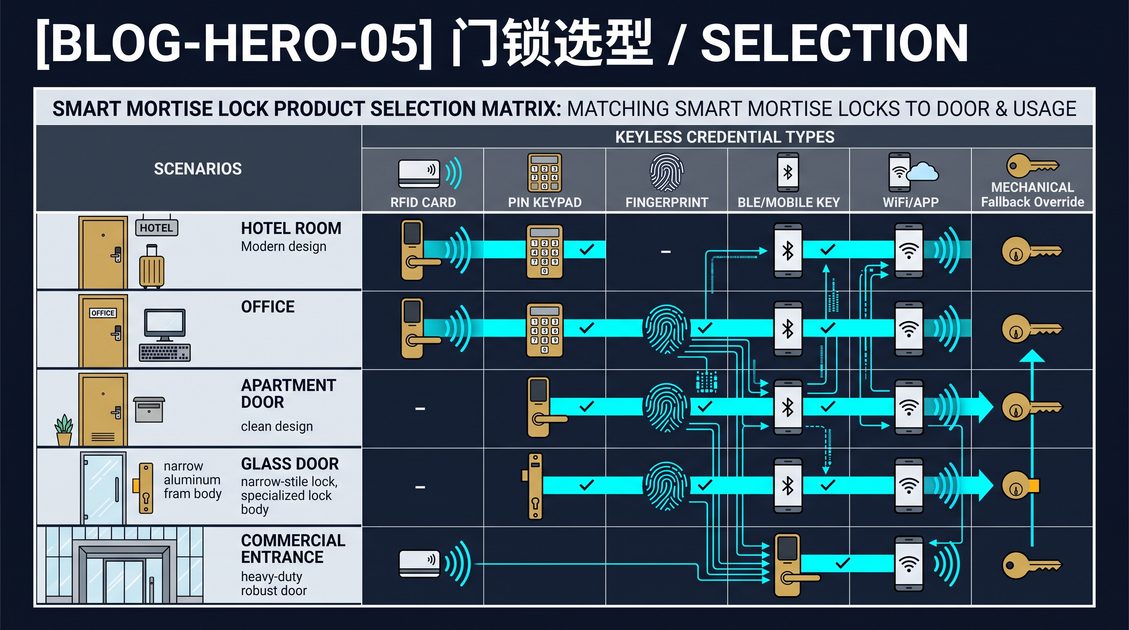
密码锁是一种电子门锁,使用数字PIN码验证用户身份,而不是实体钥匙、卡片或生物识别信息。它可以是简单的独立键盘,也可以接入联网门禁系统,用于分配个人密码、安排临时访问并记录事件。本密码锁指南将说明如何选择键盘、制定负责的PIN码策略、管理临时凭证、规划电池故障恢复,并防止门锁被滥用。
密码锁指南:键盘与门体适配
先确认门体条件,而不是先看键盘。确定门体开口需要圆柱形插芯锁、 mortise锁体还是电控锁体,并测量门厚、 backset、开门方向、锁扣、门框及可用安装空间。键盘应便于触及,适合所在环境,并与锁体兼容。安装在商业门或防火门上的密码锁,在改装前可能需要专业人员评估。
在配置密码前,先测试门体的机械状态。锁舌和方舌应移动顺畅,关门时不应需要过大压力,键盘也应为目标用户提供清晰反馈。
密码锁指南:PIN码策略与临时访问
在需要追责时,应为每位用户设置独立PIN码,避免所有用户共用一个密码。设定合理的密码长度,限制失败尝试次数,并明确密码的创建、更改、过期和撤销流程。临时密码应设置自动结束时间,尤其适用于访客、承包商、清洁人员和服务提供商。
防止PIN码在旁人窥视或公开展示中泄露。将管理员权限与日常用户访问权限分开,并记录每个密码由谁创建或撤销。联网系统可以集中管理这些操作,而独立门锁则需要建立本地操作流程。
密码锁指南:供电、安全与故障恢复
密码锁应能够报告低电量,并提供机械钥匙、备用供电端子或其他紧急进入方式。确认网络中断期间哪些功能仍可使用。安全性还取决于键盘抵御重复猜测的能力、存储密码的保护机制,以及任何联网管理通道所采用的加密方式。
本密码锁指南仅供一般信息参考。请与合格专业人员确认消防、无障碍、电气、隐私、建筑及紧急疏散要求。优秀的密码锁不仅要实现正确的物理适配,还应配合受控的PIN码管理和经过测试的故障恢复流程。
密码锁部署后,操作人员仍应定期复核,而不能认为配置完成就无需管理。检查用户是否共用密码、已过期凭证是否仍处于有效状态,以及失败尝试是否触发预期警报。定期轮换管理员凭证,移除安装人员的访问权限,并由受控人员保管紧急恢复方式。对于商业门,应记录门体开口、密码负责人、过期策略和维护联系人。这份运行记录能让密码锁从单纯的键盘产品,转变为可管理的门禁控制组件。
选择密码锁时,应充分考虑目标用户。家庭或小型团队可能只需要少量密码,而大型建筑则需要个人独立密码、过期机制和远程管理。请考虑键盘的可视性与照明条件、轮椅使用者或手持物品人员的触及距离,以及不熟悉场所的访客是否有备用进入方式。规划门锁可存储的密码数量,并确认容量是否留有余量。记录密码策略和负责的管理员,可以让门锁操作更具可预测性,也更便于审计。
密码锁的可信度取决于密码管理纪律。统一约定最短密码长度,提醒用户避免选择容易猜测的数字组合,并在人员离开或临时访问结束后立即删除对应密码。如果门锁能够报告失败尝试,应定期检查,因为反复失败可能意味着有人正在猜测密码、授权用户忘记了密码,或设备传感器存在问题。记录密码的创建与撤销过程,有助于物业管理大量用户,并为访问决策提供依据。
交付使用前,应使用新密码、已过期密码、已撤销密码和故意输入的错误密码测试密码锁。确认设备反馈和锁定行为符合预期,然后向运营团队提供书面的故障恢复流程。这项小型测试可以证明密码策略确实存在于实际设备中,而不仅仅写在采购文件里。
本文部分内容由AI生成,并针对专业准确性与可读性进行了优化。 A code lock is an electronic door lock that authenticates a user with a numeric PIN instead of a physical key, card, or biometric. It can be a simple standalone keypad or part of a networked access-control system that issues individual codes, schedules temporary access, and records events. This code lock guide explains how to select a keypad, create a responsible PIN policy, manage temporary credentials, plan battery recovery, and protect the door from misuse.
Code Lock Guide: Keypad and Door Fit
Start with the door, not the keypad. Confirm whether the opening needs a cylindrical deadbolt, a mortise lock, or an electrified lock body, and measure thickness, backset, handing, strike, frame, and available mounting space. The keypad should be reachable, weather-appropriate, and compatible with the lock body. A code lock on a commercial or fire-rated door may require professional review before modification.
Test the door mechanically before configuring codes. The latch and bolt should move smoothly, the door should close without excessive pressure, and the keypad should provide clear feedback for the intended users.
Code Lock Guide: PIN Policy and Temporary Access
Use individual PINs when accountability matters and avoid one shared code for every user. Set a reasonable length, limit failed attempts, and define how codes are created, changed, expired, and revoked. Temporary codes should have an automatic end time, particularly for guests, contractors, cleaners, and service providers.
Protect PIN privacy from shoulder surfing and public display. Keep administrator permissions separate from daily user access, and record who issued or revoked a code. A networked system can manage these operations centrally, while a standalone lock requires a local procedure.
Code Lock Guide: Power, Security, and Recovery
A code lock should report low battery and provide a mechanical key, backup power terminal, or another emergency path. Confirm what remains functional during a network outage. Security also depends on the keypad’s resistance to repeated guessing, the protection of stored codes, and the encryption of any connected management channel.
This code lock guide is general information. Confirm fire, accessibility, electrical, privacy, building, and emergency-egress requirements with qualified professionals. A good code lock combines a correct physical fit with controlled PIN administration and a tested recovery procedure.
An operator should review a code lock after deployment rather than treating configuration as finished. Check whether users share codes, whether expired credentials remain active, and whether failed attempts generate the expected alert. Rotate administrator credentials, remove installer access, and keep the emergency recovery method under controlled custody. For a commercial door, record the opening, the code owner, the expiry policy, and the maintenance contact. This operating record turns a code lock from a keypad product into a manageable access-control component.
A code lock should be chosen with the intended users in mind. A family or small team may be well served by a small number of codes, while a large building needs individual codes, expiry, and remote administration. Consider the visibility and lighting of the keypad, the reach for a person in a wheelchair or carrying objects, and the availability of an alternative method for a guest who is unfamiliar with the property. Plan how many codes the lock can store and whether that is enough with headroom. Recording the code policy and the responsible administrator makes the lock predictable to operate and easy to audit.
A code lock is only as trustworthy as its code discipline. Agree on a minimum code length, discourage users from choosing predictable sequences, and remove a code the moment a person leaves or a temporary access ends. If the lock can report failed attempts, review them regularly, because a pattern of repeated failures may indicate guessing, an authorized user who has forgotten their code, or a sensor problem. Written records of code creation and revocation help a property manage many users and defend an access decision.
Before handover, test the code lock with a new code, an expired code, a revoked code, and a deliberately incorrect code. Confirm the expected feedback and lockout behavior, then give the operating team a written recovery procedure. This small test proves that the code policy exists in the actual device rather than only in a purchase document.
Part of this article content is generated by AI and optimized for professional accuracy and readability.
不确定哪款传感器适合您的项目?
与我们的毫米波应用工程师免费咨询。