蓝牙门锁与蓝牙智能锁:工作原理、优缺点全面解析,以及相比 WiFi、指纹锁如何选择
蓝牙门锁与蓝牙智能锁如何工作?基于 BLE 低功耗蓝牙,手机靠近即可开锁,无需钥匙、密码或门卡,电池寿命通常优于 WiFi 锁;相比 WiFi 锁更省电、成本更低,但不支持远程控制。本文全面分析蓝牙锁的优缺点、与 WiFi、指纹锁的选择对比,以及适合安装的家庭、出租屋和商用门型,助您理性选购。
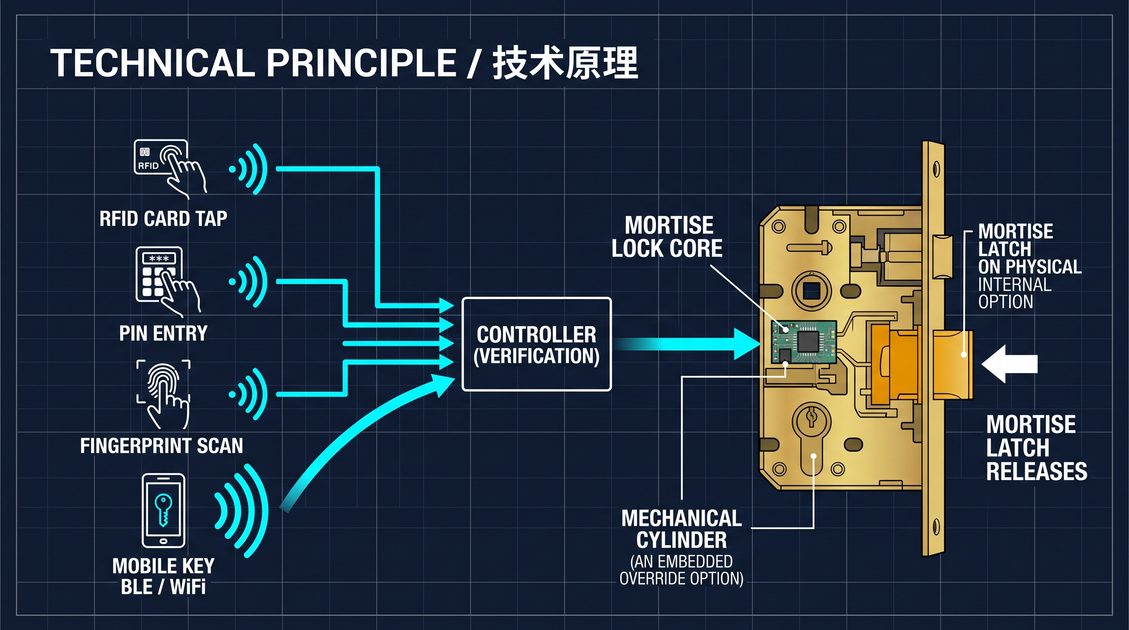
蓝牙门锁是一种使用低功耗蓝牙解锁的智能锁,通常在用户手机靠近门时即可开锁,无需输入密码、刷卡或使用钥匙。它是移动锁系列的基础,也是移动钥匙系统的构建模块,通常还是市面上最省电的联网方案之一。本文将说明蓝牙门锁及更广泛的蓝牙智能锁家族的工作原理,对比其与 WiFi 锁和指纹锁的优缺点,并帮助你判断蓝牙门锁最适合应用在哪些门上。
蓝牙门锁的工作原理
蓝牙门锁通过低功耗蓝牙(一种低功耗短距离无线技术)与手机通信。当安装了 App 并拥有已授权移动钥匙的手机进入范围内时,手机与门锁完成身份验证,门锁随即解锁——既可在你靠近时自动解锁,也可在 App 中轻点一下解锁。由于低功耗蓝牙的设计功耗极低,蓝牙门锁的电池续航通常优于 WiFi 锁,这是一个重要的实际优势。 A Bluetooth door lock is a smart lock that unlocks using Bluetooth Low Energy, typically when the user's phone is near the door, without a code, card, or key. It is the baseline of the mobile-lock family and the building block of mobile key systems, and it is often the most battery-friendly connected option available. This guide explains how a Bluetooth door lock and the wider Bluetooth smart lock family work, weighs the pros and cons against WiFi and fingerprint locks, and helps you decide which doors a Bluetooth door lock fits best.
How a Bluetooth Door Lock Works
A Bluetooth door lock communicates with a phone over Bluetooth Low Energy, a low-power short-range radio. When the phone with the app and the authorized mobile key is within range, the phone and the lock authenticate, and the lock unlocks, either automatically as you approach or with a tap in the app. Because Bluetooth Low Energy is designed to use very little power, a Bluetooth door lock typically enjoys longer battery life than a WiFi lock, which is a major practical advantage.
The Bluetooth smart lock family extends beyond the single door: a phone can hold credentials for many Bluetooth locks, so one hub in the app manages several doors, and mobile credentials can be issued and shared. Bluetooth is also the transport behind mobile access control systems. The defining limitation is range: Bluetooth works only when the phone is near the door, so it offers no remote control from another location, which is the main reason a buyer chooses WiFi instead.
Pros, Cons, and Comparison
The pros of a Bluetooth door lock are low cost, long battery life, and hands-free or app convenience at the door. The cons are the lack of remote control, the dependence on a charged phone, and the need for a fallback if the phone is dead or lost. Compared to a WiFi lock, a Bluetooth lock is cheaper and saves battery but cannot be controlled remotely. Compared to a keypad, a Bluetooth lock is more convenient for a phone user but leaves you stranded without the phone and a fallback. Compared to a fingerprint lock, Bluetooth is cheaper but less personal and can still be locked out without the phone.
The right fit for a Bluetooth door lock is a door where the user is usually at the door with a phone and rarely needs remote control. For a single-family home with a tech-savvy household, a Bluetooth lock with a keypad or mechanical fallback is a strong, economical pick. For a rental, a Bluetooth lock that issues and revokes mobile keys remotely is convenient. For a setting where remote control from anywhere is required, a WiFi or gateway-based lock is the better choice, and for a setting where many people must access without phones, a keypad, card, or fingerprint may serve better.
Choosing a Bluetooth Door Lock
When comparing a Bluetooth door lock, the key criteria are the fallback, battery reporting, mobile credential management, and security. A Bluetooth lock must pair Bluetooth with a keypad, card, or mechanical key, so a dead phone never causes a lockout. It should report battery level to the app, manage mobile credentials centrally, and encrypt the Bluetooth link so the mobile key cannot be intercepted or cloned. A lock that is Bluetooth-only with no fallback and no battery warning is risky even if the Bluetooth itself is excellent.
A Bluetooth door lock is a reliable, economical choice when you value battery life and door-side convenience and do not need remote control. Apply the same framework as any smart lock, require a fallback, battery reporting, credential management, and encrypted transport, and a Bluetooth smart lock will serve its door simply and dependably for years.
A Bluetooth door lock performs best when its role is clear and its limits are documented. Decide in advance who can issue mobile keys, what happens to a key when a device is lost, and how a guest receives and loses access. Pair the Bluetooth channel with a visible low-battery warning and a tested recovery path, and confirm that the lock accepts a fallback credential so a dead phone is an inconvenience rather than a lockout.
Part of this article content is generated by AI and optimized for professional accuracy and readability.
不确定哪款传感器适合您的项目?
与我们的毫米波应用工程师免费咨询。