生物识别门禁系统:工作原理、准确性、安全防护与商业及住宅门全方位选型指南
了解生物识别门禁系统如何工作、指纹与人脸识别的关键差异、准确性和安全防护要求,并掌握商业、办公及多户住宅门禁系统的专业选型方法。
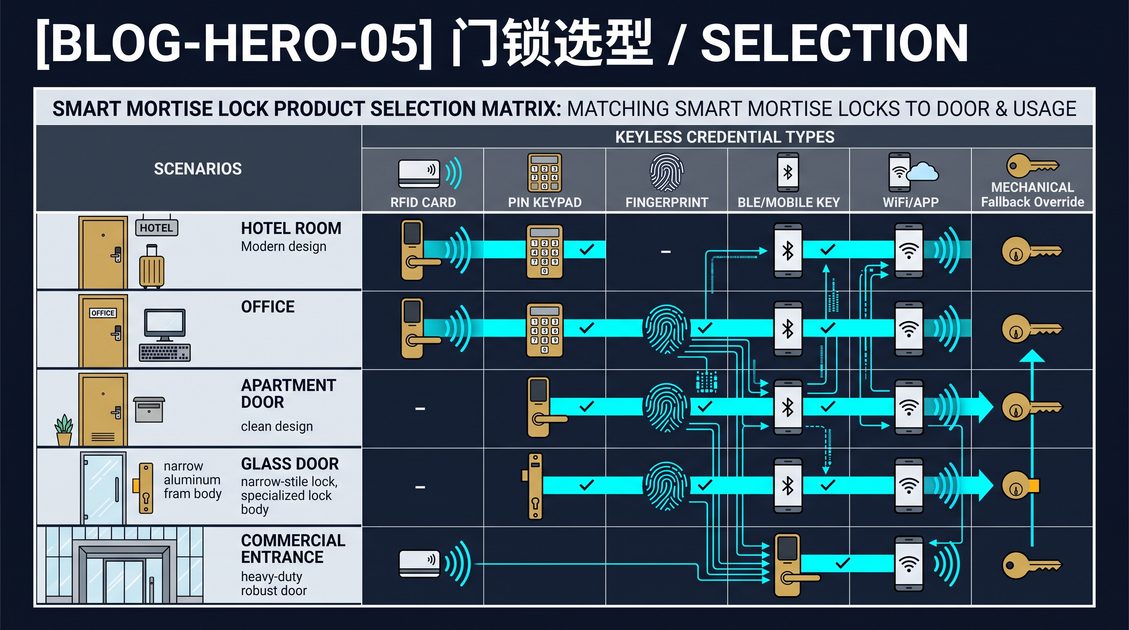
生物识别门禁系统使用人的生理特征作为凭证,最常见的是指纹或人脸,通过识别“你是谁”来控制门的进入权限,以此替代钥匙、卡片和密码。三类身份验证因素中,生物识别的身份关联性最强,适用于门禁必须确认具体个人、不能依赖可能遗失或被共享的凭证的场景。本文将介绍生物识别门禁系统的工作原理、重要的生物识别类型、准确性与安全性的衡量方式,以及如何为商业、办公或多户住宅门选择合适的系统。
生物识别门禁系统如何工作
生物识别门禁系统由三个部分组成:采集生物特征样本的传感器、从样本中提取特征模板的处理器,以及将模板与已登记授权模板进行比对的匹配器。当用户提供指纹或人脸信息时,系统会提取相关特征,与已登记的模板集合进行比较,匹配成功后即可解锁门。相同的系统可以集中管理多扇门和多个用户,完成生物识别凭证的登记、更新与撤销,并维护进入审计日志,记录谁在什么时间进入了哪扇门。
生物识别类型决定了所使用的传感器。指纹读取器采集指纹的脊线与谷线纹理,可采用光学传感器或半导体传感器,是最常见且经济性最高的方案。人脸读取器采集人脸进行识别,成本和功耗更高,但无需用户接触设备。每种生物识别技术都需要通过准确性进行评估。优秀的指纹系统能够将误接受率保持在很低水平,同时将误拒绝率控制在可接受范围内,避免合法用户无法进入。
准确性、安全性与管理
生物识别门禁系统的安全性包含两个方面:匹配准确性,以及生物特征模板的保护。准确性通常通过误接受率和误拒绝率体现。系统如果错误接受过多未授权人员,安全性就较弱;如果拒绝过多已授权人员,则会造成使用体验问题。模板保护同样重要,因为生物特征不像密码一样可以随时更换。因此,优秀的系统应在安全元件中加密存储模板,并在本地完成识别处理,绝不将原始生物特征样本传输至不受控的服务。
管理功能能够将生物识别门变成完整的门禁系统。平台可以登记用户,分配每个人可进入的门和时间计划,在人员离职或离开管理范围时撤销权限,并维护集中式审计日志。由于生物识别凭证与个人直接关联,系统能够清晰说明谁拥有访问权限,也能简化权限撤销流程。对于办公室、酒店或多户住宅建筑而言,具备集中管理功能的生物识别门禁系统能够提供钥匙或密码系统无法实现的审计能力与控制能力。
如何选择生物识别门禁系统
选择生物识别门禁系统时,应综合评估完整框架:生物识别类型、准确性、模板安全、产品形态、备用方式、管理能力和扩展性。应根据用户群体选择合适的生物识别方式;根据门的实际条件选择产品形态,可以采用独立式生物识别锁,也可以采用生物识别读取器搭配电子插芯锁;必须配置备用方式,例如卡片、密码键盘或机械钥匙,因为手指干燥或外观变化不应导致用户被锁在门外;同时确认管理平台能够支持现有及未来的门数量,并核实相关认证以及本地加密模板存储能力。
当您必须验证特定个人身份并防止凭证共享时,生物识别门禁系统就是合适的选择。这一点对于办公室、酒店、多户住宅建筑,以及任何保护贵重物品或人员安全的门都十分重要。其代价在于更高的成本、传感器敏感性,以及处理生物特征数据所承担的隐私责任。因此,应要求系统提供备用方式、保护生物特征模板,并配备可靠的管理平台。按照这些标准进行评估,生物识别门禁系统将提供最强大、最具责任追溯性的门禁能力。
可靠的系统落地还取决于登记质量和用户预期管理。应在受控光线或稳定环境下为每个人完成登记,记录获批准的手指或人脸角度,并告知用户在传感器拒绝识别时如何恢复访问。在办公室或多户住宅环境中,应公布简单明确的访问争议处理流程,并将误拒绝率控制在较低水平,确保合法用户不会被锁在门外,因为一个不断给用户带来困扰的生物识别系统最终可能被绕过。
本文部分内容由 AI 生成,并针对专业准确性与可读性进行了优化。 A biometric access control system uses a person's biological trait, most commonly a fingerprint or a face, as the credential to control entry through a door, replacing keys, cards, and codes with something-you-are. It is the strongest of the three authentication factors and is widely used where a door must identify a specific individual and cannot rely on something that can be lost or shared. This guide explains how a biometric access control system works, the biometric types that matter, how accuracy and security are measured, and how to choose a system for a commercial, office, or multifamily door.
How a Biometric Access Control System Works
A biometric access control system has three parts: a sensor that captures the biometric sample, a processor that extracts a template from the sample, and a matcher that compares the template against enrolled authorized templates. When a user presents a fingerprint or face, the system extracts the features, compares them against the enrolled set, and unlocks the door on a match. The same system can manage many doors and many users centrally, enrolling, updating, and revoking biometric credentials and maintaining an audit log of who entered which door at which time.
The biometric type determines the sensor. A fingerprint reader captures a ridge-and-valley pattern, whether by an optical or a semiconductor sensor, and is the most common and most economical. A face reader captures a face for recognition and is more expensive and power-hungry but hands-free. Each biometric is measured by accuracy, and a good fingerprint system drives the false-acceptance rate very low while keeping false rejection acceptably low so legitimate users are not locked out.
Accuracy, Security, and Management
The security of a biometric access control system has two dimensions: the accuracy of the match and the protection of the template. Accuracy is expressed by false-acceptance and false-rejection rates; a system that accepts too many unauthorized people is weak, while one that rejects too many authorized people is frustrating. Template protection matters because a biometric cannot be changed like a password, so a good system stores templates encrypted in a secure element and processes recognition locally, never transmitting raw biometric samples to an uncontrolled service.
Management turns a biometric door into an access control system. The platform enrolls users, assigns which doors and schedules each person can access, revokes access when someone leaves, and maintains a centralized audit log. Because a biometric credential is tied to a person, it clarifies who has access and simplifies revocation. For an office, a hotel, or a multifamily building, a biometric access control system with central management provides the audit and control that a key or password system cannot.
Choosing a Biometric Access Control System
When choosing a biometric access control system, apply the full framework: biometric type, accuracy, template security, form factor, fallback, management, and scalability. Match the biometric to the users; choose the form factor that fits the door, whether a standalone biometric lock or a biometric reader plus an electronic mortise lock; require a fallback, such as a card, keypad, or mechanical key, because a dry finger or changed appearance must not cause a lockout; confirm the management platform scales to your door count; and verify certification and local, encrypted template storage.
A biometric access control system is the right choice when you must authenticate a specific individual and prevent sharing of credentials, which matters for offices, hotels, multifamily buildings, and any door protecting valuables or people. The trade-off is cost, sensor sensitivity, and the privacy responsibility of handling biometric data, so require a fallback, secure templates, and a reliable management platform. Apply these criteria, and a biometric access control system will deliver the strongest, most accountable access control available.
A reliable implementation also depends on enrollment quality and user expectations. Enroll each person in controlled light or conditions, record the approved fingers or face angles, and tell users how to recover when the sensor rejects them. In an office or multifamily setting, publish a simple procedure for access disputes and keep the false-rejection rate low enough that legitimate users are not locked out, because a biometric system that annoys its users gets bypassed.
Part of this article content is generated by AI and optimized for professional accuracy and readability.
不确定哪款传感器适合您的项目?
与我们的毫米波应用工程师免费咨询。