自动门锁与自锁门锁:自动上锁的工作原理
自动门锁与自锁门锁的工作原理、可靠性对比要点,以及自动上锁门是否适合家庭或商业场所使用的专业解析。
自动门锁是一种智能门锁,在门关闭后自动上锁,因此无论因疏忽还是用户忘记锁门,门都不会处于未上锁状态。这是许多电子锁特有的功能,称为自动上锁或自锁,它是门锁最有价值的安全特性之一,因为它消除了人为疏忽导致门未上锁的风险。本文将解析自动门锁的工作原理、可靠性对比要点,以及自动上锁门是否适合家庭或商业场所使用。
自动门锁的工作原理
自动门锁在门关闭时自动弹出锁舌,无需用户按键操作。门锁通过传感器或机械触发器检测到门已关闭,随即驱动锁舌进入锁扣板以锁住门体。大多数门锁的该行为可配置:可设置关门后的延迟时间、选择是否始终启用自动上锁,某些型号还可设定是每次关门都上锁还是仅在布防状态下上锁。
自动门锁的核心价值在于可靠性与安全性。它确保门始终处于锁定状态,这对前门、后门或商业门而言至关重要,未上锁的门是真正的安全隐患。对家庭而言,它消除了忘记锁门的顾虑;对租赁物业或商业场所而言,它确保一天结束时门已锁定,无需依赖最后离开的人牢记锁门。自动上锁门是对付最常见锁具故障——人为疏忽——的有效防线。
自动上锁可靠性对比要点
对比自动门锁时,关键评估标准包括检测可靠性、行为可配置性、应急开锁通道和电池续航。检测可靠性是指门锁能否准确感知门已关闭;若门锁在半关状态下误触发,或门轻声关闭时未能触发,都会造成误锁或安全漏洞。可配置行为同样重要,并非每个人都希望每次关门都自动上锁,尤其是有儿童或人员进出频繁的家庭。应急开锁和电池管理与任何智能锁相同,但自动上锁反复触发会消耗电量,因此电量报告功能十分重要。
自动门锁绝不能导致用户被锁在门外。如果门关闭后自动上锁,而用户在外面没有凭证,用户将被困住,因此设计良好的自动门锁必须始终保留备用开锁方式,如密码键盘、刷卡、指纹、手机钥匙或机械钥匙。本指南建议选择具有可靠关门检测、可配置自动上锁、清晰的应急开锁通道以及多门部署时集中电量报告功能的自动门锁,这样自动上锁的便利性就不会演变为可靠性问题。
自动上锁的适用场景
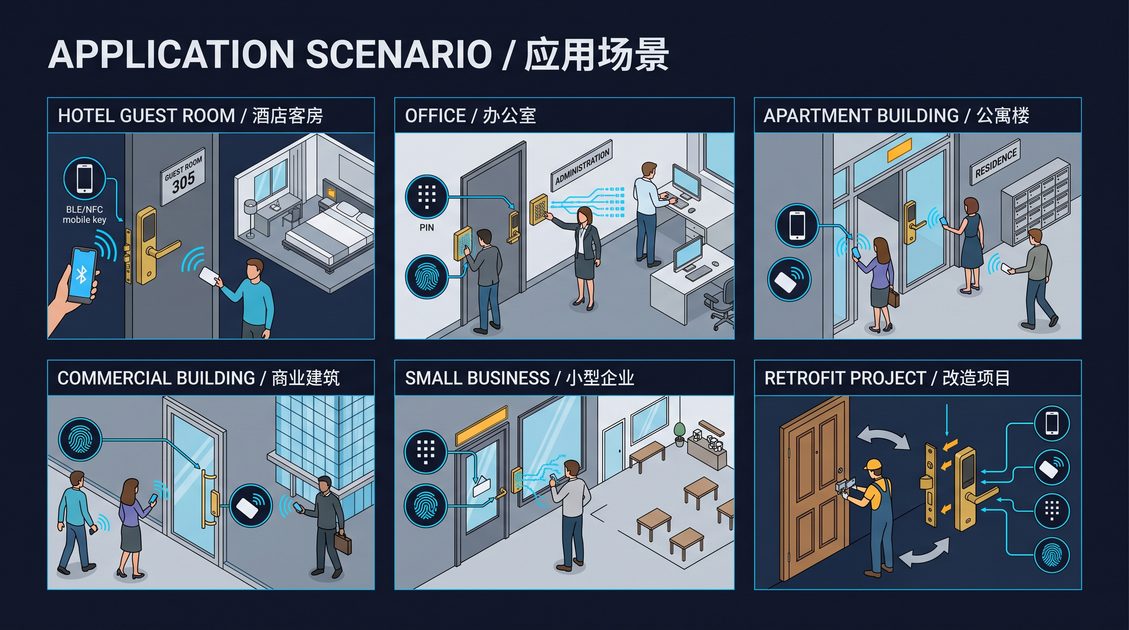
当门未上锁构成真实风险时——大多数前门、后门和商业入口均属此类——自动门锁是理想选择。对家庭而言,自动上锁是安心的保障,确保门始终处于锁定状态。对租赁或短租物业而言,自动上锁可确保客人不会让门敞开,且退房后房间处于安全状态。对商业场所而言,自动上锁可在一天结束时确保入口安全,无需依赖最后离开的人锁门。
其代价是依赖检测可靠性以及反复自动上锁带来的少量电力消耗。做工精良、具备可配置行为和可靠备用方案的自动门锁是真正的安全升级;而做工低劣的产品可能将用户锁在门外或导致门未锁。应用与任何无钥匙门禁决策相同的评估框架——要求可靠的关门检测和备用开锁方案——自动门锁将成为您门上最实用的功能之一。
本文部分内容由 AI 生成,并经过专业准确性及可读性优化。 An auto door lock is a smart door lock that locks itself after the door closes, so the door is never left unlocked, whether by accident or by a user who forgot to lock it. It is a specific behavior of many electronic locks, called auto-lock or self-locking, and it is one of the most valuable safety and security features a lock can offer because it removes the human error of leaving a door unlocked. This guide explains how an auto door lock works, what to compare for reliability, and whether an automatic locking door is the right choice for a home or a business.
How an Auto Door Lock Works
An auto door lock automatically engages the bolt when the door closes, without the user pressing a button. The lock detects that the door has closed, typically through a sensor or a mechanical trigger, and then drives the bolt into the strike to secure the door. The behavior is configurable on most locks: you can set a delay after closing, choose whether the lock always auto-locks, and, on some models, decide whether it locks on every close or only when armed.
The value of an auto door lock is reliability and safety. It guarantees the door is locked, which matters for a front door, a back door, or a commercial door where an unlocked door is a genuine security hole. For a home, it removes the worry of leaving the door open. For a rental or a business, it ensures the door is secured at the end of the day without depending on the last person to remember. An automatic locking door is a defense against the most common lock failure of all, the human one.
Comparing Auto Locking Reliability
When comparing an auto door lock, the key criteria are detection reliability, configurable behavior, emergency access, and battery. Detection reliability is whether the lock reliably knows the door has closed; a lock that triggers on a partially closed door or fails to trigger when the door closes quietly creates a false lockout or a security gap. Configurable behavior matters because not everyone wants an auto-lock on every close, especially in a home with children or frequent traffic. Emergency access and battery work as with any smart lock, but an auto lock that engages repeatedly draws power, so battery reporting is important.
An auto lock must never create a lockout. If the door closes and auto-locks while a user is outside without a credential, the user is stranded, so a well-designed auto door lock always preserves a fallback, such as a keypad, card, fingerprint, mobile key, or mechanical key. This guide recommends choosing an auto door lock with reliable closure detection, configurable auto-lock, a clear emergency-access path, and central battery reporting for multi-door deployments, so the convenience of automatic locking never becomes a reliability problem.
When Auto Locking Is Right for You
An auto door lock is a strong choice when an unlocked door is a real risk, which is most front doors, rear doors, and commercial entrances. For a home, auto-lock is a peace-of-mind feature that guarantees the door is secured. For a rental or short-term property, auto-lock ensures a guest cannot leave the door open and that the unit is secure after check-out. For a business, auto-lock secures the entrance at the end of the day without relying on the last person to lock up.
The trade-off is the dependence on detection reliability and the small power cost of repeated auto-locking. A well-made auto door lock with configurable behavior and a reliable fallback is a genuine security upgrade; a poorly made one can lock out users or leave the door open. Apply the same framework as any keyless entry decision, require reliable closure detection and a fallback, and an auto door lock will be one of the most useful features on your door.
Part of this article content is generated by AI and optimized for professional accuracy and readability.
不确定哪款传感器适合您的项目?
与我们的毫米波应用工程师免费咨询。