公寓钥匙扣门禁系统指南:从读卡器选型、住户门禁管理、访客凭证发放到遗失钥匙扣注销与物业运营的完整方案
这是一份完整的公寓钥匙扣门禁系统实用指南,详细介绍非接触式读卡器、门禁管理平台的规划部署,以及门禁点位与用户分组的设计方法。内容涵盖住户及访客凭证发放、临时访问权限设定、遗失钥匙扣快速注销、隐私与日志保护、安装维护要求,以及租户迁入迁出时的权限清理与更新,帮助物业管理团队安全高效地运营公寓门禁系统。
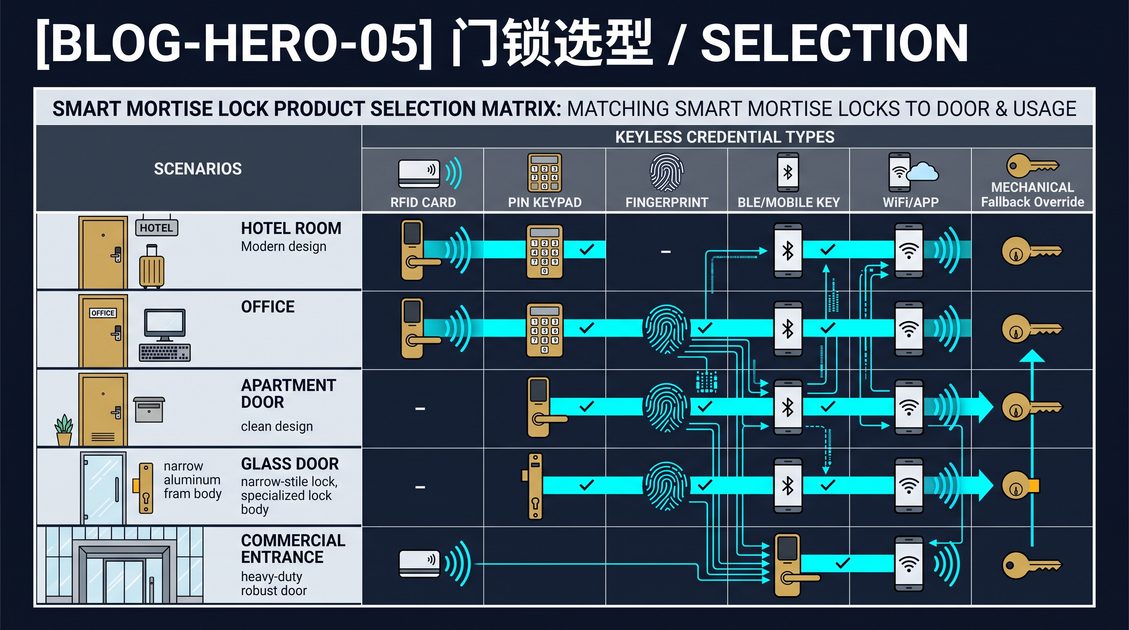
公寓钥匙扣门禁系统利用非接触式钥匙扣与电子读卡器,让住户、工作人员和访客在受控条件下进出楼宇入口和公共门。管理平台将每个钥匙扣关联到具体人员或单元,分配允许通行的门禁和时段,注销丢失的凭证,并记录所有门禁事件。本指南将说明如何规划读卡器与门禁点位,管理住户和访客的通行权限,应对钥匙扣遗失,保护隐私,并在租户更替期间持续维护系统。
公寓钥匙扣门禁系统指南:规划门禁点位与用户
首先绘制一份门禁点位图,涵盖主入口、侧门、车库、配套设施房间、邮件/包裹房、服务区域和紧急出口。记录每处开口所需安装的硬件和应达到的门禁级别。然后定义用户组:住户、家庭成员、物业工作人员、维护承包商、访客和应急人员。住户可能需要进入大堂、车库和所在楼层,而保洁人员可能需要一条限时路线,前往指定区域。
钥匙扣系统应匹配楼宇的物理结构和运营模式。公共门读卡器可能需要连线到中央控制器,而单元门可能使用智能插芯锁或其他独立电子锁。在批量订购全楼设备前,请确认读卡器、钥匙扣技术、控制器和管理软件相互兼容。
公寓钥匙扣门禁系统指南:凭证与访客管理
钥匙扣的优势在于使用快速、耐用且对住户简单方便,但它也可能被丢失或共享。如需明确责任归属,应发放个人钥匙扣,而不是每户共享一个钥匙扣。将钥匙扣标识号登记到住户或授权用户名下,定义其可打开的门,并在适当时设置有效期或审查日期。
访客通行应是临时且受限的。物业团队可以发放临时钥匙扣、移动凭证或与住户关联的入场码,并限定使用时段。访问结束后,凭证应自动过期或由授权操作员注销。工作人员和承包商凭证需要同样严格的纪律,设定使用计划并在角色变更时立即解绑。
公寓钥匙扣门禁系统指南:钥匙扣遗失与隐私保护
钥匙扣遗失后应立即注销,而不是等补发新钥后才处理。好的系统应让注销成为管理员的一项简单操作,并记录操作人。可准备备用钥匙扣,但不要让已激活的备用钥匙扣一直处于未分配状态。测试补发流程,并确认旧钥匙扣在新钥匙扣发放后仍保持失效。
门禁事件可能反映住户的出入时间,因此物业应限制日志可见范围,保护存储中和传输中的数据,明确留存期限,并发布清晰的政策。只有获得授权的工作人员才能查看与住户关联的事件记录。系统还应提供文档化的应急流程,以应对电池耗尽、控制器故障、网络中断或住户无法使用钥匙扣等情况。
公寓钥匙扣门禁系统指南:安装与运营
安装前,请检查门、门框、锁舌、供电线路、控制器位置和紧急出口。使用有效、已过期、已注销和无效的钥匙扣,在内侧开门、门位状态、断电、网络中断和访客凭证过期的场景下,对代表性门点进行测试。确认告警能送达负责的物业团队,并确认在通信不可用时,系统仍能按已批准的方式继续本地运行。
按文档计划维护读卡器、控制器、电池、锁具、权限和备件。在每次入住、搬出、人员变动和承包商介入后复查门禁权限。本指南仅为一般性信息;有关当地消防、无障碍、电气、隐私、建筑和紧急疏散的要求,请咨询具备资质的人员。
交付前,请确认新住户在入住当天如何完成登记,以及搬离住户在离开当天如何被移除,因为这两个事件决定了系统是否能持续保持可信。公寓钥匙扣门禁系统的可靠程度取决于凭证生命周期管理,因此请让注销成为文档化的习惯,而不是偶尔执行的任务,并为日常更替常备一套备用读卡器和钥匙扣。
本文部分内容由AI生成,并经过专业准确性和可读性优化。 A key fob system for apartments uses contactless fobs and electronic readers to give residents, staff, and visitors controlled access to building entrances and shared doors. The management platform links each fob to a person or unit, assigns permitted doors and schedules, revokes lost credentials, and records access events. This key fob system for apartments guide explains how to plan readers and doors, manage resident and visitor access, respond to lost fobs, protect privacy, and operate the system through tenant turnover.
Key Fob System for Apartments Guide: Map Doors and Users
Start with a door map that includes the main entrance, side entrances, garages, amenity rooms, mail or package rooms, service areas, and emergency exits. Record the hardware and the access level required at each opening. Then define user groups: residents, household members, property staff, maintenance contractors, visitors, and emergency personnel. A resident may need the lobby, garage, and their floor, while a cleaner may need a schedule-limited route to selected areas.
The fob system should reflect the building’s physical and operating model. A shared building reader may be wired to a central controller, while a unit door may use a smart mortise lock or another standalone electronic lock. Confirm that the reader, fob technology, controller, and management software are compatible before ordering a property-wide set.
Key Fob System for Apartments Guide: Credentials and Visitors
A fob is convenient because it is fast, durable, and simple for residents to use, but it is also a credential that can be lost or shared. Issue individual fobs rather than one shared fob per household when accountability matters. Record the fob identifier against the resident or authorized user, define which doors it can open, and apply an expiry or review date where appropriate.
Visitor access should be temporary and limited. A property team may issue a temporary fob, mobile credential, or entry code linked to the resident and a defined time window. When the visit ends, the credential should expire automatically or be revoked by the authorized operator. Staff and contractor credentials need the same discipline, with schedules and immediate offboarding when a role changes.
Key Fob System for Apartments Guide: Lost Fobs and Privacy
Lost fobs should be revoked immediately, not only after a replacement is issued. A good system makes revocation a simple administrator action and records who performed it. Keep spare fobs available, but do not leave active spares unassigned. Test the replacement process and confirm that the old fob remains invalid after the new one is issued.
Access events can reveal when residents enter and leave, so the property should limit log visibility, protect stored and transmitted data, define retention, and publish a clear policy. Only authorized staff should see resident-linked events. The system should also provide a documented emergency procedure for a dead battery, controller outage, network loss, or a resident who cannot use a fob.
Key Fob System for Apartments Guide: Installation and Operations
Before installation, survey the door, frame, strike, power route, controller location, and emergency egress. Test representative openings with valid, expired, revoked, and invalid fobs, inside release, door position, power interruption, network loss, and visitor expiry. Confirm that alerts reach the responsible property team and that the system continues its approved local behavior when communication is unavailable.
Maintain readers, controllers, batteries, locks, permissions, and spare parts on a documented schedule. Review access after every move-in, move-out, staff change, and contractor engagement. This key fob system for apartments guide is general information; confirm local fire, accessibility, electrical, privacy, building, and emergency-egress requirements with qualified professionals.
Before signing off, confirm how new residents are enrolled on move-in day and how a departing resident is removed the same day they leave, because these two events define whether the system stays trustworthy. A key fob system for apartments is only as strong as its credential lifecycle, so make revocation a documented habit rather than an occasional task, and keep a spare set of readers and fobs available for routine turnover.
Part of this article content is generated by AI and optimized for professional accuracy and readability.
不确定哪款传感器适合您的项目?
与我们的毫米波应用工程师免费咨询。