Panduan Memilih Smart Door Lock: Kunci Elektronik yang Tepat
Panduan pemilihan smart door lock untuk pembeli: metode pembukaan, konektivitas, baterai, keamanan, standar, dan retrofit untuk pintu rumah dan komersial.
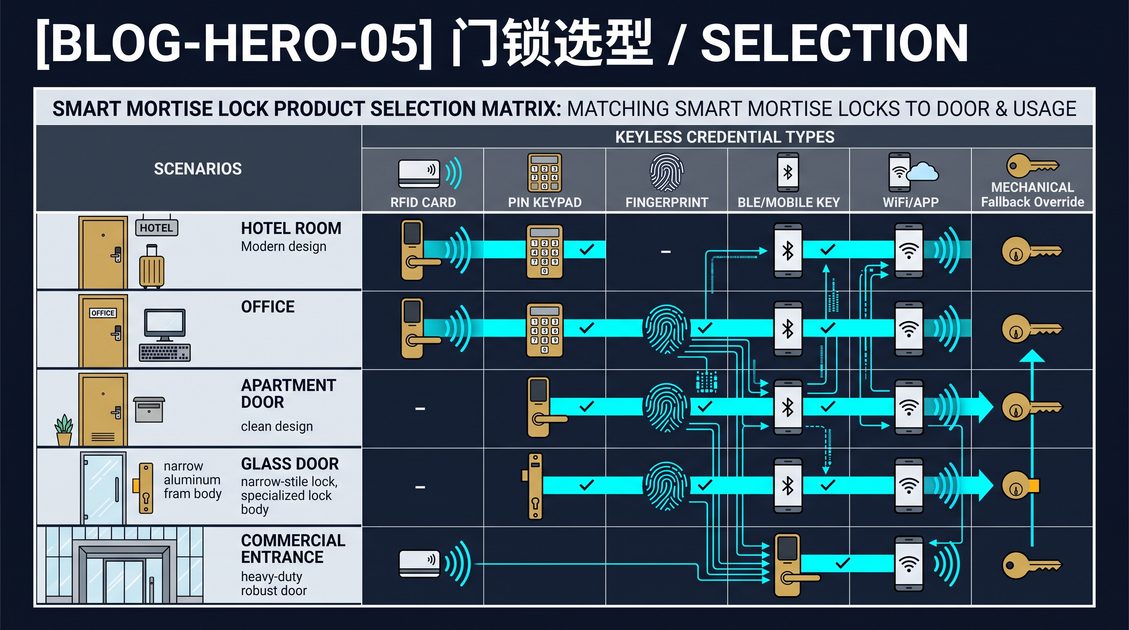
Smart door lock adalah perangkat kontrol akses elektronik yang menggantikan atau menyempurnakan kunci mekanis sehingga pintu dapat dibuka dengan kredensial alih-alih kunci tradisional. Kredensial berkisar dari kode PIN dan kartu RFID hingga sidik jari, aplikasi ponsel, dan perintah suara, sementara mekanisme penguncian umumnya berupa deadbolt yang digerakkan secara elektronik atau badan mortise lock. Panduan pemilihan smart door lock ini ditulis untuk pemilik rumah, pengelola properti, system integrator, dan importir yang perlu membandingkan model berdasarkan kriteria konkret alih-alih klaim merek. Smart door lock yang tepat bergantung pada struktur pintu, pengguna Anda, lingkungan konektivitas, dan ekspektasi keamanan Anda, dan salah memilih mahal harganya karena sebagian besar kunci elektronik dipasang sekali dan tetap terpasang selama bertahun-tahun. Panduan ini membagi keputusan menjadi sepuluh bagian, masing-masing diakhiri dengan blok jawaban mandiri yang dapat Anda bandingkan antar kunci. Panduan ini dimaksudkan sebagai referensi permanen yang dapat Anda kembali gunakan setiap kali pintu, penyewa, atau tata letak gedung berubah.
Apa Itu Smart Door Lock dan Mengapa Penting
Smart door lock adalah kunci elektromekanis yang dikendalikan oleh mikrokontroler dan diautentikasi oleh kredensial yang disajikan kepada pembaca, alih-alih dengan memutar kunci fisik yang menggerakkan pin-tumbler. Kredensial dapat berupa kode numerik yang dimasukkan pada keypad, kartu atau fob nirkontak, sampel biometrik seperti sidik jari atau wajah, atau perangkat seluler yang berkomunikasi melalui Bluetooth Low Energy, WiFi, NFC, atau gateway seluler. Ketika kredensial divalidasi terhadap tabel otorisasi yang tersimpan di perangkat atau di platform manajemen, kontroler menggerakkan motor atau solenoid yang menarik bolt atau latch, membuka pintu untuk jangka waktu tertentu atau hingga pintu ditutup kembali.
Mengapa smart door lock penting adalah karena menghilangkan mata rantai terlemah dalam keamanan fisik, yaitu kunci. Kunci dapat digandakan, hilang, dibawa oleh mantan penyewa, dan mustahil dicabut dengan cepat. Smart door lock mengubah pengelolaan akses menjadi operasi digital: kode dapat diganti dalam hitungan detik, akses dapat dibatasi waktu, dan jejak audit dapat menunjukkan dengan tepat kredensial mana yang masuk pada menit berapa. Untuk rumah keluarga tunggal manfaatnya adalah kenyamanan; untuk gedung multifamily, kantor, atau sewa jangka pendek manfaatnya adalah kontrol. Smart door lock juga menghilangkan kebutuhan untuk rekey atau mengganti silinder antar penyewa, karena pencabutan kredensial digital bersifat instan dan gratis.
Akses yang jarak jauh, terotomatisasi, dan tercatat juga merupakan akses yang dapat diskalakan. Ketika Anda mengelola satu pintu perbedaannya kecil, tetapi ketika Anda mengelola puluhan unit apartemen, kamar hotel, atau pintu kantor, kemampuan menerbitkan dan mencabut akses dari satu dasbor tanpa menyentuh setiap kunci mengubah ekonomi kontrol akses sepenuhnya. Inilah sebabnya adopsi komersial penguncian elektronik tumbuh lebih cepat daripada adopsi perumahan, dan mengapa panduan pemilihan smart door lock memberikan perhatian yang sama besarnya pada perangkat lunak manajemen seperti pada perangkat keras fisiknya.
Cara Kerja Smart Door Lock Dibandingkan Kunci Tradisional
Mortise lock atau kunci silinder tradisional mengandalkan penyelarasan mekanis kunci di dalam plug. Ketika kunci yang benar dimasukkan dan diputar, plug berputar dan menggerakkan bolt; kunci yang salah tidak menyelaraskan pin, dan tidak ada yang bergerak. Smart door lock menggantikan atau menambah jalur mekanis ini dengan jalur elektronik. Di dalam badan kunci terdapat reader atau keypad, mikrokontroler yang menjalankan logika otorisasi, aktuator motor atau solenoid, dan sumber daya, biasanya baterai. Ketika kredensial yang valid disajikan, kontroler mengaktifkan aktuator, yang secara fisik menggerakkan bolt, dan bagian mekanis yang sama yang menahan pintu tetap tertutup melakukan tugasnya.
Perbedaan arsitektural yang krusial adalah letak kecerdasannya. Kunci mekanis sepenuhnya otonom dan tidak membutuhkan daya, tetapi juga tidak dapat mengetahui siapa yang membukanya atau kapan. Smart door lock dapat berupa standalone, yang berarti tabel otorisasi tersimpan secara lokal dan semua keputusan terjadi di perangkat, atau networked, yang berarti kunci berkomunikasi dengan hub, gateway, atau platform cloud yang mengelola kredensial, jadwal, dan log audit. Kunci standalone lebih murah dan lebih mudah diterapkan; kunci networked lebih mudah diadministrasikan dalam skala besar. Banyak kunci modern mendukung keduanya: beroperasi secara lokal demi kecepatan dan keandalan bahkan saat jaringan mati, dan tersinkronisasi ke platform saat konektivitas kembali.
Cara berguna untuk memandang perbandingan ini adalah dari apa yang bisa gagal. Kunci mekanis hanya gagal jika mekanismenya aus atau kuncinya patah. Smart door lock menambahkan mode kegagalan baru yang harus diantisipasi pembeli: baterai habis, ponsel hilang, kode terlupakan, masalah firmware, atau gangguan jaringan. Tantangan rekayasa, dan alasan pabrikan bereputasi menghabiskan banyak biaya untuk desain, adalah membuat jalur elektronik sama andal dengan jalur mekanisnya. Smart door lock yang baik mempertahankan override kunci mekanis, memberikan peringatan baterai rendah jauh sebelumnya, dan berperilaku dapat diprediksi saat terputus. Panduan ini akan kembali berulang kali ke dimensi keandalan ini, karena inilah yang membedakan kunci yang dapat Anda percaya dari sekadar gadget.
Smart door lock menggantikan mata rantai terlemah dalam keamanan fisik, yaitu kunci, dengan kredensial digital yang dapat diterbitkan, dijadwalkan, dan dicabut dalam hitungan detik. Badan kunci berisi reader atau keypad, mikrokontroler, dan aktuator motor atau solenoid yang ditenagai baterai; override kunci mekanis dipertahankan sebagai pengaman. Kunci standalone menyimpan tabel otorisasi di perangkat, sementara kunci networked tersinkronisasi ke hub atau platform cloud untuk administrasi terpusat dan jejak audit. Penguncian elektronik paling berarti dalam skala besar: rumah memperoleh kenyamanan, sementara gedung multifamily, kantor, atau sewa memperoleh kemampuan mengelola puluhan hingga ratusan pintu dari satu dasbor. Karena jalur elektronik menambah mode kegagalan baru, baterai habis, kredensial hilang, dan gangguan jaringan, smart door lock yang dirancang baik harus memberi peringatan lebih awal, berperilaku dapat diprediksi saat offline, dan mempertahankan override mekanis yang andal.
Panduan Pemilihan Smart Door Lock: Ikhtisar Kriteria Utama
Panduan pemilihan smart door lock ini mengevaluasi kunci dengan serangkaian kriteria yang konsisten, karena membandingkan kunci elektronik murni dari harga menyembunyikan perbedaan yang menentukan apakah sebuah kunci benar-benar cocok. Kriteria pertama adalah struktur pintu: kantong mortise lock, deadbolt silinder, rim latch, atau pintu khusus seperti pintu kaca geser atau french door masing-masing memerlukan badan kunci yang berbeda. Kedua adalah metode pembukaan, yaitu kredensial apa saja yang diterima reader, dan apakah kombinasinya sesuai dengan pengguna Anda. Ketiga adalah konektivitas, protokol yang digunakan kunci dan apakah terintegrasi dengan ekosistem yang sudah Anda pakai. Keempat adalah daya, jenis baterai, perkiraan masa pakai, dan akses darurat saat baterai habis. Kelima adalah keamanan, sertifikasi perangkat keras, enkripsi, dan ketahanan terhadap bypass. Keenam adalah manajemen, apakah kunci bersifat standalone atau networked dan berapa banyak pengguna yang didukung perangkat lunaknya. Ketujuh adalah rating lingkungan untuk lokasi luar ruangan atau lembap tinggi. Kriteria terakhir adalah biaya kepemilikan, mencakup perangkat keras, instalasi, kredensial, dan manajemen berkelanjutan.
Tidak setiap kriteria sama pentingnya untuk setiap pembeli, dan justru itulah alasan panduan ini ada. Pemilik rumah yang memasang satu pintu depan paling peduli pada metode pembukaan, keandalan, dan integrasi dengan ponselnya. Pengelola properti yang menerapkan lima puluh unit paling peduli pada perangkat lunak manajemen, fleksibilitas kredensial, dan total biaya kepemilikan. Importir atau OEM yang mengevaluasi pemasok paling peduli pada sertifikasi, MOQ, dan ketersediaan badan mortise lock yang sesuai dengan pasarnya. Karena smart mortise lock adalah bentuk dominan untuk pasar komersial, hotel, dan pintu Eropa, panduan ini memberikan perhatian khusus pada bagaimana kriteria-kriteria ini berlaku pada badan mortise lock, bukan hanya pada deadbolt gaya Amerika.
Perbandingan terstruktur melintasi struktur pintu, metode pembukaan, konektivitas, daya, keamanan, manajemen, rating lingkungan, dan biaya kepemilikan adalah satu-satunya cara andal untuk memilih smart door lock. Struktur pintu menentukan badan kunci, baik mortise, silinder, rim, atau khusus; bentuk mortise mendominasi pasar komersial dan Eropa. Metode pembukaan harus sesuai dengan pengguna Anda, baik kode, kartu, sidik jari, seluler, atau suara. Konektivitas menentukan integrasi dengan ekosistem yang ada dan apakah manajemen bersifat standalone atau networked. Perencanaan daya mencakup jenis baterai, perkiraan masa pakai, dan jalur darurat saat daya hilang. Keamanan mencakup sertifikasi perangkat keras, enkripsi, dan ketahanan bypass. Rating lingkungan penting untuk lokasi luar ruangan dan lembap tinggi. Terakhir, biaya kepemilikan mencakup perangkat keras, instalasi, kredensial, dan perangkat lunak manajemen jangka panjang. Setiap pembeli menimbang hal-hal ini secara berbeda, dan itulah mengapa satu model rekomendasi tidak dapat melayani setiap pintu.
Struktur Pintu: Kesesuaian Mortise, Cylindrical, dan Khusus
Sebelum keputusan elektronik apa pun, pintu fisik yang menentukan. Smart door lock harus cocok secara mekanis dengan lubang, backset, ketebalan, dan orientasi tangan pintu Anda. Tiga keluarga dominan adalah mortise lock, kunci silinder, dan kunci rim atau khusus. Mortise lock adalah badan kunci persegi panjang yang dipasang ke kantong dalam yang dipahat di tepi pintu; ini adalah standar dominan dalam konstruksi komersial, perhotelan, dan perumahan Eropa, dan membawa badan mortise lock, latch, dan deadbolt dalam satu rakitan. Kunci silinder menggunakan chassis dua bagian yang disekrupkan melalui lubang bulat, tipikal untuk pintu interior Amerika Utara dan sebagian pintu eksterior. Rim lock dipasang di permukaan pintu dan umum pada pintu lama atau khusus.
Salah memilih keluarga berarti kandidat smart lock Anda sama sekali tidak dapat dipasang, sebaik apa pun kuncinya. Backset, jarak dari tepi pintu ke pusat silinder atau handle, harus cocok, dan ketebalan pintu harus berada dalam rentang yang ditentukan kunci. Orientasi tangan, apakah pintu di-engsel kiri atau kanan, harus dapat dikonfigurasi secara mekanis atau dalam perangkat lunak. Banyak smart lock modern menangani kedua orientasi dan berbagai ketebalan, tetapi mortise lock kurang toleran karena ukuran kantong dan geometri bolt distandarisasi oleh norma regional, dan kantong yang sudah ada sulit diperbesar tanpa mengerjakan ulang tepi pintu.
Inilah sebabnya keputusan smart door lock sering kali sebenarnya adalah keputusan mortise lock. Jika pintu Anda sudah memiliki kantong mortise, peningkatan paling bersih adalah mortise lock elektronik yang dipasang langsung ke lubang yang ada, mempertahankan handle set dan penampilan keseluruhan pintu sambil mengganti inti mekanis dengan yang elektronik. Untuk proyek konstruksi baru Anda memiliki kebebasan menentukan badan kunci dan pintu bersamaan, yang membuka pilihan elektronik terluas. Untuk retrofit, kantong yang ada membatasi apa yang cocok, dan jalur praktisnya sering kali berupa silinder mortise elektronik atau badan kunci terlektrifikasi yang disesuaikan dengan perangkat keras mortise yang ada. Panduan ini memperlakukan mortise lock sebagai tulang punggung penerapan smart door lock yang serius dan kembali ke sana sepanjang panduan.
Struktur pintu menentukan segalanya di hilirnya. Mortise lock, badan persegi panjang yang dipasang ke kantong yang dipahat di tepi pintu, adalah standar komersial, perhotelan, dan perumahan Eropa serta tulang punggung penerapan yang serius. Kunci silinder menggunakan chassis dua bagian melalui lubang bulat dan umum di Amerika Utara. Rim lock dipasang di permukaan untuk pintu lama. Backset, ketebalan pintu, dan orientasi tangan semuanya harus cocok dengan kandidat kunci, dan kantong mortise adalah yang paling tidak toleran untuk retrofit karena geometrinya distandarisasi oleh norma regional. Untuk pintu yang sudah memiliki kantong mortise, peningkatan paling bersih adalah mortise lock elektronik yang dipasang langsung ke lubang yang ada, mempertahankan handle set dan penampilan. Konstruksi baru memungkinkan badan kunci dan pintu ditentukan bersamaan; retrofit dibatasi oleh kantong yang ada dan sering diselesaikan dengan silinder mortise elektronik atau badan kunci terlektrifikasi.
Metode Pembukaan pada Smart Door Lock
Metode pembukaan adalah bagian paling terlihat dari smart door lock dan fitur yang pertama disentuh pembeli. Setiap metode memiliki trade-off berbeda di antara kenyamanan, keamanan, dan biaya, dan sebagian besar kunci menggabungkan dua metode atau lebih. Yang paling umum adalah keypad, kartu atau fob RFID, sensor biometrik, dan perangkat seluler. Keypad memerlukan kode numerik yang dimasukkan pengguna; paling murah, tidak memerlukan apa pun untuk dibawa, dan berfungsi untuk jumlah pengguna berapa pun, tetapi kode dapat dibagikan atau diamati. Kartu atau fob RFID disajikan ke reader nirkontak, umumnya pada 13.56 MHz; cepat, tahan lama, dan mudah dicabut, menjadikannya standar di hotel dan kantor, tetapi kartu dapat hilang atau disalin jika tidak terenkripsi. Sensor sidik jari membaca sampel biometrik; sangat nyaman dan personal, tetapi menambah biaya dan bergantung pada kualitas sensor. Perangkat seluler menggunakan Bluetooth Low Energy atau WiFi untuk membuka melalui aplikasi; nyaman dan dapat diaudit, tetapi bergantung pada masa pakai baterai dan keandalan aplikasi.
Sebagian besar smart door lock serius menawarkan campuran multi-kredensial alih-alih satu metode tunggal, karena pengguna nyata berbeda-beda. Kunci hotel biasanya menawarkan kartu plus seluler; kunci kantor menawarkan kartu, seluler, dan kadang sidik jari; kunci residensial menawarkan keypad, seluler, dan kadang sidik jari atau wajah. Campuran yang tepat adalah yang sesuai dengan kebiasaan pengguna dan kebijakan keamanan Anda. Jika pengguna Anda non-teknis, keypad atau kartu yang selalu berfungsi lebih aman daripada aplikasi yang bergantung pada ponsel terisi daya. Jika pengguna Anda sering lewat, pembukaan biometrik atau seluler tanpa sentuhan mengurangi gesekan. Jika Anda menyewakan unit, kredensial yang dapat Anda terbitkan dan cabut seketika, seperti kode, kartu, atau pass seluler, lebih bernilai daripada kunci fisik.
Keamanan metode pembukaan bergantung pada cara penerapannya, bukan hanya pada metodenya sendiri. Keypad seaman panjang kode dan ketahanan kunci terhadap pemaksaan tebakan; sistem kartu seaman enkripsi pada kartu dan readernya; sistem sidik jari seaman deteksi keaslian sensor dan tingkat penerimaan palsunya; sistem seluler seaman autentikasi aplikasi dan enkripsi transportnya. Panduan pemilihan smart door lock ini mendorong Anda bertanya kepada pemasok bagaimana setiap kredensial disimpan dan ditransmisikan, dan mengutamakan sistem dengan enkripsi per kredensial dan penyimpanan secure element daripada sistem yang membaca nomor kartu mentah atau menyimpan kode dalam plaintext.
Metode pembukaan adalah keputusan paling terlihat dan yang pertama disentuh pembeli. Keypad paling murah, tidak memerlukan apa pun untuk dibawa, dan dapat diskalakan ke jumlah pengguna berapa pun, tetapi kode dapat dibagikan atau diamati. Kartu atau fob RFID pada 13.56 MHz cepat, tahan lama, dan dapat dicabut seketika, menjadikannya standar di hotel dan kantor. Sensor sidik jari nyaman dan personal tetapi menambah biaya dan bergantung pada kualitas sensor dan deteksi keaslian. Perangkat seluler membuka melalui Bluetooth Low Energy atau WiFi dan memberikan kenyamanan serta auditabilitas tetapi bergantung pada baterai ponsel dan keandalan aplikasi. Sebagian besar kunci serius menggabungkan dua metode atau lebih untuk menyesuaikan dengan pengguna nyata. Keamanan bergantung pada implementasi: enkripsi per kredensial dan penyimpanan secure element mengalahkan kode plaintext dan nomor kartu mentah, sehingga pembeli harus bertanya bagaimana setiap kredensial disimpan dan ditransmisikan alih-alih berasumsi suatu metode aman secara inheren.
Konektivitas: Bluetooth, WiFi, NFC, dan Kecocokan Ekosistem
Konektivitas menentukan bagaimana smart door lock berkomunikasi dengan dunia dan seberapa banyak Anda dapat mengelolanya dari jarak jauh. Pilihan radio dominan adalah Bluetooth Low Energy, WiFi, NFC, dan semakin banyak Matter over Thread, dengan jalur seluler atau berbasis gateway untuk penerapan daya rendah atau skala besar. Bluetooth Low Energy adalah basis sebagian besar kunci seluler: ponsel harus berada di dekat pintu, dan kunci terhubung langsung ke aplikasi. WiFi membawa kontrol jarak jauh penuh dari mana saja, tetapi WiFi mengonsumsi daya lebih besar dan memerlukan kunci berada dalam jangkauan jaringan yang andal. NFC menawarkan ketukan jarak sangat pendek, nyaman dan hemat baterai tetapi kurang umum sebagai metode utama. Matter adalah standar smart home yang sedang berkembang yang memungkinkan kunci bekerja dengan Apple HomeKit, Google Home, Amazon Alexa, dan platform lain melalui satu protokol tunggal.
Konektivitas yang tepat bergantung pada apakah Anda memerlukan manajemen jarak jauh dan ekosistem apa yang sudah Anda gunakan. Jika Anda ingin membuka dari kota lain atau menerbitkan kode terbatas waktu untuk tamu, Anda memerlukan WiFi atau gateway. Jika Anda hanya perlu membuka saat berada di depan pintu, Bluetooth sudah cukup dan lebih murah serta lebih hemat baterai. Jika Anda memiliki pengaturan HomeKit, Google Home, atau Alexa, Anda menginginkan kunci yang berbicara dengan protokol tersebut secara native atau melalui Matter, dan Anda harus memverifikasi kompatibilitas sebelum membeli karena tidak semua kunci "smart" terintegrasi dengan semua ekosistem. Kunci yang mengklaim kompatibilitas ekosistem tetapi tidak tersertifikasi untuknya bisa sangat mengecewakan pada hari pemasangan.
Untuk pengelola properti dan pembeli OEM, konektivitas juga merupakan keputusan arsitektur. Kunci standalone dengan Bluetooth saja tidak dapat dikelola terpusat tanpa dipasangkan satu per satu. Kunci networked, atau yang terhubung ke gateway atau platform cloud, dapat didaftarkan, diberi kredensial, dan diaudit dalam skala besar. Trade-off-nya adalah biaya dan kompleksitas: sistem networked membutuhkan hub atau gateway dan langganan manajemen, sementara kunci standalone lebih sederhana tetapi kurang mudah dikelola. Panduan ini merekomendasikan merencanakan arsitektur konektivitas sebelum memilih perangkat keras, karena beralih dari standalone ke networked nanti berarti mengganti atau mengonfigurasi ulang setiap kunci.
Konektivitas menentukan apa yang dapat dilakukan smart door lock untuk Anda. Bluetooth Low Energy hanya membuka saat ponsel berada di dekat pintu dan merupakan basis termurah dan paling hemat baterai. WiFi menyediakan kontrol jarak jauh penuh dari mana saja tetapi menarik daya lebih besar dan membutuhkan jangkauan jaringan andal. NFC menawarkan ketukan pendek yang nyaman dan hemat baterai. Matter adalah standar yang sedang berkembang yang memungkinkan satu kunci bekerja dengan Apple HomeKit, Google Home, Amazon Alexa, dan lainnya melalui satu protokol. Pilih berdasarkan kebutuhan manajemen jarak jauh dan ekosistem yang ada: WiFi atau gateway untuk kontrol jarak jauh, Bluetooth untuk kenyamanan di sisi pintu, dan kompatibilitas native atau Matter untuk integrasi ekosistem. Bagi pengelola properti dan pembeli OEM, konektivitas juga adalah arsitektur: kunci networked dapat didaftarkan, diberi kredensial, dan diaudit dalam skala besar, sementara kunci standalone lebih sederhana tetapi dipasangkan satu per satu. Rencanakan arsitektur sebelum memilih perangkat keras.
Daya, Masa Pakai Baterai, dan Akses Darurat
Smart door lock berjalan dengan baterai, dan perencanaan baterai adalah masalah keandalan, bukan sekadar kenyamanan. Sebagian besar kunci menggunakan baterai AA, AAA, atau 9V atau paket isi ulang tersegel, dengan perkiraan masa pakai sekitar enam bulan hingga dua tahun tergantung frekuensi pembukaan, penggunaan radio, dan suhu. Lalu lintas WiFi berat menguras baterai paling cepat, itulah sebabnya kunci WiFi sering memiliki masa pakai baterai lebih pendek daripada model khusus Bluetooth. Cuaca dingin juga mempercepat pengosongan, yang berarti untuk pintu luar ruangan atau pintu masuk tanpa pemanas. Kunci yang dirancang baik melaporkan tingkat baterai ke aplikasi dan memberi peringatan pada ambang batas tertentu, memberi Anda berminggu-minggu pemberitahuan alih-alih kegagalan mendadak.
Akses darurat adalah bagian perencanaan daya yang membedakan kunci profesional dari mainan. Saat baterai habis, Anda tetap perlu bisa masuk. Solusi umum adalah override kunci mekanis, port daya cadangan seperti terminal USB atau 9V di bagian luar kunci, dan keypad fisik atau pelepasan mekanis tersembunyi. Override kunci mekanis adalah pengaman paling universal dan sangat direkomendasikan, meskipun menambah kunci yang dapat digandakan; terminal 9V memungkinkan Anda memberi daya sesaat pada kunci untuk membukanya dengan kredensial Anda. Kunci terbaik menawarkan keduanya, sehingga baterai habis tidak pernah membuat pengguna terjebak.
Untuk penerapan komersial dan sewa, perencanaan baterai menjadi operasional. Pengelola properti dengan lima puluh kunci perlu tahu kapan masing-masing lemah, bukan menunggu penyewa terkunci di luar. Kunci networked melaporkan status baterai secara terpusat, memungkinkan pemeliharaan menjadwalkan penggantian alih-alih bereaksi terhadap kegagalan. Beberapa kunci mendukung baki baterai yang dapat ditukar saat panas atau sel redundan untuk menghindari waktu henti sama sekali. Panduan ini merekomendasikan, untuk penerapan multi-pintu apa pun, memilih kunci dengan pelaporan baterai terpusat dan jalur akses darurat yang jelas, serta menganggarkan penggantian rutin sebagai biaya operasional alih-alih kejutan sesekali.
Perencanaan baterai adalah masalah keandalan. Sebagian besar kunci menggunakan sel AA, AAA, atau 9V atau paket isi ulang tersegel, dengan masa pakai enam bulan hingga dua tahun tergantung frekuensi pembukaan, penggunaan radio, dan suhu; lalu lintas WiFi menguras paling cepat dan cuaca dingin mempercepat pengosongan. Kunci yang baik melaporkan tingkat baterai dan memberi peringatan berminggu-minggu sebelum kegagalan. Akses darurat adalah pembedanya: override kunci mekanis adalah pengaman paling universal, dan port daya cadangan seperti terminal USB atau 9V memungkinkan Anda memberi daya sesaat pada kunci untuk membukanya dengan kredensial Anda. Untuk penerapan komersial dan sewa, kunci networked melaporkan status baterai secara terpusat sehingga pemeliharaan menjadwalkan penggantian alih-alih bereaksi terhadap penyewa yang terkunci di luar. Rencanakan penggantian baterai rutin sebagai biaya operasional, dan jangan pernah memilih kunci tanpa jalur akses darurat yang jelas.
Keamanan, Enkripsi, dan Sertifikasi untuk Smart Door Lock
Keamanan smart door lock diukur dari perangkat kerasnya, enkripsinya, dan ketahanannya terhadap bypass, dan disertifikasi terhadap standar yang diakui. Pada perangkat keras, kunci harus menggunakan mikrokontroler aman dan, idealnya, secure element yang menyimpan kredensial dan kunci dalam perangkat keras tahan tamper alih-alih memori umum. Pada komunikasi, kredensial dan perintah harus dienkripsi saat transit, baik melalui Bluetooth, WiFi, NFC, maupun antarmuka reader kartu, sehingga penyerang yang mengendus lalu lintas radio tidak dapat memutar ulang atau mendekodenya. Pada sisi mekanis, kunci harus tahan terhadap penerobosan paksa: bolt, strike, dan pemasangan harus kokoh, dan tidak boleh ada bypass sederhana seperti picking, bumping, atau memutar handle luar untuk melepaskan bolt.
Sertifikasi memberi pembeli pemeriksaan independen atas klaim-klaim ini. Yang paling umum adalah CE, FCC, dan RoHS. CE menunjukkan kesesuaian dengan persyaratan keselamatan Eropa dan kompatibilitas elektromagnetik, FCC mencakup batas emisi radio di Amerika Serikat, dan RoHS membatasi zat berbahaya dalam elektronik. Untuk klaim keamanan lebih tinggi, cari grading UL atau ANSI/BHMA, atau standar nasional yang setara, yang menilai kekuatan mekanis dan umur siklus kunci. Pembeli yang mengimpor atau menerapkan dalam skala besar harus meminta sertifikat sebagai dokumentasi, bukan percaya klaim pemasaran, dan harus memverifikasi bahwa nomor sertifikat sesuai dengan model yang tepat.
Enkripsi layak mendapat perhatian khusus karena tidak terlihat dan mudah diabaikan. Tanyakan kepada pemasok bagaimana kartu, aplikasi ponsel, dan tautan radio mengautentikasi dan mengenkripsi. Utamakan sistem yang menggunakan kunci terdiversifikasi per kredensial, di mana setiap kartu atau fob menyimpan kunci yang diturunkan untuk kunci spesifik tersebut, daripada sistem yang membaca nomor kartu polos, karena nomor kartu polos dapat dikloning. Demikian pula, kredensial seluler harus menggunakan transport aman dan, di sisi platform, autentikasi sisi server alih-alih passcode statis murni. Kunci yang berskor baik pada sertifikasi tetapi lemah pada enkripsi dapat tampak patuh dan tetap dapat di-bypass; keduanya harus dievaluasi bersama.
Keamanan menggabungkan perangkat keras, enkripsi, dan ketahanan bypass, yang diverifikasi melalui sertifikasi. Perangkat keras harus menggunakan mikrokontroler aman dan idealnya secure element yang menyimpan kredensial dalam perangkat keras tahan tamper. Komunikasi harus dienkripsi melalui Bluetooth, WiFi, NFC, dan antarmuka kartu sehingga lalu lintas radio tidak dapat diputar ulang atau didekode. Mekanismenya harus tahan terhadap picking, bumping, dan penerobosan paksa. Sertifikasi memberikan verifikasi independen: CE untuk keselamatan Eropa dan EMC, FCC untuk batas radio Amerika Serikat, RoHS untuk zat terbatas, dan grade UL atau ANSI/BHMA untuk kekuatan mekanis dan umur siklus. Pembeli harus meminta sertifikat sebagai dokumentasi dan memverifikasi nomornya cocok dengan modelnya. Enkripsi adalah dimensi yang tidak terlihat: utamakan kunci terdiversifikasi per kredensial daripada nomor kartu polos, dan autentikasi seluler sisi server daripada passcode statis, karena kunci yang patuh dengan enkripsi lemah tetap dapat di-bypass.
Manajemen Standalone vs Networked dan Jejak Audit
Keputusan arsitektur terbesar dalam penerapan smart door lock apa pun adalah apakah kunci-kunci tersebut standalone atau networked. Kunci standalone menyimpan tabel penggunanya sendiri dan membuat setiap keputusan secara lokal; tidak membutuhkan hub, cloud, atau langganan, dan tetap berfungsi saat internet mati. Biayanya adalah mengelolanya berarti menyentuhnya atau memasangkannya satu per satu, dan data audit hanya tersimpan di perangkat. Kunci networked terhubung ke hub atau gateway yang tersinkronisasi dengan platform manajemen, memungkinkan administrator mendaftarkan kunci, menerbitkan dan mencabut kredensial, mengatur jadwal, dan membaca log audit dari satu dasbor, baik gedung-gedung itu di sebelah maupun di benua lain.
Pilihan yang tepat berskala dengan jumlah pintu dan beban manajemen. Untuk satu rumah, kunci standalone dengan aplikasi biasanya cukup, dan kesederhanaan serta keandalan offline-nya menjadi keunggulan. Untuk kantor, bisnis kecil, atau sewa jangka pendek, sistem networked ringan atau berbasis gateway sering kali layak karena memusatkan kredensial tamu dan staf. Untuk hotel, gedung multifamily, atau portofolio komersial besar, manajemen networked bukan pilihan; menerbitkan ratusan kredensial dan merespons kartu hilang secara real time membutuhkan platform. Dalam lingkungan ini, jejak audit penting untuk kepatuhan dan penyelesaian sengketa, dan hanya sistem networked yang dapat memberikannya secara terpusat.
Jejak audit layak mendapat kehati-hatian. Smart door lock yang mengklaim jejak audit mungkin menyimpannya hanya secara lokal, yang hampir tidak berguna dalam skala besar karena Anda tidak dapat mencari lintas pintu atau melihat linimasa seluruh gedung. Jika Anda perlu tahu siapa memasuki ruangan mana kapan, demi keamanan, asuransi, atau alasan operasional, wajibkan log audit terpusat, bertanda waktu, dengan atribusi pengguna. Demikian pula, penjadwalan berbasis waktu, seperti mengizinkan cleaner akses hanya pada hari tertentu atau tamu Airbnb hanya selama masa menginapnya, memerlukan lapisan manajemen yang mendorong jadwal ke kunci. Evaluasi fitur-fitur ini dengan menguji platform yang sebenarnya, bukan dengan membaca lembar spesifikasi.
Manajemen standalone dan networked adalah keputusan arsitektur terbesar. Kunci standalone menyimpan tabel penggunanya sendiri dan bekerja offline tanpa hub atau langganan, tetapi masing-masing harus dikelola secara individual dan data audit tetap lokal. Kunci networked tersinkronisasi ke hub atau gateway dan platform manajemen, memungkinkan pendaftaran terpusat, penerbitan kredensial, pencabutan, penjadwalan, dan audit di banyak pintu dari satu dasbor. Pilihannya berskala dengan jumlah pintu dan beban manajemen: satu rumah biasanya hanya butuh kunci standalone, sementara kantor dan sewa diuntungkan oleh sistem ringan, dan hotel, multifamily, serta portofolio komersial besar membutuhkan manajemen networked. Jejak audit hanya berguna dalam skala besar saat terpusat dan bertanda waktu dengan atribusi pengguna, jadi wajibkan pencatatan dan penjadwalan di level platform dan uji perangkat lunak manajemen yang sebenarnya alih-alih percaya lembar spesifikasi.
Smart Door Lock untuk Pintu dan Lingkungan Khusus
Tidak setiap pintu adalah pintu masuk standar, dan panduan pemilihan smart door lock akan tidak lengkap tanpa membahas kasus khusus yang menjebak pembeli. Pintu kaca geser dan pintu halaman tidak dapat menerima deadbolt standar atau mortise lock dan biasanya membutuhkan latch elektronik khusus atau kunci yang dirancang untuk stile sempit panel geser. French door membutuhkan kunci yang menangani daun pintu pasif dan aktif bersamaan, biasanya mortise atau mekanisme multi-point. Storm door dan screen door tipis dan ringan, sehingga smart lock berat mungkin tidak cocok atau berlebihan, dan sering membutuhkan latch elektronik lebih ringan. Pintu dengan thumb-turn di bagian dalam, umum pada mortise lock interior, membutuhkan kunci yang mempertahankan fungsi privasi sambil menambah kontrol elektronik.
Lokasi luar ruangan dan lembap tinggi menambah persyaratan lingkungan. Smart door lock dengan rating penggunaan luar ruangan harus memiliki rating perlindungan masuk, umumnya IP54 atau lebih tinggi, untuk bertahan terhadap hujan, debu, dan fluktuasi suhu. Dingin ekstrem memengaruhi masa pakai baterai serta pelumas dan bagian bergerak mekanisme. Kunci pada pintu logam, pintu tahan api, atau pintu keamanan tinggi menghadapi kendala tambahan: pintu logam dapat mengganggu sinyal nirkabel dan membutuhkan penempatan antena hati-hati, dan pintu tahan api memerlukan perangkat keras yang tidak mengorbankan rating kebakaran. Pintu keamanan komersial dan aplikasi keamanan tinggi mungkin memerlukan mortise lock terlektrifikasi yang dapat dikabel ke panel kontrol akses terpusat alih-alih standalone bertenaga baterai.
Pelajarannya adalah mencocokkan kunci dengan realitas fisik sebelum mencocokkannya dengan daftar fitur. Jika penerapan Anda melibatkan pintu geser, french, storm, atau logam, atau pintu di iklim keras, daftar kandidat menyempit drastis, dan pilihan yang benar adalah kunci yang direkayasa untuk jenis pintu spesifik itu, bukan model serbaguna termurah atau terpopuler. Pemasok yang berspesialisasi pada satu jenis pintu biasanya memiliki perangkat keras pemasangan yang benar dan sertifikasi yang benar, dan meminta rekomendasi spesifik-pintu dari mereka lebih andal daripada menebak dari katalog generik. Di sinilah juga kemampuan adaptasi mortise lock bersinar, karena mortise lock elektronik yang dipilih baik dapat melayani pintu masuk, koridor, french, dan interior dengan badan umum dan trim berbeda.
Pintu dan lingkungan khusus membutuhkan smart door lock terspesialisasi. Pintu kaca geser dan pintu halaman membutuhkan kunci yang dirancang untuk stile sempit panel geser; french door membutuhkan mekanisme yang menangani kedua daun, biasanya mortise atau multi-point; storm door dan screen door tipis dan membutuhkan latch elektronik lebih ringan; pintu interior thumb-turn membutuhkan kunci yang mempertahankan privasi sambil menambah kontrol elektronik. Lokasi luar ruangan memerlukan rating perlindungan masuk IP54 atau lebih tinggi dan ketahanan terhadap hujan, debu, dan fluktuasi suhu, yang juga memperpendek masa pakai baterai. Pintu logam dapat mengganggu sinyal nirkabel dan membutuhkan penempatan antena hati-hati, dan pintu tahan api membutuhkan perangkat keras yang mempertahankan rating kebakaran. Pintu keamanan tinggi dan komersial mungkin memerlukan mortise lock terlektrifikasi yang dikabel ke panel akses terpusat. Cocokkan kunci dengan pintu fisik terlebih dahulu, dan minta rekomendasi spesifik-pintu dari pemasok alih-alih memilih dari katalog generik.
Instalasi, Retrofit, dan Total Biaya Kepemilikan
Instalasi adalah tempat banyak proyek smart door lock berhasil atau gagal, dan panduan pemilihan smart door lock memperlakukannya sebagai kriteria utama. Kunci yang memerlukan pemasang profesional menambah ratusan dolar per pintu, sementara kunci yang dapat dipasang pemilik kompeten dalam satu jam menghemat uang dan waktu. Tingkat kesulitan instalasi bergantung pada struktur pintu, badan kunci, dan seberapa banyak lubang yang ada harus dimodifikasi. Memasang mortise lock elektronik ke kantong mortise yang ada biasanya mudah. Memasang kunci ke pintu tanpa lubang elektronik yang ada mungkin memerlukan pengeboran, pematian, atau penggantian strike plate, yang merupakan pekerjaan profesional pada pintu logam atau tahan api.
Retrofit adalah kasus dunia nyata yang paling umum, karena sebagian besar pembeli menyempurnakan pintu yang ada alih-alih membangun baru. Retrofit paling mudah saat kunci baru menggunakan pola lubang dan backset yang ada; inilah janji retrofit smart lock, yang dipasang di atas deadbolt yang ada dan mempertahankan mekanisme kunci. Lebih sulit saat bentuknya berbeda, seperti berpindah dari kunci silinder ke mortise lock, yang memerlukan pemahatan kantong baru. Sebelum membeli, ukur pintu, pastikan backset dan ketebalan berada dalam rentang kunci, dan periksa apakah kunci dikirim dengan strike dan perangkat keras pemasangan yang benar untuk pintu Anda. Salah di sini adalah alasan paling umum smart lock "kompatibel" tidak pas.
Total biaya kepemilikan mencakup lebih dari sekadar harga. Tambahkan biaya instalasi, baterai, kartu atau fob kredensial, dan untuk sistem networked, langganan platform manajemen, yang sering berulang per pintu per bulan. Kunci murah tanpa perangkat lunak manajemen bisa jauh lebih mahal daripada kunci networked yang lebih mahal begitu Anda mengalikan pintu dan tahun. Sebaliknya, kunci standalone pada satu rumah tidak memiliki biaya berulang sama sekali. Pembeli harus menghitung biaya tiga tahun per pintu yang mencakup perangkat keras, instalasi, bahan habis pakai, dan perangkat lunak, dan harus meminta model harga perangkat lunak secara tertulis, karena biaya berulang adalah tempat biaya kejutan bersembunyi.
Instalasi dan biaya kepemilikan adalah kriteria utama. Pemasang profesional dapat menambah ratusan dolar per pintu, sementara kunci yang dipasang sendiri oleh pemilik menghemat uang dan waktu. Memasang mortise lock elektronik ke kantong yang ada itu mudah; berpindah antar bentuk, seperti dari silinder ke mortise, memerlukan pemahatan kantong baru dan profesional. Retrofit adalah kasus paling umum: paling mudah saat kunci baru menggunakan pola lubang yang ada, seperti retrofit smart lock di atas deadbolt yang ada. Ukur backset, ketebalan, dan periksa strike serta perangkat keras pemasangan yang disediakan sebelum membeli. Total biaya kepemilikan mencakup perangkat keras, instalasi, baterai, kartu atau fob, dan biaya berulang perangkat lunak manajemen untuk sistem networked. Hitung biaya tiga tahun per pintu dan dapatkan model harga perangkat lunak secara tertulis, karena biaya berulang menyembunyikan kejutan terbesar.
FAQ: Panduan Pemilihan Smart Door Lock
Apakah smart door lock berfungsi dengan pintu saya yang sudah ada?
Berfungsi hanya jika badan kunci sesuai dengan struktur pintu, backset, ketebalan, dan orientasi tangan pintu Anda. Pintu dengan kantong mortise yang sudah ada paling baik dilayani oleh mortise lock elektronik yang dipasang langsung ke lubang yang ada; pintu silinder menggunakan kunci silinder. Ukur pintu dan bandingkan dengan spesifikasi kunci sebelum membeli.
Apa yang terjadi saat baterai habis?
Smart door lock yang dirancang baik memberikan peringatan lebih awal dan menyediakan jalur darurat, biasanya override kunci mekanis atau terminal daya cadangan seperti USB atau 9V di bagian luar. Kunci terbaik menawarkan keduanya. Jangan pernah memilih kunci tanpa metode akses darurat yang jelas.
Apakah saya memerlukan WiFi atau Bluetooth saja cukup?
Bluetooth cukup jika Anda hanya membuka di depan pintu; lebih murah dan lebih hemat baterai. WiFi atau gateway diperlukan untuk kontrol jarak jauh dari mana saja dan manajemen terpusat dalam skala besar. Pilih berdasarkan apakah Anda memerlukan akses jarak jauh dan ekosistem apa yang sudah Anda gunakan.
Apakah smart door lock aman?
Keamanan bergantung pada perangkat keras, enkripsi, dan ketahanan terhadap bypass, yang diverifikasi melalui sertifikasi seperti CE, FCC, RoHS, dan untuk klaim lebih tinggi, grade UL atau ANSI/BHMA. Utamakan enkripsi per kredensial dan penyimpanan secure element daripada kode plaintext dan nomor kartu mentah. Minta sertifikat aslinya dan verifikasi nomornya cocok dengan modelnya.
Apa perbedaan antara standalone dan networked?
Kunci standalone menyimpan tabel penggunanya di perangkat, tidak memerlukan hub atau langganan, dan bekerja offline, tetapi masing-masing dikelola secara individual. Kunci networked tersinkronisasi ke hub atau platform untuk pendaftaran, penerbitan kredensial, penjadwalan, dan audit terpusat, yang esensial untuk hotel, gedung multifamily, dan portofolio komersial besar.
Berapa lama masa pakai baterai smart door lock?
Biasanya enam bulan hingga dua tahun tergantung frekuensi pembukaan, penggunaan radio, dan suhu. Kunci WiFi lebih cepat habis daripada model khusus Bluetooth, dan cuaca dingin mempercepat pengosongan. Kunci dengan pelaporan baterai terpusat memungkinkan pengelola properti menjadwalkan penggantian alih-alih merespons penyewa yang terkunci di luar.
Kesimpulan: Pilih Smart Door Lock yang Sesuai dengan Pintu Anda
Panduan pemilihan smart door lock ini telah membahas struktur pintu, metode pembukaan, konektivitas, daya, keamanan, manajemen, lingkungan khusus, dan biaya. Pelajaran pemersatunya adalah tidak ada smart door lock terbaik yang universal; hanya ada kunci yang cocok dengan pintu fisik, pengguna, dan model manajemen Anda. Mulailah dengan mengukur pintu dan mengidentifikasi keluarga badan kunci, lalu kerjakan kriteria dalam urutan prioritas, dan akhiri dengan menguji perangkat lunak manajemen yang sebenarnya serta memverifikasi sertifikasi.
Untuk pemilik rumah, prioritasnya adalah metode pembukaan yang andal dan akses darurat pada kunci yang cocok dengan pintu standar. Untuk pengelola properti, prioritasnya adalah manajemen networked, fleksibilitas kredensial, dan total biaya kepemilikan yang dapat diprediksi di banyak pintu. Untuk importir atau OEM, prioritasnya adalah mortise lock elektronik yang tersertifikasi dan adaptif dengan sertifikasi regional yang tepat, MOQ yang dapat diterima, dan pemasok yang mendokumentasikan rekayasa keamanan dan dayanya. Apa pun peran Anda, terapkan panduan pemilihan smart door lock ini sebagai daftar periksa alih-alih katalog, dan Anda akan menghindari kesalahan paling umum dan paling mahal dalam penguncian elektronik.
Sebagian konten artikel ini dihasilkan oleh AI dan dioptimalkan untuk akurasi profesional dan keterbacaan. A smart door lock is an electronic access control device that replaces or upgrades a mechanical lock so that doors can be unlocked with a credential rather than a traditional key. Credentials range from PIN codes and RFID cards to fingerprints, mobile phone apps, and voice commands, and the locking mechanism is typically an electronically driven deadbolt or a mortise lock body. This smart door locks selection guide is written for homeowners, property managers, system integrators, and importers who need to compare models on concrete criteria rather than brand claims. The right smart door lock depends on your door structure, your users, your connectivity environment, and your security expectations, and choosing incorrectly is expensive because most electronic locks are installed once and stay in place for years. This guide breaks the decision into ten sections, each ending with a self-contained answer block that you can compare across locks. It is intended as a permanent reference you can return to whenever a door, a tenant, or a building layout changes.
What Is a Smart Door Lock and Why It Matters
A smart door lock is an electromechanical lock that is controlled by a micro-controller and authenticated by a credential presented to a reader, rather than by turning a physical key that engages tumblers. The credential can be a numeric code entered on a keypad, a contactless card or fob, a biometric sample such as a fingerprint or face, or a mobile device that communicates over Bluetooth Low Energy, WiFi, NFC, or a cellular gateway. When the credential is validated against an authorization table stored on the device or in a management platform, the controller drives a motor or solenoid that retracts the bolt or latch, unlocking the door for a defined period or until the door is closed again.
Why smart door locks matter is about removing the weakest link in physical security, the key. Keys are copied, lost, carried by former tenants, and impossible to revoke quickly. A smart door lock turns entry management into a digital operation: codes can be changed in seconds, access can be time-limited, and an audit trail can show exactly which credential entered at which minute. For a single-family home the benefit is convenience; for a multifamily building, an office, or a short-term rental the benefit is control. A smart door lock also removes the need to rekey or replace cylinders between tenants, because revoking a digital credential is instantaneous and free.
An entry that is remote, automated, and logged is also an entry that scales. When you manage one door the difference is small, but when you manage dozens of apartment units, hotel rooms, or office doors, the ability to issue and revoke access from a dashboard without touching each lock changes the economics of access control entirely. This is why the commercial adoption of electronic locking is growing faster than residential adoption, and why the smart door locks selection guide pays as much attention to management software as to the physical hardware.
How Smart Door Locks Work Compared to Traditional Locks
A traditional mortise or cylinder lock relies on mechanical key alignment inside a plug. When the correct key is inserted and turned, the plug rotates and moves the bolt; wrong keys simply do not align the pins, and nothing moves. A smart door lock replaces or augments this mechanical path with an electronic one. Inside the lock body there is a reader or keypad, a micro-controller running the authorization logic, a motor or solenoid actuator, and a power source, usually batteries. When a valid credential is presented, the controller energizes the actuator, which physically moves the bolt, and the same mechanical parts that hold the door closed do their work.
The critical architectural difference is where the intelligence lives. A mechanical lock is fully autonomous and needs no power, but it also cannot know who opened it or when. A smart door lock can be either standalone, meaning the authorization table is stored locally and all decisions happen on the device, or networked, meaning the lock communicates with a hub, gateway, or cloud platform that manages credentials, schedules, and audit logs. Standalone locks are cheaper and easier to deploy; networked locks are easier to administer at scale. Many modern locks support both: they operate locally for speed and reliability even when the network is down, and they sync to a platform when connectivity returns.
A useful way to think about the comparison is by what fails. A mechanical key lock fails only if the mechanism wears or the key breaks. A smart door lock adds new failure modes that a buyer must plan for: depleted batteries, a lost phone, a forgotten code, a firmware issue, or a network outage. The engineering challenge, and the reason reputable manufacturers spend heavily on design, is to make the electronic path as reliable as the mechanical one. Good smart door locks keep a mechanical key override, provide low-battery warnings well in advance, and behave predictably when disconnected. This guide will return to these reliability dimensions repeatedly, because they separate a lock you can trust from a gadget.
A smart door lock replaces the weakest link in physical security, the key, with a digital credential that can be issued, scheduled, and revoked in seconds. The lock body contains a reader or keypad, a micro-controller, and a motor or solenoid actuator powered by batteries; a mechanical key override is retained as a failsafe. Standalone locks keep the authorization table on-device, while networked locks sync to a hub or cloud platform for central administration and audit trails. Electronic locking matters most at scale: a home gains convenience, while a multifamily building, office, or rental gains the ability to manage dozens or hundreds of doors from one dashboard. Because the electronic path adds new failure modes, battery depletion, lost credentials, and network outages, a well-designed smart door lock must warn early, behave predictably offline, and preserve a reliable mechanical override.
Smart Door Locks Selection Guide: Key Criteria Overview
This smart door locks selection guide evaluates locks on a consistent set of criteria, because comparing electronic locks purely on price hides the differences that determine whether a lock actually fits. The first criterion is door structure: a mortise lock pocket, a cylindrical deadbolt, a rim latch, or a specialty door such as a sliding glass or french door each require a different lock body. The second is opening method, meaning which credentials the reader accepts, and whether the mix matches your users. The third is connectivity, the protocol a lock speaks and whether it integrates with the ecosystems you already use. The fourth is power, battery type, expected life, and emergency access when the battery dies. The fifth is security, hardware certification, encryption, and resistance to bypass. The sixth is management, whether a lock is standalone or networked and how many users the software supports. The seventh is environmental rating for outdoor or high-moisture locations. The final criterion is cost of ownership, including hardware, installation, credentials, and ongoing management.
Not every criterion matters equally for every buyer, which is exactly why this guide exists. A homeowner installing one front door cares most about opening method, reliability, and integration with their phone. A property manager deploying fifty units cares most about management software, credential flexibility, and total cost of ownership. An importer or OEM evaluating a supplier cares most about certification, MOQ, and the availability of a mortise lock body that fits their market. Because the smart mortise lock is the dominant form factor for commercial, hotel, and European door markets, the guide gives special attention to how these criteria play out on a mortise lock body rather than only on a US-style deadbolt.
A structured comparison across door structure, opening method, connectivity, power, security, management, environmental rating, and cost of ownership is the only reliable way to choose a smart door lock. Door structure decides the lock body, whether mortise, cylindrical, rim, or specialty; the mortise form factor dominates commercial and European markets. Opening method must match your users, whether codes, cards, fingerprints, mobile, or voice. Connectivity determines integration with existing ecosystems and whether management is standalone or networked. Power planning covers battery type, expected life, and the emergency path when power is lost. Security encompasses hardware certification, encryption, and bypass resistance. Environmental rating matters for outdoor and high-moisture locations. Finally, cost of ownership includes hardware, installation, credentials, and long-term management software. Each buyer weights these differently, which is why a single recommended model cannot serve every door.
Door Structure: Mortise, Cylindrical, and Specialty Fits
Before any electronic decision, the physical door wins. A smart door lock must mechanically fit the cutout, the backset, the thickness, and the handedness of your door. The three dominant families are the mortise lock, the cylindrical lock, and the rim or specialty lock. A mortise lock is a rectangular lock body fitted into a deep pocket cut into the edge of the door; it is the dominant standard in commercial, hospitality, and European residential construction, and it carries the mortise lock body, latch, and deadbolt in one assembly. A cylindrical lock uses a two-part chassis that screws together through a round hole, typical of North American interior and some exterior doors. A rim lock mounts on the surface of the door and is common on older or specialist doors.
Choosing the wrong family means your candidate smart lock simply will not install, no matter how good it is. The backset, the distance from the door edge to the center of the cylinder or handle, must match, and the door thickness must fall within the lock's specified range. Handedness, whether the door is left- or right-hinged, must be configurable either mechanically or in software. Many modern smart locks handle both hands and a range of thicknesses, but a mortise lock is less forgiving because the pocket size and bolt geometry are standardized by regional norms, and a retrofitted pocket is hard to enlarge without re-doing the door edge.
This is why the smart door lock decision is so often actually a mortise lock decision. If your door already has a mortise pocket, the cleanest upgrade is an electronic mortise lock that drops into the existing cutout, preserving the handle set and the overall appearance of the door while replacing the mechanical core with an electronic one. For a new-construction project you have the freedom to specify the lock body and the door together, which opens the widest choice of electronic options. For a retrofit, the existing pocket constrains what fits, and the practical path is often an electronic mortise cylinder or an electrified lock body matched to the existing mortise hardware. This guide treats the mortise lock as the backbone of serious smart door lock deployments and returns to it throughout.
The door structure decides everything downstream. A mortise lock, a rectangular body fitted into a pocket cut into the door edge, is the commercial, hospitality, and European residential standard and the backbone of serious deployments. A cylindrical lock uses a two-part chassis through a round hole and is common in North America. A rim lock mounts on the surface for older doors. Backset, door thickness, and handedness must all match the candidate lock, and a mortise pocket is the least forgiving to retrofit because its geometry is standardized by regional norms. For a door that already has a mortise pocket, the cleanest upgrade is an electronic mortise lock that drops into the existing cutout, preserving the handle set and appearance. New construction allows lock body and door to be specified together; retrofit is constrained by the existing pocket and often resolved with an electronic mortise cylinder or electrified lock body.
Opening Methods on Smart Door Locks
The opening method is the most visible part of a smart door lock and the feature buyers touch first. Each method has a distinct trade-off among convenience, security, and cost, and most locks combine two or more. The most common are the keypad, the RFID card or fob, the biometric sensor, and the mobile device. A keypad requires a numeric code entered by the user; it is the least expensive, requires nothing to carry, and works for any number of users, but codes can be shared or observed. An RFID card or fob is presented to a contactless reader, typically at 13.56 MHz; it is fast, durable, and easy to revoke, which makes it the standard in hotels and offices, but a card can be lost or copied if not encrypted. A fingerprint sensor reads a biometric sample; it is extremely convenient and personal, but it adds cost and depends on sensor quality. A mobile device uses Bluetooth Low Energy or WiFi to unlock via an app; it is convenient and auditable, but it depends on battery life and app reliability.
Most serious smart door locks offer a multi-credential mix rather than a single method, because real users differ. A hotel lock typically offers card plus mobile; an office lock offers card, mobile, and sometimes fingerprint; a residential lock offers keypad, mobile, and sometimes fingerprint or face. The right mix is the one that matches your users' habits and your security policy. If your users are non-technical, an always-working keypad or card is safer than an app that depends on a charged phone. If your users are frequent, a hands-free biometric or mobile unlock reduces friction. If you are renting units, a credential you can issue and revoke instantly, such as a code, card, or mobile pass, is more valuable than a physical key.
The security of an opening method depends on how it is implemented, not only on the method itself. A keypad is as secure as the code length and the lock's resistance to forced-entry guessing; a card system is as secure as the encryption on the card and the reader; a fingerprint system is as secure as the sensor's liveness detection and false-acceptance rate; a mobile system is as secure as the app's authentication and the transport encryption. This smart door locks selection guide encourages you to ask suppliers how each credential is stored and transmitted, and to prefer systems with per-credential encryption and secure element storage over those that read raw card numbers or store codes in plaintext.
The opening method is the most visible decision and the one buyers touch first. A keypad is the least expensive, requires nothing to carry, and scales to any number of users, but codes can be shared or observed. An RFID card or fob at 13.56 MHz is fast, durable, and instantly revocable, making it the standard in hotels and offices. A fingerprint sensor is convenient and personal but adds cost and depends on sensor quality and liveness detection. A mobile device unlocks via Bluetooth Low Energy or WiFi and provides convenience and auditability but depends on phone battery and app reliability. Most serious locks combine two or more methods to match real users. Security depends on implementation: per-credential encryption and secure-element storage beat plaintext codes and raw card numbers, so a buyer should ask how each credential is stored and transmitted rather than assume a method is inherently safe.
Connectivity: Bluetooth, WiFi, NFC, and Ecosystem Fit
Connectivity determines how a smart door lock talks to the world and how much of it you can manage remotely. The dominant radio options are Bluetooth Low Energy, WiFi, NFC, and, increasingly, Matter over Thread, with cellular or gateway-based paths for low-power or large-scale deployments. Bluetooth Low Energy is the baseline of most mobile locks: the phone must be near the door, and the lock connects directly to the app. WiFi brings full remote control from anywhere, but WiFi consumes more power and requires the lock to be in range of a reliable network. NFC offers a very short-range tap, which is convenient and battery-friendly but less common as the primary method. Matter is the emerging smart-home standard that lets a lock work with Apple HomeKit, Google Home, Amazon Alexa, and other platforms through a single protocol.
The right connectivity depends on whether you need remote management and which ecosystem you already use. If you want to unlock from another city or issue a time-limited code to a guest, you need WiFi or a gateway. If you only need to unlock when you are at the door, Bluetooth is enough and is cheaper and more battery-friendly. If you have a HomeKit, Google Home, or Alexa setup, you want a lock that speaks that protocol natively or through Matter, and you should verify compatibility before buying because not all "smart" locks integrate with all ecosystems. A lock that claims ecosystem compatibility but is not certified for it can disappoint badly on installation day.
For property managers and OEM buyers, connectivity is also an architecture decision. A standalone lock with Bluetooth only cannot be centrally managed without being individually paired. A networked lock, or one that connects to a gateway or cloud platform, can be enrolled, issued credentials, and audited at scale. The trade-off is cost and complexity: networked systems need a hub or gateway and a management subscription, while standalone locks are simpler but less manageable. This guide recommends planning the connectivity architecture before selecting the hardware, because switching from standalone to networked later means replacing or reconfiguring every lock.
Connectivity decides what a smart door lock can do for you. Bluetooth Low Energy unlocks only when the phone is near the door and is the cheapest, most battery-friendly baseline. WiFi provides full remote control from anywhere but draws more power and needs reliable network range. NFC offers a short tap that is convenient and battery-friendly. Matter is the emerging standard that lets one lock work with Apple HomeKit, Google Home, Amazon Alexa, and others through a single protocol. Choose based on remote-management need and existing ecosystems: WiFi or a gateway for remote control, Bluetooth for door-side convenience, and native or Matter compatibility for ecosystem integration. For property managers and OEM buyers, connectivity is also architecture: networked locks enroll, credential, and audit at scale, while standalone locks are simpler but individually paired. Plan the architecture before selecting hardware.
Power, Battery Life, and Emergency Access
A smart door lock runs on batteries, and battery planning is a reliability issue, not a convenience one. Most locks use AA, AAA, or 9V batteries or a sealed rechargeable pack, and expected life ranges from roughly six months to two years depending on unlock frequency, radio use, and temperature. Heavy WiFi traffic drains batteries fastest, which is why WiFi locks often have shorter battery life than Bluetooth-only models. Cold weather also accelerates discharge, which matters for outdoor or unheated entry doors. A well-designed lock reports battery level to the app and warns at a defined threshold, giving you weeks of notice rather than a sudden failure.
Emergency access is the part of power planning that separates professional locks from toys. When the battery dies, you still need to get in. The common solutions are a mechanical key override, a backup power port such as a USB or 9V terminal on the outside of the lock, and a physical keypad or hidden mechanical release. A mechanical key override is the most universal failsafe and is strongly recommended, even though it adds a key that can be copied; a 9V terminal lets you jump the lock temporarily to open it with your credential. The best locks offer both, so that a dead battery never strands a user.
For commercial and rental deployments, battery planning becomes operational. A property manager with fifty locks needs to know when each is low, not wait for a tenant to be locked out. Networked locks report battery status centrally, letting maintenance schedule replacements instead of reacting to failures. Some locks support hot-swappable battery trays or redundant cells to avoid any downtime at all. This guide recommends, for any multi-door deployment, choosing a lock with central battery reporting and a clear emergency-access path, and budget for regular replacement as an operating cost rather than an occasional surprise.
Battery planning is a reliability issue. Most locks use AA, AAA, or 9V cells or a sealed rechargeable pack, with six months to two years of life depending on unlock frequency, radio use, and temperature; WiFi traffic drains fastest and cold weather accelerates discharge. A good lock reports battery level and warns weeks before failure. Emergency access is the differentiator: a mechanical key override is the most universal failsafe, and a backup power port such as a USB or 9V terminal lets you jump the lock to open with your credential. For commercial and rental deployments, networked locks report battery status centrally so maintenance schedules replacement instead of reacting to a locked-out tenant. Plan for regular battery replacement as an operating cost, and never select a lock without a clear emergency-access path.
Security, Encryption, and Certification for Smart Door Locks
The security of a smart door lock is measured by its hardware, its encryption, and its resistance to bypass, and it is certified against recognized standards. On hardware, a lock should use a secure microcontroller and, ideally, a secure element that stores credentials and keys in tamper-resistant hardware rather than in general memory. On communication, credentials and commands should be encrypted in transit, whether over Bluetooth, WiFi, NFC, or the card reader interface, so that an attacker sniffing radio traffic cannot replay or decode them. On the mechanical side, the lock must resist forced entry: the bolt, the strike, and the mounting must be robust, and there must be no simple bypass such as picking, bumping, or rotating the outside handle to release the bolt.
Certification gives a buyer an independent check on these claims. The most common are CE, FCC, and RoHS. CE indicates conformity with European safety and electromagnetic compatibility requirements, FCC covers radio emission limits in the United States, and RoHS restricts hazardous substances in the electronics. For higher security claims, look for UL or ANSI/BHMA grading, or equivalent national standards, which grade the lock's mechanical strength and cycle life. A buyer importing or deploying at scale should request the certificates as documentation, not trust a marketing claim, and should verify that the certificate number corresponds to the exact model.
Encryption deserves special attention because it is invisible and easy to overlook. Ask the supplier how the card, the phone app, and the radio link authenticate and encrypt. Prefer systems that use per-credential diversified keys, where each card or fob holds a key derived for that specific lock, over systems that read a plain card number, because a plain card number can be cloned. Similarly, mobile credentials should use secure transport and, on the platform side, server-side authentication rather than a purely static passcode. A lock that scores well on certification but weak on encryption can look compliant and still be bypassable; the two must be evaluated together.
Security combines hardware, encryption, and bypass resistance, verified by certification. Hardware should use a secure microcontroller and ideally a secure element storing credentials in tamper-resistant hardware. Communication must be encrypted over Bluetooth, WiFi, NFC, and the card interface so radio traffic cannot be replayed or decoded. The mechanism must resist picking, bumping, and forced entry. Certification gives independent verification: CE for European safety and EMC, FCC for US radio limits, RoHS for restricted substances, and UL or ANSI/BHMA grades for mechanical strength and cycle life. Buyers should request certificates as documentation and verify the number matches the model. Encryption is the invisible dimension: prefer per-credential diversified keys over plain card numbers, and server-side mobile authentication over static passcodes, because a compliant lock with weak encryption can still be bypassed.
Standalone vs Networked Management and Audit Trails
The biggest architectural decision in any smart door lock deployment is whether the locks are standalone or networked. A standalone lock stores its own user table and makes every decision locally; it needs no hub, no cloud, and no subscription, and it keeps working if the internet goes down. The cost is that managing it means touching it or pairing it individually, and audit data lives only on the device. A networked lock connects to a hub or gateway that syncs with a management platform, letting an administrator enroll locks, issue and revoke credentials, set schedules, and read audit logs from a single dashboard, whether the buildings are next door or on another continent.
The right choice scales with the number of doors and the management burden. For a single home, a standalone lock with an app is usually enough, and its simplicity and offline reliability are advantages. For an office, a small business, or a short-term rental, a lightweight networked or gateway-based system is often worth it because it centralizes guest and staff credentials. For a hotel, a multifamily building, or a large commercial portfolio, networked management is not optional; issuing hundreds of credentials and responding to a lost card in real time requires a platform. In these settings, audit trails matter for compliance and dispute resolution, and only a networked system can deliver them centrally.
Audit trails deserve a caution. A smart door lock that claims an audit trail may store it only locally, which is nearly useless at scale because you cannot search across doors or see a building-wide timeline. If you need to know who entered which room when, for security, insurance, or operational reasons, require centralized, timestamped audit logs with user attribution. Similarly, time-based scheduling, such as allowing a cleaner access only on a specific day or an Airbnb guest only during their stay, requires the management layer to push schedules to the lock. Evaluate these features by testing the actual platform, not by reading a spec sheet.
Standalone and networked management is the biggest architecture decision. Standalone locks store their own user table and work offline with no hub or subscription, but each must be managed individually and audit data stays local. Networked locks sync to a hub or gateway and a management platform, enabling central enrollment, credential issuance, revocation, scheduling, and audit across many doors from one dashboard. The choice scales with door count and management burden: a single home usually needs only a standalone lock, while offices and rentals benefit from a lightweight system, and hotels, multifamily, and large commercial portfolios require networked management. Audit trails only become useful at scale when centralized and timestamped with user attribution, so require platform-level logging and scheduling and test the actual management software rather than trusting a spec sheet.
Smart Door Locks for Specialized Doors and Environments
Not every door is a standard entry door, and the smart door locks selection guide would be incomplete without addressing the specialty cases that trip up buyers. Sliding glass doors and patio doors cannot accept a standard deadbolt or mortise lock and typically need a dedicated electronic latch or a lock designed for the narrow stile of the sliding panel. French doors need a lock that handles the inactive and active leaf together, usually a mortise or a multi-point mechanism. Storm doors and screen doors are thin and lightweight, so a heavy smart lock may not fit or may be overkill, and they often need a lighter electronic latch. A door with a thumb-turn on the interior, common on interior mortise locks, needs a lock that preserves the privacy function while adding electronic control.
Outdoor and high-moisture locations add environmental requirements. A smart door lock rated for outdoor use must have an ingress-protection rating, commonly IP54 or higher, to survive rain, dust, and temperature swings. Extreme cold affects both battery life and the lubricants and moving parts of the mechanism. A lock on a metal door, a fire door, or a high-security door faces additional constraints: metal doors can interfere with wireless signals and need careful antenna placement, and fire doors require hardware that does not compromise the fire rating. Commercial security doors and high-security applications may require an electrified mortise lock that can be wired to a central access control panel rather than a battery-powered standalone.
The lesson is to match the lock to the physical reality before matching it to a feature list. If your deployment involves sliding, french, storm, or metal doors, or doors in harsh climates, the candidate list narrows dramatically, and the correct choice is the lock engineered for that specific door type, not the cheapest or most popular general-purpose model. Suppliers who specialize in one door type usually have the correct mounting hardware and the correct certifications, and asking them for a door-specific recommendation is more reliable than guessing from a generic catalog. This is also where the mortise lock's adaptability shines, because a well-chosen electronic mortise lock can serve entry, corridor, french, and interior doors with a common body and different trim.
Specialty doors and environments need specialized smart door locks. Sliding glass and patio doors require a lock designed for the narrow stile of the sliding panel; french doors need a mechanism that handles both leaves, usually mortise or multi-point; storm and screen doors are thin and need a lighter electronic latch; interior thumb-turn doors need a lock that preserves privacy while adding electronic control. Outdoor locations require an ingress-protection rating of IP54 or higher and survive rain, dust, and temperature swings, which also shorten battery life. Metal doors can interfere with wireless signals and need careful antenna placement, and fire doors need hardware that preserves the fire rating. High-security and commercial doors may require an electrified mortise lock wired to a central access panel. Match the lock to the physical door first, and ask suppliers for door-specific recommendations rather than choosing from a generic catalog.
Installation, Retrofit, and Total Cost of Ownership
Installation is where many smart door lock projects succeed or fail, and the smart door locks selection guide treats it as a first-class criterion. A lock that requires a professional installer adds hundreds of dollars per door, while a lock a competent owner can fit in an hour saves money and time. Installation difficulty depends on the door structure, the lock body, and how much the existing cutout has to be modified. Dropping an electronic mortise lock into an existing mortise pocket is usually straightforward. Fitting a lock into a door with no existing electronic cutout may require drilling, mortising, or replacing the strike plate, which is a job for a professional on metal or fire doors.
Retrofit is the common real-world case, because most buyers upgrade an existing door rather than build new. A retrofit is easiest when the new lock uses the existing hole pattern and backset; this is the promise of the retrofit smart lock, which bolts over an existing deadbolt and preserves the key mechanism. It is harder when the form factor differs, such as moving from a cylindrical lock to a mortise lock, which requires cutting a new pocket. Before buying, measure the door, confirm the backset and thickness are within the lock's range, and check whether the lock ships with the correct strike and mounting hardware for your door. Getting this wrong is the most common reason a "compatible" smart lock does not fit.
Total cost of ownership includes more than the price tag. Add installation cost, batteries, credential cards or fobs, and, for networked systems, the management platform subscription, which is often recurring per door per month. A cheap lock with no management software can be far more expensive than a pricier networked lock once you multiply doors and years. Conversely, a standalone lock on a single home has no recurring cost at all. Buyers should calculate a three-year cost per door that includes hardware, installation, consumables, and software, and should ask the supplier for the software pricing model in writing, because recurring fees are where surprise costs hide.
Installation and cost of ownership are first-class criteria. A professional installer can add hundreds of dollars per door, while an owner-fitted lock saves money and time. Dropping an electronic mortise lock into an existing pocket is straightforward; moving between form factors, such as cylindrical to mortise, requires cutting a new pocket and a professional. Retrofit is the common case: it is easiest when the new lock uses the existing hole pattern, as with a retrofit smart lock over an existing deadbolt. Measure backset, thickness, and check supplied strike and mounting hardware before buying. Total cost of ownership includes hardware, installation, batteries, cards or fobs, and recurring management-software fees for networked systems. Calculate a three-year cost per door and get the software pricing model in writing, because recurring fees hide the biggest surprises.
FAQ: Smart Door Locks Selection Guide
Do smart door locks work with my existing door?
They work only if the lock body matches your door structure, backset, thickness, and handedness. A door with an existing mortise pocket is best served by an electronic mortise lock that drops into the cutout; a cylindrical door takes a cylindrical lock. Measure the door and compare to the lock's specifications before buying.
What happens when the battery dies?
A well-designed smart door lock warns in advance and provides an emergency path, usually a mechanical key override or a backup power terminal such as USB or 9V on the outside. The best locks offer both. Never choose a lock without a clear emergency-access method.
Do I need WiFi or is Bluetooth enough?
Bluetooth is enough if you only unlock at the door; it is cheaper and more battery-friendly. WiFi or a gateway is required for remote control from anywhere and for central management at scale. Choose based on whether you need remote access and which ecosystem you already use.
Are smart door locks secure?
Security depends on hardware, encryption, and bypass resistance, verified by certification such as CE, FCC, RoHS, and, for higher claims, UL or ANSI/BHMA grades. Prefer per-credential encryption and secure-element storage over plaintext codes and raw card numbers. Request the actual certificates and verify the number matches the model.
What is the difference between standalone and networked?
A standalone lock keeps its user table on-device, needs no hub or subscription, and works offline, but each lock is managed individually. A networked lock syncs to a hub or platform for central enrollment, credentialing, scheduling, and audit, which is essential for hotels, multifamily, and large commercial portfolios.
How long do smart door lock batteries last?
Typically six months to two years depending on unlock frequency, radio use, and temperature. WiFi locks drain faster than Bluetooth-only models, and cold weather accelerates discharge. A lock with central battery reporting lets a property manager schedule replacement instead of reacting to a locked-out tenant.
Conclusion: Choose the Smart Door Lock That Matches Your Door
This smart door locks selection guide has walked through door structure, opening methods, connectivity, power, security, management, specialty environments, and cost. The unifying lesson is that there is no universal best smart door lock; there is only the lock that matches your physical door, your users, and your management model. Start by measuring the door and identifying the lock body family, then work through the criteria in priority order, and end by testing the actual management software and verifying certifications.
For a homeowner, the priority is a reliable opening method and emergency access on a lock that fits a standard door. For a property manager, the priority is networked management, credential flexibility, and a predictable total cost of ownership across many doors. For an importer or OEM, the priority is a certified, adaptable electronic mortise lock with the right regional certification, an acceptable MOQ, and a supplier that documents its security and power engineering. Whatever your role, apply this smart door locks selection guide as a checklist rather than a catalog, and you will avoid the most common and most expensive mistakes in electronic locking.
Part of this article content is generated by AI and optimized for professional accuracy and readability.
blog.inArticleCta.title
blog.inArticleCta.description
contentGraph.title
contentGraph.description
contentGraph.sections.products
1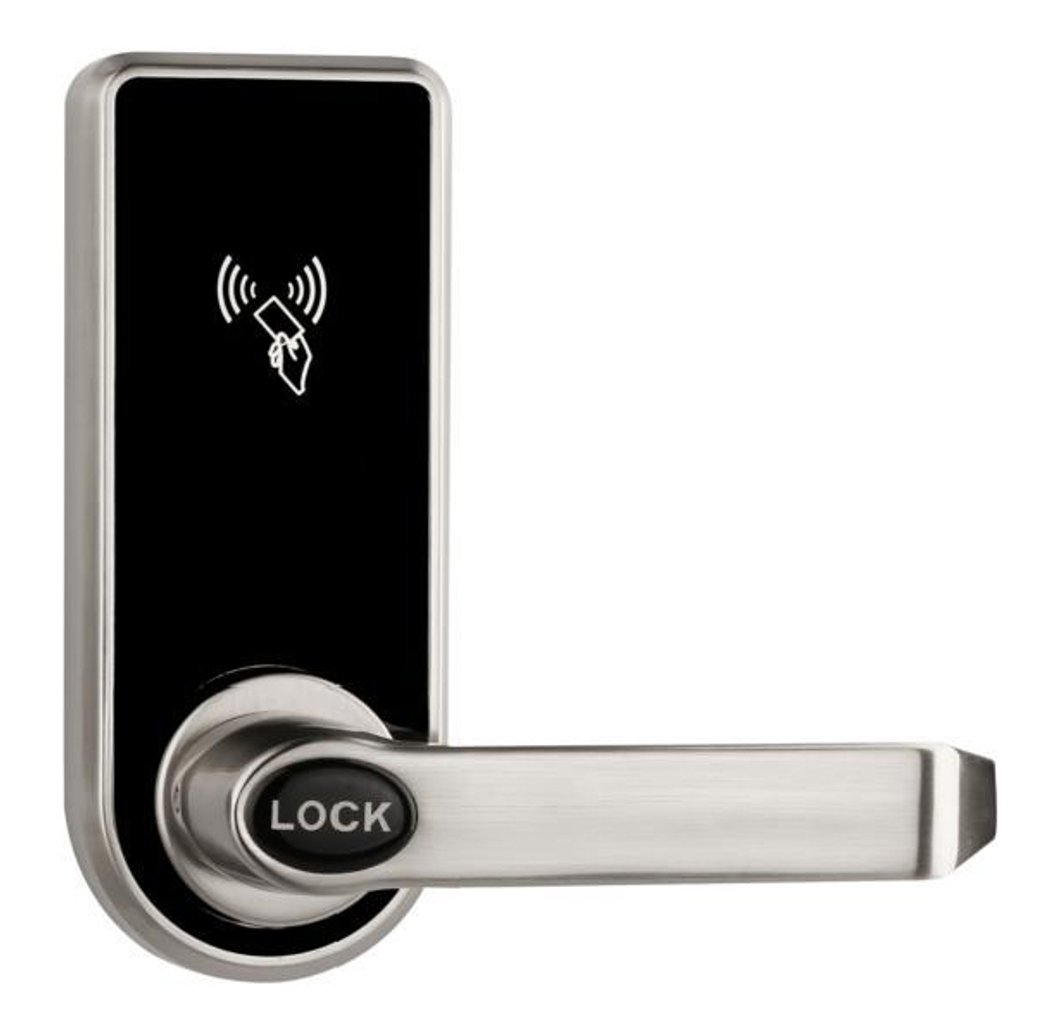
Kunci Pintar Hotel EK818 — Kunci Mortise Kartu RFID untuk Kamar Tamu
Kunci pintar hotel EK818: pembukaan kartu RFID dan kunci mekanik, panel paduan seng silver, single latch mini mortise, PCB sistem hotel atau stand-alone. 270+ model kunci hotel. CE RoHS. OEM/ODM.
contentGraph.reasons.explicit
contentGraph.sections.blog
1
Cara Memilih Kunci Pintu Sidik Jari: Panduan Kunci Biometrik
Panduan memilih kunci pintu sidik jari: jenis sensor, kecepatan pengenalan, akurasi, keamanan, baterai, sertifikasi, dan kunci biometrik untuk rumah dan bisnis.
contentGraph.reasons.productContext
nextStep.blog.title
nextStep.blog.description
- nextStep.blog.points.one
- nextStep.blog.points.two
- nextStep.blog.points.three