Panduan Memilih Sistem Kunci Pintu Hotel: RFID vs Mobile Key
Panduan pemilihan sistem kunci pintu hotel: RFID vs mobile key, integrasi PMS, operasi offline, software manajemen, baterai, keamanan, dan pemilihan pemasok.
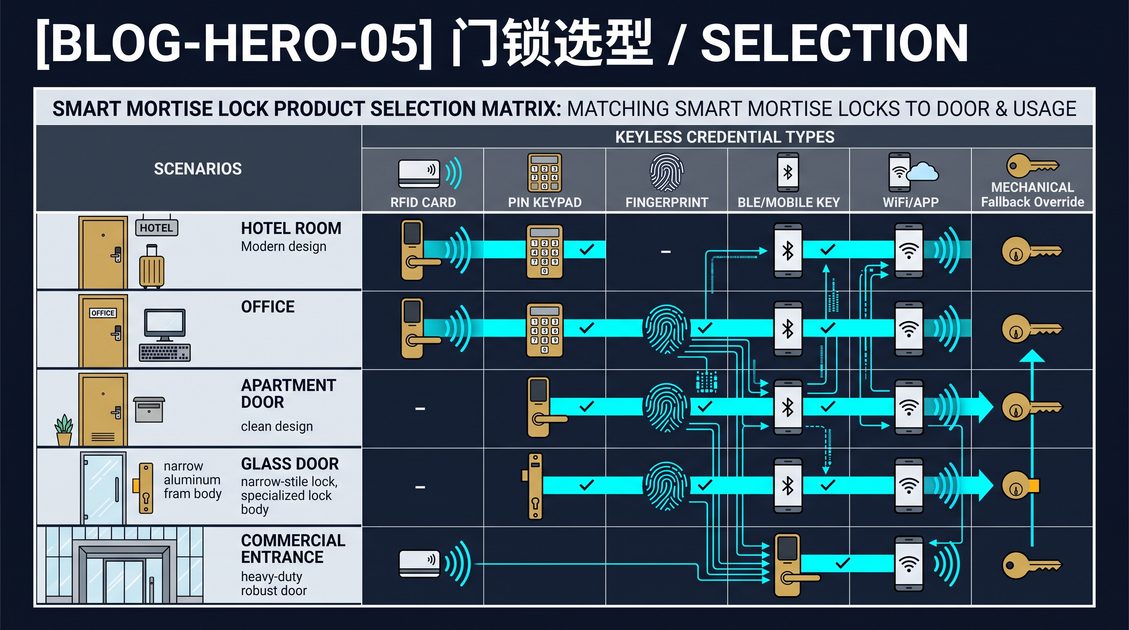
Sistem kunci pintu hotel adalah jaringan kontrol akses elektronik yang melindungi setiap kamar tamu dan mengatur siapa yang dapat memasuki pintu mana pada waktu tertentu, menggantikan kunci mekanis dan, semakin sering, model kartu kunci cetak. Kunci fisiknya biasanya berupa kunci mortise elektronik yang dipasang pada pintu kamar tamu, diautentikasi melalui kartu RFID, mobile key, atau PIN, dan dikelola oleh perangkat lunak yang menerbitkan, menjadwalkan, dan mencabut kredensial serta mencatat jejak audit. Panduan pemilihan sistem kunci pintu hotel ini ditulis untuk pemilik hotel, operator, manajer proyek, dan importir yang menentukan spesifikasi sistem untuk bangunan baru maupun retrofit dan perlu membandingkan solusi berdasarkan kriteria operasional, bukan klaim merek. Kunci pintu hotel adalah investasi yang tetap terpasang selama bertahun-tahun dan menyentuh setiap menginapnya tamu, sehingga memilih dengan tepat sangat penting, dan keputusan ini mencakup perangkat keras, perangkat lunak, integrasi, keandalan, keamanan, serta hubungan dengan pemasok.
Apa Itu Sistem Kunci Pintu Hotel dan Cara Kerjanya
Sistem kunci pintu hotel adalah kombinasi terkoordinasi dari kunci pintu elektronik, kredensial, dan perangkat lunak manajemen yang mengontrol akses ke kamar tamu dan area hotel lainnya. Setiap pintu kamar tamu dilengkapi kunci mortise elektronik dengan reader terpasang; meja depan atau kios check-in menerbitkan kredensial, paling umum berupa kartu RFID atau mobile key, yang hanya diotorisasi selama masa menginap tamu; dan perangkat lunak manajemen mengatur masa berlaku, menetapkan pintu, serta mencatat setiap pintuk masuk. Saat tamu menunjukkan kredensial, kunci memvalidasinya terhadap tabel otorisasinya dan membuka pintu jika kredensial valid untuk pintu dan rentang waktu tersebut.
Sistem ini memiliki tiga lapisan yang saling berinteraksi. Yang pertama adalah perangkat keras: bodi kunci mortise, reader, aktuator, dan perangkat keras pintu. Yang kedua adalah kredensial, token fisik atau digital yang dibawa tamu. Yang ketiga adalah perangkat lunak, yang berkisar dari encoder meja depan tunggal hingga integrasi sistem manajemen properti terjaringan yang menerbitkan kredensial secara otomatis saat check-in dan mencabutnya saat check-out. Kekuatan sistem kunci pintu hotel adalah lapisan-lapisan ini bekerja bersama: tamu tidak pernah melihat kerumitannya, hanya kartu yang berfungsi untuk kamar selama masa menginap dan berhenti bekerja tepat pada waktunya.
Bagi sebuah hotel, sistem ini adalah infrastruktur operasional, bukan sekadar perangkat keamanan. Sistem ini menentukan kecepatan check-in, kemampuan merespons kartu yang hilang dalam hitungan detik, keterlacakan siapa yang memasuki kamar dan kapan, serta integrasi dengan housekeeping, manajemen energi, dan akses bangunan. Sistem kunci pintu hotel yang cepat, andal, dan terintegrasi dengan baik meningkatkan pengalaman tamu dan efisiensi operasional; sistem yang lambat, tidak stabil, atau terisolasi menimbulkan friksi di meja depan, penguncian di koridor, dan sengketa soal akses kamar. Itulah mengapa proses pemilihan sistem kunci hotel merupakan latihan desain sistem, bukan sekadar pembelian produk.
Sistem kunci pintu hotel adalah jaringan terkoordinasi dari kunci mortise elektronik, kredensial, dan perangkat lunak manajemen yang mengontrol akses kamar tamu. Setiap pintu dilengkapi kunci mortise elektronik dengan reader; meja depan atau kios menerbitkan kredensial, paling umum kartu RFID atau mobile key, yang hanya berlaku selama masa menginap tamu; dan perangkat lunak mengatur masa berlaku, menetapkan pintu, serta mencatat pintuk masuk. Sistem ini memiliki tiga lapisan: perangkat keras, yaitu bodi kunci, reader, aktuator, dan perangkat keras pintu; kredensial; dan perangkat lunak, dari encoder tunggal hingga integrasi sistem manajemen properti terjaringan yang menerbitkan kredensial saat check-in dan mencabutnya saat check-out. Bagi hotel, sistem ini adalah infrastruktur operasional: menentukan kecepatan check-in, respons terhadap kartu hilang, keterlacakan akses kamar, dan integrasi dengan housekeeping serta manajemen energi. Pemilihannya adalah latihan desain sistem, bukan pembelian produk.
Kartu RFID vs Mobile Key pada Kunci Mortise Hotel
Kredensial adalah keputusan yang paling terlihat dalam sistem kunci pintu hotel, dan dua opsi dominannya adalah kartu RFID dan mobile key. Kartu RFID adalah kredensial kontak-nol, yang umumnya bekerja pada 13.56 MHz, dan ditunjukkan tamu ke reader pada kunci. Kartu ini cepat, tahan lama, murah untuk diproduksi, dan sudah dikenal tamu di seluruh dunia, serta bekerja untuk tamu mana pun dengan ponsel apa pun, sehingga menjadi pilihan default bagi sebagian besar hotel. Mobile key adalah kredensial digital yang dikirim ke ponsel pintar tamu, biasanya melalui Bluetooth Low Energy, yang membuka pintu melalui kedekatan atau ketukan di aplikasi, memungkinkan check-in mandiri tanpa singgah di meja depan.
Pilihan ini tidak selalu salah satu saja, karena sebagian besar sistem modern mendukung keduanya dan menggunakannya bersamaan. Hotel biasanya menawarkan kartu RFID di meja depan untuk mayoritas tamu dan mobile key untuk tamu yang memilih kedatangan kontak-nol. Perbedaan operasionalnya ada pada alur meja depan: sistem berbasis kartu mengharuskan meja depan meng-encode kartu untuk setiap tamu, sementara sistem mobile key memungkinkan tamu check-in secara daring dan langsung menuju kamar. Mobile key mengurangi beban meja depan dan mendukung pengalaman sepenuhnya kontak-nol, tetapi bergantung pada ponsel tamu yang terisi daya dan kompatibel serta aplikasi yang andal, sehingga cadangan kartu hampir selalu dipertahankan.
Bagi operator hotel, keputusan kredensial harus didorong oleh komposisi tamu dan ambisi operasional. Hotel bisnis atau merek yang mengedepankan teknologi mungkin mendorong mobile key untuk memperlancar kedatangan; hotel rekreasi atau internasional dengan tamu yang tingkat kenyamanan teknologinya beragam harus mengutamakan kartu RFID dan menawarkan mobile sebagai opsi. Keamanan juga penting: kartu hotel modern menggunakan kunci terenkripsi dan terdiversifikasi yang tidak dapat dikloning dengan reader sederhana, dan mobile key harus menggunakan transportasi aman serta kredensial sekali pakai atau terbatas waktu. Panduan ini merekomendasikan memilih sistem yang mendukung RFID dan mobile key secara native, sehingga hotel dapat menyesuaikan kredensial dengan tamu, bukan memaksakan salah satunya.
Dua kredensial dominan adalah kartu RFID dan mobile key. Kartu RFID, umumnya 13.56 MHz, ditunjukkan ke reader, cepat, tahan lama, murah, dan bekerja untuk tamu mana pun dengan ponsel apa pun, sehingga menjadi default bagi sebagian besar hotel. Mobile key adalah kredensial digital yang dikirim ke ponsel pintar melalui Bluetooth Low Energy, membuka pintu melalui kedekatan atau ketukan, dan memungkinkan check-in mandiri tanpa meja depan. Sebagian besar sistem modern mendukung keduanya dan menggunakannya bersamaan: kartu di meja depan untuk mayoritas dan mobile key untuk tamu yang memilih kedatangan kontak-nol. Pilih komposisinya sesuai tipe tamu, kartu sebagai andalan untuk tamu internasional atau yang kurang teknis, dan mobile untuk kedatangan kontak-nol. Keamanan menuntut kunci kartu terenkripsi dan terdiversifikasi yang tidak dapat dikloning serta kredensial mobile yang aman dan terbatas waktu.
Integrasi PMS: Cara Kunci Pintu Hotel Berkomunikasi dengan Sistem Anda
Sistem manajemen properti, atau PMS, adalah jantung operasional sebuah hotel, dan sistem kunci pintu hotel hanya benar-benar berguna ketika terintegrasi dengannya. Integrasi berarti perangkat lunak kunci pintu bertukar data dengan PMS sehingga check-in menerbitkan kredensial kamar secara otomatis, check-out mencabutnya, dan status setiap kamar tetap tersinkronisasi. Tanpa integrasi, meja depan harus meng-encode kartu secara manual dan mengelola perangkat lunak kunci pintu sebagai silo terpisah, yang menggandakan pekerjaan dan mengundang kesalahan, terutama untuk peristiwa check-in dan check-out yang menentukan hari-hari operasional hotel.
Kedalaman integrasi bervariasi. Minimumnya adalah antarmuka bersama atau middleware yang meneruskan peristiwa esensial, seperti check-in, check-out, perpindahan kamar, dan perpanjangan menginap. Integrasi yang lebih canggih juga meneruskan status housekeeping, memungkinkan audit jarak jauh, dan tersinkronisasi dengan sistem lain seperti manajemen energi, yang dapat menetapkan kamar ke kondisi kosong untuk memangkas penggunaan HVAC saat tamu meninggalkan kamar. Sistem kunci pintu hotel yang terintegrasi dengan baik mengurangi beban kerja meja depan, menghilangkan kesalahan penerbitan kredensial untuk kamar yang salah, dan mendukung check-in yang lebih cepat dan lebih otomatis.
Bagi pembeli, kemampuan integrasi harus diverifikasi, bukan diasumsikan, dan panduan ini menjadikannya salah satu dari tiga kriteria pemilihan teratas. Tanyakan platform PMS mana yang terintegrasi dengan sistem tersebut, bagaimana integrasinya diimplementasikan, apakah bersifat dua arah dan real-time, dan apakah vendor menyediakan antarmuka serta dukungan. Sistem yang mengklaim "integrasi PMS" tetapi membutuhkan pengembangan khusus, middleware berpemilik dengan biaya berulang, atau ekspor-impor manual lebih lemah daripada yang memiliki integrasi plug-in terbukti ke merek PMS yang Anda jalankan. Karena PMS adalah sistem pencatatan utama sebuah hotel, kunci pintu harus menyatu dengannya secara mulus, atau operasional akan menanggung biaya ketidakcocokan tersebut setiap hari.
Integrasi PMS adalah salah satu dari tiga kriteria pemilihan teratas. Integrasi berarti perangkat lunak kunci pintu bertukar data dengan sistem manajemen properti sehingga check-in menerbitkan kredensial kamar secara otomatis, check-out mencabutnya, dan status kamar tetap tersinkronisasi, menghilangkan pengodean kartu manual dan kesalahan yang menyertai sistem yang terpisah-pisah. Minimumnya adalah antarmuka bersama yang meneruskan peristiwa check-in, check-out, perpindahan kamar, dan perpanjangan; integrasi yang lebih dalam juga meneruskan status housekeeping dan memungkinkan sinkronisasi dengan manajemen energi, yang dapat menetapkan kamar kosong untuk memangkas penggunaan HVAC. Verifikasi, jangan berasumsi: tanyakan platform PMS mana yang terintegrasi, apakah integrasinya dua arah dan real-time, bagaimana implementasinya, dan apakah ada biaya middleware berulang. Integrasi plug-in terbukti ke merek PMS yang Anda jalankan lebih baik daripada klaim yang membutuhkan pengembangan khusus atau ekspor-impor manual.
Operasi Offline, Baterai, dan Keandalan di Koridor
Kunci pintu hotel harus tetap bekerja ketika hal lain tidak berfungsi, karena tamu yang berdiri di depan pintu kamar terkunci dengan koper tidak punya kesabaran terhadap gangguan jaringan. Kunci mortise hotel karena itu dirancang untuk mengautentikasi secara lokal: kunci memvalidasi kredensial terhadap tabel otorisasinya sendiri tanpa memerlukan koneksi jaringan aktif, dan reader, prosesor, serta aktuator berjalan dengan baterai di dalam pintu. Desain offline-first inilah yang membuat kartu yang diterbitkan di meja depan langsung berfungsi dan menjaga sistem tetap berfungsi bahkan jika WiFi, server, atau platform cloud mengalami kegagalan. Konsekuensinya adalah kunci offline harus diperbarui, biasanya melalui encoder atau kartu master di meja depan atau melalui sinkronisasi berkala, dan data audit terakumulasi di perangkat hingga dikumpulkan.
Manajemen baterai adalah perhatian operasional yang menentukan bagi armada kunci hotel. Kunci mortise hotel biasanya berjalan dengan baterai, umumnya sel AA, untuk periode yang bergantung pada frekuensi pembukaan, jenis reader, dan penggunaan radio; pintu hotel dengan lalu lintas tinggi dapat menghabiskan baterai dalam beberapa bulan hingga sekitar setahun, sedangkan pintu dengan lalu lintas rendah bertahan lebih lama. Sistem harus melaporkan status baterai lemah secara terpusat, dan banyak kunci memberikan peringatan baterai lemah kepada tamu pada kunci itu sendiri dan kepada tim pemeliharaan melalui perangkat lunak. Beberapa desain mendukung terminal daya cadangan sehingga baterai habis tidak membuat tamu terjebak, dan override kunci mekanis tetap menjadi jalan keluar terakhir yang universal.
Keandalan di koridor adalah hasil penjumlahan autentikasi offline, perencanaan baterai, dan kualitas mekanis. Panduan ini merekomendasikan menentukan spesifikasi sistem dengan autentikasi lokal yang tangguh, pelaporan baterai terpusat, jalur akses darurat yang terdokumentasi termasuk override mekanis dan daya cadangan, serta perangkat keras yang telah diuji siklus untuk volume yang dihasilkan sebuah hotel. Minta pemasok memberikan spesifikasi masa pakai baterai pada frekuensi pembukaan Anda, mekanisme pelaporan baterai, dan opsi akses darurat. Sistem kunci pintu hotel yang cepat di meja depan tetapi tidak andal di koridor adalah kegagalan, karena koridor adalah tempat tamu menjalani aktivitasnya.
Kunci pintu hotel harus bekerja ketika hal lain tidak berfungsi, sehingga kunci-kunci itu mengautentikasi secara lokal: kunci memvalidasi kredensial terhadap tabelnya sendiri tanpa jaringan aktif, berjalan dengan baterai di dalam pintu, yang menjaga sistem tetap berfungsi melalui gangguan jaringan, server, atau cloud. Konsekuensinya adalah kunci offline diperbarui melalui encoder, kartu master, atau sinkronisasi berkala, dan data audit terakumulasi hingga dikumpulkan. Manajemen baterai adalah perhatian utama: kunci mortise hotel berjalan dengan baterai, umumnya AA, selama beberapa bulan hingga sekitar setahun pada lalu lintas tinggi, dan sistem harus melaporkan baterai lemah secara terpusat sekaligus menawarkan terminal daya cadangan dan override kunci mekanis sebagai cadangan. Keandalan di koridor adalah hasil penjumlahan autentikasi offline, perencanaan baterai, dan kualitas mekanis yang teruji siklus. Tentukan pelaporan baterai terpusat, jalur akses darurat terdokumentasi, dan perangkat keras yang teruji untuk volume hotel.
Software Manajemen, Jejak Audit, dan Akses Multi-Level
Perangkat lunak manajemen adalah lapisan yang mengubah sekumpulan kunci pintu menjadi sistem hotel, dan kualitasnya menentukan seberapa besar manfaat operasional yang diperoleh. Platform manajemen kunci hotel memungkinkan administrator mendaftarkan kunci, mendefinisikan pengguna dan grup, mengatur masa berlaku, mengelola akses multi-level, dan membaca log audit. Akses multi-level penting dalam hotel karena staf yang berbeda membutuhkan hak yang berbeda: petugas housekeeping mungkin mengakses kumpulan kamar tertentu selama satu shift, supervisor mungkin mengakses semua kamar di satu lantai, dan manajemen mungkin mengakses semuanya. Perangkat lunak harus memodelkan peran-peran ini dengan rapi sehingga kredensial diterbitkan dengan cakupan yang tepat dan dicabut saat peran atau shift berakhir.
Jejak audit adalah fitur yang tidak bisa ditawar untuk sistem kunci pintu hotel. Catatan setiap pintuk masuk yang bertanda waktu dan teratribusi pengguna mendukung investigasi keselamatan tamu, penyelesaian sengketa, klaim asuransi, dan tinjauan operasional, serta dapat menjadi perlindungan dari tanggung jawab hukum bagi hotel. Panduan ini merekomendasikan mewajibkan log audit terpusat dengan atribusi pengguna dan kebijakan retensi yang jelas, serta menguji antarmuka pelaporan yang sebenarnya alih-alih menerima klaim di lembar spesifikasi. Jejak audit yang hanya tersimpan di setiap kunci dan harus dikumpulkan pintu demi pintu hampir tidak berguna di hotel besar, sehingga platform harus mengagregasi log secara terpusat dan membuatnya dapat dicari.
Platform manajemen juga mengontrol siklus hidup kredensial tamu dan staf dalam skala besar. Encoder meja depan menerbitkan kartu tamu atau mobile key dalam hitungan detik saat check-in; kartu yang hilang diterbitkan ulang dengan mencabut kredensial lama dan meng-encode kartu baru; check-in dicabut aksesnya saat check-out. Semakin mulus siklus hidup ini, semakin cepat meja depan bekerja dan semakin sedikit insiden terkunci terjadi. Panduan ini merekomendasikan memilih platform dengan alur kerja meja depan yang intuitif, peran staf yang dapat dikonfigurasi, audit terpusat, dan rekam jejak penerapan yang terbukti di hotel seukuran Anda, serta menganggarkan platform tersebut sebagai biaya perangkat lunak berulang yang merupakan bagian dari harga total sistem.
Perangkat lunak manajemen mengubah kunci menjadi sistem hotel dan menentukan manfaat operasionalnya. Platform ini memungkinkan administrator mendaftarkan kunci, mendefinisikan pengguna dan grup, mengatur masa berlaku, mengelola akses multi-level, dan membaca log audit. Akses multi-level memodelkan peran hotel: petugas housekeeping mengakses kumpulan kamar tertentu selama shift, supervisor satu lantai, dan manajemen semuanya, dengan kredensial yang dicakupkan dan dicabut saat peran berakhir. Jejak audit tidak bisa ditawar: catatan setiap pintuk masuk yang bertanda waktu dan teratribusi pengguna mendukung investigasi keselamatan, penyelesaian sengketa, dan asuransi, serta harus terpusat, dapat dicari, dan disimpan sesuai kebijakan yang jelas, bukan tersebar di setiap kunci. Platform juga mengelola siklus hidup kredensial dalam skala besar, menerbitkan, menerbitkan ulang, dan mencabut kredensial tamu dan staf dari meja depan. Pilih alur kerja meja depan yang intuitif, peran yang dapat dikonfigurasi, audit terpusat, dan penerapan terbukti di hotel seukuran Anda, serta anggarkan platform sebagai biaya perangkat lunak berulang.
Keamanan Kunci Mortise Hotel: Enkripsi dan Standar
Keamanan dalam konteks hotel berarti mencegah masuknya kamar tanpa izin, melindungi privasi tamu, serta menahan kloning kredensial dan pintuk bypass kunci. Sistem kunci pintu hotel menahan kloning melalui kunci kartu yang terenkripsi dan terdiversifikasi: setiap kartu di-encode dengan kunci yang diturunkan untuk kunci dan properti tertentu, sehingga reader RFID sederhana tidak dapat membaca nomor kartu mentah dan mereproduksinya. Ini adalah pembedaan yang kritis, karena kartu hotel frekuensi rendah yang tidak terenkripsi dapat dikloning dengan alat murah. Sistem juga harus mengamankan komunikasi radio, baik antara kunci dan encoder, mobile key melalui Bluetooth, maupun tautan manajemen nirkabel, dengan enkripsi.
Perlindungan privasi tamu dan paparan data hotel mengikuti dari desain yang aman. Kredensial, log audit, dan informasi tamu harus disimpan dan ditransmisikan secara aman, dan platform manajemen harus menegakkan akses berbasis peran sehingga hanya staf yang berwenang yang dapat melihat siapa memasuki kamar mana. Bagi hotel yang menangani data pribadi, kepatuhan terhadap regulasi perlindungan data penting, dan sistem yang menyimpan data di server lokal atau di cloud yang patuh dengan kontrol akses yang tepat lebih disukai daripada yang memaparkan data melalui antarmuka yang lemah.
Keamanan mekanis dan perangkat keras melengkapi keseluruhan gambaran. Bodi kunci mortise harus cukup kuat untuk menahan pembobolan, dengan bolt, strike, dan pemasangan yang tangguh, dan elektronikanya harus tahan gangguan perusakan. Sertifikasi memberikan verifikasi independen: CE dan FCC mencakup persyaratan keselamatan dan radio, RoHS membatasi zat berbahaya, dan klaim mekanis serta keamanan yang lebih tinggi dinilai berdasarkan standar seperti UL, ANSI/BHMA, atau norma nasional yang setara. Panduan ini merekomendasikan meminta sertifikasi dan spesifikasi enkripsi, serta memverifikasi bahwa model yang tepat tercakup, karena perbedaan antara kunci hotel yang aman dan yang rentan justru terletak pada detail rekayasa ini.
Keamanan berarti mencegah masuk tanpa izin, melindungi privasi tamu, serta menahan kloning dan bypass. Sistem hotel menahan kloning melalui kunci kartu yang terenkripsi dan terdiversifikasi, masing-masing di-encode dengan kunci yang diturunkan untuk kunci dan properti tertentu, sehingga reader RFID sederhana tidak dapat mengkloning kartu; kartu frekuensi rendah yang tidak terenkripsi rentan dan harus dihindari. Komunikasi radio, antara kunci dan encoder, mobile key melalui Bluetooth, dan tautan manajemen nirkabel, harus terenkripsi. Privasi tamu dan perlindungan data menuntut penyimpanan kredensial, log audit, dan informasi tamu yang aman, dengan akses berbasis peran sehingga hanya staf berwenang yang melihat catatan pintuk masuk, serta kepatuhan terhadap regulasi perlindungan data. Keamanan mekanis dan perangkat keras menuntut bolt, strike, dan pemasangan yang tangguh serta elektronik tahan perusakan. Sertifikasi, CE, FCC, RoHS, dan grade lebih tinggi seperti UL atau ANSI/BHMA, memverifikasi klaim-klaim tersebut; minta sertifikat dan pastikan model yang tepat tercakup.
New Build vs Retrofit: Memilih dan Memasang Kunci Pintu Hotel
Konteks pemasangan fisik membentuk keputusan kunci pintu hotel, dan dua kasus, new build dan retrofit, mengarah pada pilihan yang berbeda. Pada bangunan baru, pintu dan kunci ditentukan spesifikasinya bersamaan, sehingga hotel memiliki kebebasan terluas untuk memilih bentuk kunci mortise, finishing, set handle, dan konfigurasi elektronik, dan kunci dapat ditentukan agar sesuai spesifikasi pintu yang persis sejak awal. Bangunan baru juga berarti perangkat keras dapat dipasang dengan rapi selama konstruksi, dengan infrastruktur daya dan jaringan yang direncanakan lebih dahulu jika desain menggunakan konektivitas berbasis kabel atau gateway.
Retrofit adalah kasus yang lebih umum dan lebih terkendala, karena sebagian besar hotel meningkatkan pintu yang sudah ada. Pertanyaan kunci dalam retrofit adalah apakah pintu yang ada memiliki kantong mortise dan apakah kunci baru dapat masuk ke dalamnya, atau pintu harus dimodifikasi. Retrofit paling bersih ketika kunci mortise elektronik baru menggunakan cutout, backset, dan strike yang sudah ada, mempertahankan set handle dan tampilan pintu; lebih sulit ketika bentuknya berubah, yang membutuhkan pemotongan kantong baru, dan ini adalah pekerjaan profesional pada pintu solid-core atau tahan api. Kondisi, ketebalan, dan rating tahan api pintu yang ada semuanya memengaruhi apa yang dapat dipasang.
Bagi operator hotel, panduan ini merekomendasikan audit pintu sebelum memilih sistem apa pun. Survei pintu-pintu kamar untuk memastikan keluarga bodi kunci, backset, ketebalan, orientasi tangan, dan rating tahan api, serta identifikasi pintu mana yang sudah memiliki kantong mortise yang dapat digunakan kembali oleh kunci elektronik. Gunakan audit tersebut untuk memutuskan apakah proyek ini merupakan pemasangan langsung yang sederhana atau proyek modifikasi, dan susun anggaran sesuai hal itu. Proyek bangunan baru atau retrofit yang bersih dapat mengadopsi sistem kunci mortise elektronik lengkap dengan set handle; retrofit yang sulit mungkin lebih menguntungkan jalur peningkatan yang lebih sederhana. Dalam semua kasus, pemasangan profesional pada pintu tahan api sangat penting untuk mempertahankan rating tahan api dan garansi.
Bangunan baru dan retrofit mengarah pada pilihan yang berbeda. Pada bangunan baru, pintu dan kunci ditentukan bersamaan, memberikan kebebasan terluas untuk memilih bentuk mortise, finishing, set handle, dan konfigurasi elektronik, dengan daya dan jaringan yang direncanakan lebih dahulu. Retrofit lebih umum dan lebih terkendala: pertanyaan kuncinya adalah apakah pintu yang ada memiliki kantong mortise yang dapat dimasuki kunci baru, yang mempertahankan set handle dan tampilan, atau perubahan bentuk membutuhkan pemotongan kantong baru, pekerjaan profesional pada pintu solid-core atau tahan api. Lakukan audit pintu sebelum memilih sistem, memastikan keluarga bodi kunci, backset, ketebalan, orientasi tangan, dan rating tahan api, serta memutuskan pemasangan langsung atau modifikasi. Retrofit yang bersih mengadopsi sistem mortise elektronik lengkap dengan set handle; yang sulit lebih memilih jalur yang lebih sederhana. Pemasangan profesional pada pintu tahan api mempertahankan rating tahan api dan garansi.
Jenis Pintu, Finishing, dan Kompatibilitas Kunci Hotel
Properti hotel memiliki lebih dari satu jenis pintu, dan sistem kunci pintu hotel harus cocok untuk semuanya. Di luar kunci mortise kamar tamu standar, hotel biasanya membutuhkan kunci atau latch untuk pintu koridor, pintu tangga darurat, pintu tahan api, ruang servis dan housekeeping, serta pintu masuk utama, dan masing-masing mungkin membutuhkan perangkat atau cakupan kredensial yang berbeda. Pintu kamar tamu hampir selalu berupa kunci mortise elektronik; pintu koridor dan servis mungkin menggunakan sistem yang sama dengan hak akses berbeda, sedangkan pintu tahan api membutuhkan perangkat keras yang mempertahankan rating tahan api dan sering kali konfigurasi fail-safe atau fail-secure. Pintu masuk utama mungkin menggunakan perangkat berbeda, seperti reader atau pintu lobi, yang terintegrasi dengan ekosistem kredensial yang sama.
Kompatibilitas juga mencakup perangkat keras fisik dan finishing. Merek hotel biasanya memiliki estetika tersendiri, dan finishing kunci, set handle, serta trim harus cocok dengan desain interior sekaligus memenuhi persyaratan daya tahan untuk penggunaan tamu yang berat. Panduan ini merekomendasikan menentukan finishing dan desain handle sebagai bagian dari pemilihan, karena perangkat keras ini terlihat di setiap kamar dan mengganti kunci yang tidak menarik atau finishingnya buruk di kemudian hari itu mahal. Daya tahan sama pentingnya dengan tampilan: kunci pintu hotel digunakan puluhan kali sehari dan harus bertahan bertahun-tahun siklus penggunaan tanpa longgar, pudar, atau rusak.
Integrasi dengan sistem hotel lain melengkapi gambaran kompatibilitas. Di luar PMS, hotel mungkin ingin kunci pintu bekerja dengan manajemen energi, untuk menetapkan kamar kosong dan memangkas HVAC saat tamu meninggalkan kamar, serta dengan akses bangunan, sehingga kredensial staf bekerja lintas kamar, lantai, dan pintu masuk. Panduan ini merekomendasikan menanyakan bagaimana kunci terintegrasi dengan manajemen energi dan akses bangunan, serta lebih memilih sistem dari satu pemasok atau mitra integrasi tersertifikasi agar komponen-komponen bekerja bersama. Sistem kunci pintu hotel hanya sebaik kesesuaiannya di seluruh properti, dan menentukan spesifikasi untuk jenis pintu, finishing, dan integrasi sistem sejak awal menghindarkan Anda dari tambal sulam yang mahal di kemudian hari.
Properti hotel mencakup berbagai jenis pintu, dan sistem kunci pintu hotel harus cocok untuk semuanya: kunci mortise elektronik kamar tamu, pintu koridor dan tangga darurat, pintu tahan api yang membutuhkan perangkat keras fail-safe atau fail-secure yang mempertahankan rating tahan api, ruang servis dengan akses terbatas, dan pintu masuk utama yang terintegrasi dengan ekosistem kredensial yang sama. Kompatibilitas juga mencakup finishing dan perangkat keras: finishing kunci, set handle, dan trim harus cocok dengan estetika merek dan bertahan puluhan siklus harian tanpa longgar, pudar, atau rusak, sehingga tentukan finishing dan desain handle sebagai bagian dari pemilihan karena perangkat keras terlihat di setiap kamar. Integrasi dengan manajemen energi, untuk menetapkan kamar kosong dan memangkas HVAC saat tamu pergi, serta dengan akses bangunan, agar kredensial staf bekerja lintas kamar, lantai, dan pintu masuk, melengkapi keseluruhan gambaran. Utamakan satu pemasok atau mitra integrasi tersertifikasi agar komponen bekerja bersama, menghindari tambal sulam yang mahal di kemudian hari.
Memilih Pemasok Kunci Pintu Hotel dan Mengelola Biaya
Hubungan dengan pemasok sama pentingnya dengan perangkat keras dalam proyek kunci pintu hotel, dan panduan ini menjadikannya keputusan inti. Sistem hotel dipasang sekali dan dioperasikan selama bertahun-tahun, sehingga keandalan pemasok, dukungan, ketersediaan suku cadang, dan daya respons purna jual lebih penting daripada perbedaan harga kecil. Bagi hotel yang membeli langsung atau melalui importir, verifikasi kredensial produsen, minta referensi pemasangan di hotel seukuran sebanding, tanyakan tentang garansi, suku cadang, dokumentasi teknis, dan pelatihan, serta pastikan pemasok mampu mendukung siklus hidup penuh sistem tersebut.
Biaya dalam proyek kunci pintu hotel memiliki beberapa lapisan. Ada biaya perangkat keras per pintu, yang berskala mengikuti bodi kunci, reader kredensial, dan finishing. Ada biaya pemasangan, yang bergantung pada bangunan baru atau retrofit dan tenaga profesional. Ada biaya kredensial, kartu RFID atau lisensi mobile key, yang berulang seiring konsumsi tamu. Dan ada biaya perangkat lunak, sering kali biaya per-pintu atau per-properti yang berulang untuk platform manajemen beserta pembaruan dan dukungannya. Panduan ini merekomendasikan menghitung total biaya kepemilikan per pintu dalam horizon perencanaan yang realistis, misalnya lima tahun, alih-alih membandingkan hanya harga satuan kunci.
Bagi pembeli volume dan importir, tuas ekonominya adalah MOQ, waktu pengiriman, kustomisasi, dan pasokan. Konfirmasikan MOQ untuk kunci mortise hotel standar dan untuk versi kustom dengan merek atau finishing tertentu, karena MOQ kustom biasanya lebih tinggi. Tetapkan waktu pengiriman secara tertulis, perjelas syarat pembayaran, dan pahami pasokan suku cadang purna jual. Sistem kunci hotel adalah kemitraan jangka panjang, dan pemasok yang bertanggung jawab atas perangkat keras, sertifikasi, dan dukungan dari satu sumber lebih berharga daripada harga satuan pertama termurah. Membeli langsung dari produsen kunci mortise pintar memberi hotel mitra tunggal yang dapat dimintai pertanggungjawaban di sepanjang proyek.
Hubungan dengan pemasok adalah inti dari proyek kunci hotel. Verifikasi kredensial produsen, minta referensi pemasangan di hotel seukuran sebanding, dan pastikan garansi, suku cadang, dokumentasi teknis, serta pelatihan, karena sistem dipasang sekali dan dioperasikan selama bertahun-tahun. Biaya memiliki beberapa lapisan: perangkat keras per pintu, pemasangan, biaya kredensial berulang seperti kartu RFID atau lisensi mobile key, dan biaya perangkat lunak berulang untuk platform manajemen dan dukungan. Hitung total biaya kepemilikan lima tahun per pintu alih-alih membandingkan harga satuan. Bagi pembeli volume, konfirmasikan MOQ untuk kunci standar dan kustom, tetapkan waktu pengiriman secara tertulis, perjelas syarat pembayaran, dan pahami pasokan suku cadang. Pemasok yang bertanggung jawab atas perangkat keras, sertifikasi, dan dukungan dari satu sumber lebih berharga daripada harga satuan pertama termurah, dan membeli langsung dari produsen memberi hotel satu mitra yang dapat dimintai pertanggungjawaban.
FAQ: Panduan Pemilihan Sistem Kunci Pintu Hotel
Kartu RFID atau mobile key untuk hotel saya?
Sebagian besar sistem mendukung keduanya dan menggunakannya bersamaan. Utamakan kartu RFID untuk mayoritas tamu, karena bekerja dengan ponsel apa pun dan sudah dikenal di seluruh dunia, serta tawarkan mobile key untuk tamu yang memilih kedatangan kontak-nol. Pilih komposisinya sesuai profil tamu Anda.
Apakah saya membutuhkan integrasi PMS?
Integrasi PMS adalah salah satu dari tiga kriteria teratas. Integrasi mengotomatiskan check-in dan check-out, menerbitkan dan mencabut kredensial tanpa pengodean kartu manual, serta menjaga status kamar tetap tersinkronisasi. Verifikasi bahwa sistem terintegrasi dengan merek PMS yang Anda jalankan, secara dua arah dan real-time.
Apa yang terjadi jika jaringan mati?
Kunci mortise hotel mengautentikasi secara lokal, sehingga kartu yang diterbitkan di meja depan tetap berfungsi bahkan saat jaringan atau server mati. Pastikan ada pelaporan baterai terpusat, terminal daya cadangan, dan override kunci mekanis sebagai cadangan darurat.
Berapa lama baterai kunci hotel bertahan?
Pada lalu lintas tamu tinggi, baterai umumnya bertahan dari beberapa bulan hingga sekitar setahun, bergantung pada frekuensi pembukaan, jenis reader, dan penggunaan radio. Sistem harus melaporkan status baterai lemah secara terpusat agar pemeliharaan mengganti sel sesuai jadwal.
Bagaimana saya mengamankan dari kloning kartu?
Wajibkan kunci kartu yang terenkripsi dan terdiversifikasi yang tidak dapat dikloning reader sederhana, dan hindari kartu frekuensi rendah yang tidak terenkripsi. Enkripsikan komunikasi radio dan transportasi mobile key, serta pastikan sertifikasi seperti CE, FCC, RoHS, dan grade lebih tinggi seperti UL atau ANSI/BHMA.
Bisakah saya melakukan retrofit pada pintu hotel yang ada?
Ya, jika pintu yang ada memiliki kantong mortise yang dapat digunakan kembali oleh kunci mortise elektronik baru. Lakukan audit pintu pada bodi kunci, backset, ketebalan, orientasi tangan, dan rating tahan api untuk memutuskan pemasangan langsung atau modifikasi, dan gunakan profesional pada pintu tahan api.
Kesimpulan: Pilih Sistem Kunci Pintu Hotel yang Mendukung Operasional Anda
Panduan pemilihan sistem kunci pintu hotel ini telah membahas komposisi kredensial, integrasi PMS, keandalan offline, baterai, perangkat lunak manajemen, keamanan, pemasangan, kompatibilitas pintu, dan ekonomi pemasok. Rekomendasi pemersatunya adalah memilih sistem yang mengautentikasi secara andal di pintu, terintegrasi dengan mulus dengan PMS Anda, mengelola kredensial dan audit secara terpusat, dan berasal dari pemasok yang bertanggung jawab atas seluruh siklus hidup. Sistem kunci pintu hotel adalah infrastruktur operasional, dan pilihan terbaik adalah yang menghilang ke dalam pengalaman menginap tamu yang mulus, cepat, dan aman.
Terapkan panduan ini sebagai spesifikasi. Pastikan kunci mortise offline-first beserta desain baterai dan akses daruratnya, pilih komposisi kredensial RFID dan mobile key yang sesuai dengan tamu Anda, verifikasi integrasi PMS yang nyata, wajibkan audit terpusat dan akses multi-level, tentukan finishing dan set handle yang cocok dengan merek Anda, audit pintu Anda untuk retrofit, dan pilih produsen yang dapat Anda mintai pertanggungjawaban selama bertahun-tahun. Anggarkan untuk siklus hidup penuh, termasuk kredensial, penggantian baterai, dan langganan platform manajemen, sehingga sistem ini berkelanjutan secara operasional sekaligus teknis. Sistem kunci pintu hotel yang dipilih dengan baik dan terikat pada kunci mortise elektronik tersertifikasi adalah aset jangka panjang bagi properti hotel mana pun, dan melindungi pengalaman tamu sekaligus postur keamanan operasional selama bertahun-tahun layanan.
Sebagian konten artikel ini dihasilkan oleh AI dan dioptimalkan untuk akurasi profesional dan keterbacaan. A hotel door lock system is the electronic access-control network that protects every guest room and manages who can enter which door at which time, replacing mechanical keys and, increasingly, the printed key card model. The physical lock is typically an electronic mortise lock fitted to the guest-room door, authenticated by an RFID card, a mobile key, or a PIN, and managed by software that issues, schedules, and revokes credentials and records an audit trail. This hotel door lock system selection guide is written for hotel owners, operators, project managers, and importers who are specifying a system for a new-build or a retrofit and need to compare solutions on operational criteria rather than brand claims. A hotel door lock is an investment that stays in place for years and touches every guest stay, so choosing correctly matters enormously, and the decision spans hardware, software, integration, reliability, security, and the supplier relationship.
What Is a Hotel Door Lock System and How It Works
A hotel door lock system is a coordinated combination of electronic door locks, credentials, and management software that controls access to guest rooms and other hotel areas. Each guest-room door carries an electronic mortise lock with an embedded reader; the front desk or a check-in kiosk issues a credential, most commonly an RFID card or a mobile key, that is authorized only for the guest's stay; and the management software sets the validity period, assigns the door, and records every entry. When a guest presents the credential, the lock validates it against its authorization table and unlocks the door if the credential is valid for that door and that time window.
The system has three interacting layers. The first is the hardware: the mortise lock body, the reader, the actuator, and the door furniture. The second is the credential, the physical or digital token the guest carries. The third is the software, which ranges from a single front-desk encoder to a networked property-management-system integration that issues credentials automatically at check-in and revokes them at check-out. The power of a hotel door lock system is that these layers work together: the guest never sees the complexity, only a card that works for the room during the stay and stops working the moment it should.
For a hotel, the system is operational infrastructure, not a security gadget. It determines check-in speed, the ability to respond to a lost card in seconds, the auditability of who entered a room and when, and the integration with housekeeping, energy management, and building access. A hotel door lock system that is fast, reliable, and well-integrated improves the guest experience and the operation's efficiency; one that is slow, flaky, or isolated creates friction at the front desk, lockouts in the corridor, and disputes about room access. This is why the selection process for a hotel lock system is a system-design exercise, not a product purchase.
A hotel door lock system is a coordinated network of electronic mortise locks, credentials, and management software that controls guest-room access. Each door carries an electronic mortise lock with a reader; the front desk or kiosk issues a credential, most commonly an RFID card or mobile key, valid only for the guest's stay; and software sets validity, assigns doors, and records entries. The system has three layers: hardware, the lock body, reader, actuator, and door furniture; the credential; and the software, from a single encoder to a networked property-management-system integration that issues credentials at check-in and revokes them at check-out. For a hotel, the system is operational infrastructure: it determines check-in speed, response to lost cards, auditability of room access, and integration with housekeeping and energy management. Selection is a system-design exercise, not a product purchase.
RFID Card vs Mobile Key on Hotel Mortise Locks
The credential is the most visible decision in a hotel door lock system, and the two dominant options are the RFID card and the mobile key. An RFID card is a contactless credential, most commonly operating at 13.56 MHz, that the guest presents to a reader on the lock. It is fast, durable, inexpensive to produce, and familiar to guests worldwide, and it works for any guest with any phone, which makes it the default for most hotels. A mobile key is a digital credential delivered to the guest's smartphone, usually over Bluetooth Low Energy, that unlocks the door by proximity or a tap in the app, enabling self-service check-in without a stop at the front desk.
The choice is not strictly either-or, because most modern systems support both and use them together. A hotel typically offers an RFID card at the desk for the majority of guests and a mobile key for guests who opt into contactless arrival. The operational difference is in the front-desk flow: a card-based system requires the desk to encode a card per guest, while a mobile-key system lets guests check in online and go straight to the room. Mobile keys reduce front-desk load and support a fully contactless experience, but they depend on the guest having a charged, compatible phone and on the app being reliable, so a card fallback is almost always retained.
For a hotel operator, the credential decision should be driven by the guest mix and the operation's ambition. A business hotel or a tech-forward brand may push mobile keys to streamline arrival; a leisure or international hotel with guests of varying technical comfort should lead with the RFID card and offer mobile as an option. Security also matters: modern hotel cards use encrypted, diversified keys that cannot be cloned by a simple reader, and a mobile key should use secure transport and a one-time or time-limited credential. This guide recommends choosing a system that supports both RFID and mobile key natively, so the hotel can match the credential to the guest rather than forcing one.
The two dominant credentials are the RFID card and the mobile key. An RFID card, most commonly 13.56 MHz, is presented to a reader, is fast, durable, inexpensive, and works for any guest with any phone, making it the default for most hotels. A mobile key is a digital credential delivered to the smartphone over Bluetooth Low Energy, unlocking by proximity or tap and enabling self-service check-in without the front desk. Most modern systems support both and use them together: a card at the desk for the majority and a mobile key for guests who opt into contactless arrival. Choose the mix by guest type, offering card-led for international or less technical guests and mobile for contactless arrival. Security requires encrypted, diversified card keys that cannot be cloned and secure, time-limited mobile credentials.
PMS Integration: How the Hotel Door Lock Talks to Your Systems
The property-management system, or PMS, is the operational heart of a hotel, and a hotel door lock system is only fully useful when it integrates with it. Integration means the door-lock software exchanges data with the PMS so that check-in issues the room credential automatically, check-out revokes it, and the status of each room stays in sync. Without integration, the front desk must encode cards manually and manage the door-lock software as a separate silo, which doubles the work and invites errors, especially for the check-in and check-out events that define a hotel's day.
The depth of integration varies. The minimum is a shared interface or middleware that passes the essential events, such as check-in, check-out, room change, and extension. More sophisticated integration also passes housekeeping status, enables remote audit, and synchronizes with other systems such as energy management, which can put the room in an unoccupied state to cut HVAC use when a guest leaves. A well-integrated hotel door lock system reduces front-desk labor, eliminates the error of issuing a credential for the wrong room, and supports faster, more automated check-in.
For a buyer, integration capability should be verified, not assumed, and this guide treats it as a top-three selection criterion. Ask which PMS platforms the system integrates with, how the integration is delivered, whether it is bidirectional and real-time, and whether the vendor provides the interface and support. A system that claims "PMS integration" but requires custom development, a proprietary middleware with recurring fees, or manual export-import is weaker than one with a proven, plug-in integration to the PMS brands you run. Because the PMS is the system of record for a hotel, the door lock must fit into it cleanly or the operation will carry the cost of the mismatch every day.
PMS integration is a top-three selection criterion. It means the door-lock software exchanges data with the property-management system so check-in issues the room credential automatically, check-out revokes it, and room status stays in sync, eliminating manual card encoding and the errors that come with a siloed system. The minimum is a shared interface passing check-in, check-out, room change, and extension events; deeper integration also passes housekeeping status and enables synchronization with energy management, which can set a room unoccupied to cut HVAC use. Verify, not assume: ask which PMS platforms the system integrates with, whether the integration is bidirectional and real-time, how it is delivered, and whether it carries recurring middleware fees. A proven plug-in integration to the PMS brands you run beats a claim that requires custom development or manual export-import.
Offline Operation, Battery, and Reliability in the Corridor
A hotel door lock must work when nothing else does, because a guest standing at a locked room door with luggage has no patience for a network outage. Hotel mortise locks are therefore designed to authenticate locally: the lock validates the credential against its own authorization table without needing a live network connection, and the reader, processor, and actuator run on batteries inside the door. This offline-first design is what makes a card issued at the desk work immediately and keeps the system functional even if the WiFi, the server, or the cloud platform fails. The trade-off is that offline locks must be updated, typically by an encoder or a master card at the front desk or by a periodic sync, and audit data accumulates on the device until it is collected.
Battery management is a defining operational concern for a hotel lock fleet. A hotel mortise lock typically runs on batteries, commonly AA cells, for a period that depends on unlock frequency, reader type, and radio use; a high-traffic hotel door can drain batteries in several months to about a year, while a low-traffic door lasts longer. A system must report low-battery status centrally, and many locks provide a low-battery warning to the guest on the lock itself and to maintenance via the software. Some designs support a backup power terminal so a dead battery does not strand a guest, and the mechanical key override remains the universal final fallback.
Reliability in the corridor is the sum of offline authentication, battery planning, and mechanical quality. This guide recommends specifying a system with robust local authentication, central battery reporting, a documented emergency-access path including a mechanical override and backup power, and hardware that has been cycle-tested for the volumes a hotel generates. Ask the supplier for the specified battery life at your unlock frequency, the battery-reporting mechanism, and the emergency-access options. A hotel door lock system that is fast at the desk but unreliable in the corridor is a failure, because the corridor is where the guest lives.
Hotel door locks must work when nothing else does, so they authenticate locally: the lock validates the credential against its own table without a live network, running on batteries inside the door, which keeps the system functional through a network, server, or cloud outage. The trade-off is that offline locks are updated by an encoder, master card, or periodic sync, and audit data accumulates until collected. Battery management is a defining concern: a hotel mortise lock runs on batteries, commonly AA, for several months to about a year at high traffic, and a system must report low-battery centrally while offering a backup power terminal and a mechanical key override as fallbacks. Reliability in the corridor is the sum of offline authentication, battery planning, and cycle-tested mechanical quality. Specify central battery reporting, a documented emergency-access path, and hardware tested for hotel volume.
Management Software, Audit Trails, and Multi-Level Access
The management software is the layer that turns a set of door locks into a hotel system, and its quality determines how much the operation benefits. A hotel lock management platform lets an administrator enroll locks, define users and groups, set validity periods, manage multi-level access, and read audit logs. Multi-level access matters in a hotel because different staff need different rights: a housekeeper may access a defined set of rooms during a shift, a supervisor may access all rooms on a floor, and management may access everything. The software should model these roles cleanly so that credentials are issued with the correct scope and revoked when a role or shift ends.
Audit trails are a non-negotiable feature for a hotel door lock system. A timestamped, user-attributed record of every entry supports guest-safety investigations, dispute resolution, insurance, and operational reviews, and it can be a liability protection for the hotel. This guide recommends requiring centralized audit logs with user attribution and a clear retention policy, and testing the actual reporting interface rather than accepting a spec-sheet claim. An audit trail that lives only on each lock and must be collected door by door is nearly useless in a large hotel, so the platform should aggregate logs centrally and make them searchable.
The management platform also controls the guest and staff credential lifecycle at scale. A front-desk encoder issues a guest card or mobile key in seconds at check-in; a lost card is reissued by revoking the old credential and encoding a new one; a check-out revokes access. The smoother this lifecycle, the faster the desk operates and the fewer lockouts occur. This guide recommends choosing a platform with an intuitive front-desk workflow, configurable staff roles, centralized audit, and a proven deployment at hotels of your size, and to budget the platform as recurring software cost that is part of the total system price.
The management software turns locks into a hotel system and determines operational benefit. It lets an administrator enroll locks, define users and groups, set validity, manage multi-level access, and read audit logs. Multi-level access models hotel roles: a housekeeper accesses a defined room set during a shift, a supervisor a floor, and management everything, with credentials scoped and revoked as roles end. Audit trails are non-negotiable: a timestamped, user-attributed record of every entry supports safety investigations, dispute resolution, and insurance, and must be centralized, searchable, and retained under a clear policy rather than left scattered per lock. The platform also manages the credential lifecycle at scale, issuing, reissuing, and revoking guest and staff credentials from the desk. Choose an intuitive front-desk workflow, configurable roles, centralized audit, and proven deployments at your hotel's size, and budget the platform as recurring software cost.
Security for Hotel Mortise Locks: Encryption and Standards
Security in a hotel context means preventing unauthorized room entry, protecting guest privacy, and resisting credential cloning and lock bypass. A hotel door lock system resists cloning through encrypted, diversified card keys: each card is encoded with a key derived for the specific lock and property, so a simple RFID reader cannot read a raw card number and reproduce it. This is a critical distinction, because unencrypted low-frequency hotel cards can be cloned with inexpensive tools. The system should also secure the radio communication, whether between the lock and the encoder, the mobile key over Bluetooth, or the wireless management link, with encryption.
Protecting guest privacy and the hotel's data exposure follows from secure design. Credentials, audit logs, and guest information should be stored and transmitted securely, and the management platform should enforce role-based access so that only authorized staff see who entered which room. For hotels handling personal data, compliance with data-protection regulations matters, and a system that stores data on a local server or in a compliant cloud with proper access controls is preferable to one that exposes data through weak interfaces.
Mechanical and hardware security complete the picture. The mortise lock body should be strong enough to resist forced entry, with a robust bolt, strike, and mounting, and the electronics should resist tampering. Certification gives independent verification: CE and FCC cover safety and radio requirements, RoHS restricts hazardous substances, and higher mechanical and security claims are graded by standards such as UL, ANSI/BHMA, or equivalent national norms. This guide recommends requesting the certifications and the encryption specification, and verifying that the exact model is covered, because the difference between a secure hotel lock and a vulnerable one is exactly this engineering detail.
Security means preventing unauthorized entry, protecting guest privacy, and resisting cloning and bypass. A hotel system resists cloning through encrypted, diversified card keys, each encoded with a key derived for the specific lock and property, so a simple RFID reader cannot clone a card; unencrypted low-frequency cards are vulnerable and should be avoided. Radio communication, between lock and encoder, mobile key over Bluetooth, and the wireless management link, must be encrypted. Guest privacy and data protection require secure storage of credentials, audit logs, and guest information, with role-based access so only authorized staff see entry records, and compliance with data-protection regulations. Mechanical and hardware security require a robust bolt, strike, and mounting and tamper-resistant electronics. Certification, CE, FCC, RoHS, and higher grades such as UL or ANSI/BHMA, verifies these claims; request certificates and confirm the exact model is covered.
New Build vs Retrofit: Choosing and Fitting Hotel Door Locks
The physical installation context shapes the hotel door lock decision, and the two cases, new build and retrofit, lead to different choices. In a new build, the door and the lock are specified together, so the hotel has the widest freedom to choose a mortise lock form factor, the finish, the handle set, and the electronic configuration, and the lock can be specified to fit the exact door specification from the start. New build also means the hardware can be installed cleanly during construction, with power and network infrastructure planned in advance if the design uses wired or gateway-based connectivity.
A retrofit is the more common and more constrained case, because most hotels upgrade an existing door. The key question in a retrofit is whether the existing door has a mortise pocket and whether the new lock drops into it, or whether the door must be modified. A retrofit is cleanest when the new electronic mortise lock uses the existing cutout, backset, and strike, preserving the handle set and the door's appearance; it is harder when the form factor changes, which requires cutting a new pocket, and this is a job for a professional on a solid-core or fire-rated door. The existing door's condition, thickness, and fire rating all affect what can be fitted.
For a hotel operator, this guide recommends a door audit before selecting any system. Survey the room doors to confirm the lock body family, backset, thickness, handedness, and fire rating, and identify which doors already have a mortise pocket that an electronic lock can reuse. Use the audit to decide whether the project is a straightforward drop-in or a modification project, and budget accordingly. A new-build or clean-retrofit project can adopt a full electronic mortise lock system with handle sets; a difficult retrofit may favor a simpler upgrade path. In all cases, professional installation on fire-rated doors is essential to preserve the fire rating and the warranty.
New build and retrofit lead to different choices. In a new build, door and lock are specified together, giving the widest freedom to choose mortise form factor, finish, handle set, and electronic configuration, with power and network planned in advance. Retrofit is more common and constrained: the key question is whether the existing door has a mortise pocket that the new lock drops into, which preserves the handle set and appearance, or whether the form factor change requires cutting a new pocket, a professional job on solid-core or fire-rated doors. Conduct a door audit before selecting a system, confirming lock body family, backset, thickness, handedness, and fire rating, and deciding drop-in versus modification. A clean retrofit adopts a full electronic mortise system with handle sets; a difficult one favors a simpler path. Professional installation on fire-rated doors preserves the fire rating and warranty.
Door Types, Finishes, and Compatibility on Hotel Locks
A hotel property contains more than one type of door, and a hotel door lock system must fit them all. Beyond standard guest-room mortise locks, a hotel typically needs locks or latches for corridor doors, stairwell doors, fire doors, service and housekeeping rooms, and the main entrance, and each may require a different device or credential scope. Guest-room doors are almost always electronic mortise locks; corridor and service doors may use the same system with different access rights, while fire doors require hardware that preserves the fire rating and often a fail-safe or fail-secure configuration. The main entrance may use a different device, such as a reader or a lobby door, integrated with the same credential ecosystem.
Compatibility also spans the physical furniture and finish. A hotel brand usually has an aesthetic, and the lock finish, handle set, and trim must match the interior design while meeting durability requirements for heavy guest use. This guide recommends specifying the finish and handle design as part of the selection, because the hardware is visible in every room and replacing an unattractive or poorly finished lock later is expensive. Durability matters as much as appearance: a hotel door lock is used dozens of times a day and must survive years of cycling without loosening, fading, or failing.
Integration with other hotel systems completes the compatibility picture. Beyond the PMS, a hotel may want the door lock to work with energy management, to set a room unoccupied and cut HVAC when a guest leaves, and with building access, so staff credentials work across rooms, floors, and entrances. This guide recommends asking how the lock integrates with energy management and building access, and preferring a system from one supplier or a certified-integration partner so the components work together. A hotel door lock system is only as good as its fit across the whole property, and specifying for door types, finishes, and system integration up front avoids a costly patchwork later.
A hotel property spans multiple door types, and a hotel door lock system must fit them all: guest-room electronic mortise locks, corridor and stairwell doors, fire doors requiring fail-safe or fail-secure hardware that preserves the fire rating, service rooms with limited access, and the main entrance integrated with the same credential ecosystem. Compatibility also spans finish and furniture: the lock finish, handle set, and trim must match the brand aesthetic and survive dozens of daily cycles without loosening, fading, or failing, so specify finish and handle design as part of selection because the hardware is visible in every room. Integration with energy management, to set a room unoccupied and cut HVAC when a guest leaves, and with building access, so staff credentials work across rooms, floors, and entrances, completes the picture. Prefer one supplier or certified-integration partners so components work together, avoiding a costly patchwork later.
Choosing a Hotel Door Lock Supplier and Managing Cost
The supplier relationship is as important as the hardware in a hotel door lock project, and this guide treats it as a core decision. A hotel system is deployed once and operated for years, so the supplier's reliability, support, spare-parts availability, and after-sales responsiveness matter more than a small price difference. For a hotel that buys directly or through an importer, verify the manufacturer's credentials, request reference installations at hotels of comparable size, ask about warranty, spare parts, technical documentation, and training, and confirm that the supplier can support the full lifecycle of the system.
Cost in a hotel door lock project has several layers. There is the hardware cost per door, which scales with the lock body, the credential readers, and the finish. There is the installation cost, which depends on new build or retrofit and on professional labor. There is the credential cost, the RFID cards or mobile-key licenses, which recur as guests consume them. And there is the software cost, often a recurring per-door or per-property fee for the management platform and its updates and support. This guide recommends calculating a total cost of ownership per door over a realistic planning horizon, such as five years, rather than comparing only the unit price of the lock.
For volume buyers and importers, the economic levers are MOQ, lead time, customization, and supply. Confirm the MOQ for the standard hotel mortise lock and for a customized version with branding or a specific finish, because the custom MOQ is usually higher. Commit the lead time in writing, clarify the payment terms, and understand the after-sales parts supply. A hotel lock system is a long-term partnership, and the supplier who is accountable for the hardware, the certification, and the support from a single source is worth more than the lowest first-unit price. Buying directly from a manufacturer of smart mortise locks gives the hotel a single accountable partner across the project.
The supplier relationship is core to a hotel lock project. Verify the manufacturer's credentials, request reference installations at hotels of comparable size, and confirm warranty, spare parts, technical documentation, and training, because the system is deployed once and operated for years. Cost has several layers: hardware per door, installation, recurring credential costs such as RFID cards or mobile-key licenses, and recurring software fees for the management platform and support. Calculate a five-year total cost of ownership per door rather than comparing unit price. For volume buyers, confirm the MOQ for standard and customized locks, commit lead time in writing, clarify payment terms, and understand parts supply. A supplier accountable for hardware, certification, and support from a single source is worth more than the lowest first-unit price, and buying directly from a manufacturer gives the hotel one accountable partner.
FAQ: Hotel Door Lock System Selection Guide
RFID card or mobile key for my hotel?
Most systems support both and use them together. Lead with an RFID card for the majority of guests, since it works with any phone and is familiar worldwide, and offer a mobile key for guests who opt into contactless arrival. Choose the mix by your guest profile.
Do I need PMS integration?
PMS integration is a top-three criterion. It automates check-in and check-out, issuing and revoking credentials without manual card encoding, and keeps room status in sync. Verify the system integrates with the PMS brands you run, bidirectionally and in real time.
What happens if the network goes down?
Hotel mortise locks authenticate locally, so a card issued at the desk works even through a network or server outage. Ensure central battery reporting, a backup power terminal, and a mechanical key override as emergency fallbacks.
How long do hotel lock batteries last?
At high guest traffic, batteries commonly last from several months to about a year, depending on unlock frequency, reader type, and radio use. A system should report low-battery status centrally so maintenance replaces cells on schedule.
How do I secure against card cloning?
Require encrypted, diversified card keys that cannot be cloned by a simple reader, and avoid unencrypted low-frequency cards. Encrypt radio communication and mobile-key transport, and confirm certification such as CE, FCC, RoHS, and higher grades like UL or ANSI/BHMA.
Can I retrofit my existing hotel doors?
Yes, if the existing door has a mortise pocket that a new electronic mortise lock reuses. Conduct a door audit of lock body, backset, thickness, handedness, and fire rating to decide drop-in versus modification, and use a professional on fire-rated doors.
Conclusion: Choose a Hotel Door Lock System That Runs Your Operation
This hotel door lock system selection guide has covered the credential mix, PMS integration, offline reliability, battery, management software, security, installation, door compatibility, and supplier economics. The unifying recommendation is to choose a system that authenticates reliably at the door, integrates cleanly with your PMS, manages credentials and audits centrally, and comes from a supplier accountable for the whole lifecycle. A hotel door lock system is operational infrastructure, and the best choice is the one that disappears into smooth, fast, secure guest stays.
Apply this guide as a specification. Confirm the offline-first mortise lock and its battery and emergency-access design, choose an RFID and mobile-key credential mix matched to your guests, verify real PMS integration, require centralized audit and multi-level access, specify a finish and handle set that fits your brand, audit your doors for retrofit, and select a manufacturer you can hold accountable for years. Budget for the full lifecycle, including credentials, battery replacement, and the management-platform subscription, so the system is sustainable operationally as well as technically. A well-chosen hotel door lock system tied to a certified electronic mortise lock is a lasting asset for any hotel property, and it protects both the guest experience and the operation's security posture over years of service.
Belum yakin sensor mana yang cocok untuk proyek Anda?
Bicaralah dengan insinyur aplikasi mmWave kami untuk konsultasi gratis.
Temukan sensor kehadiran yang tepat untuk proyek hotel Anda
Bandingkan 3 protokol, periksa studi kasus khusus hotel, dan unduh panduan instalasi
Produk terkait
1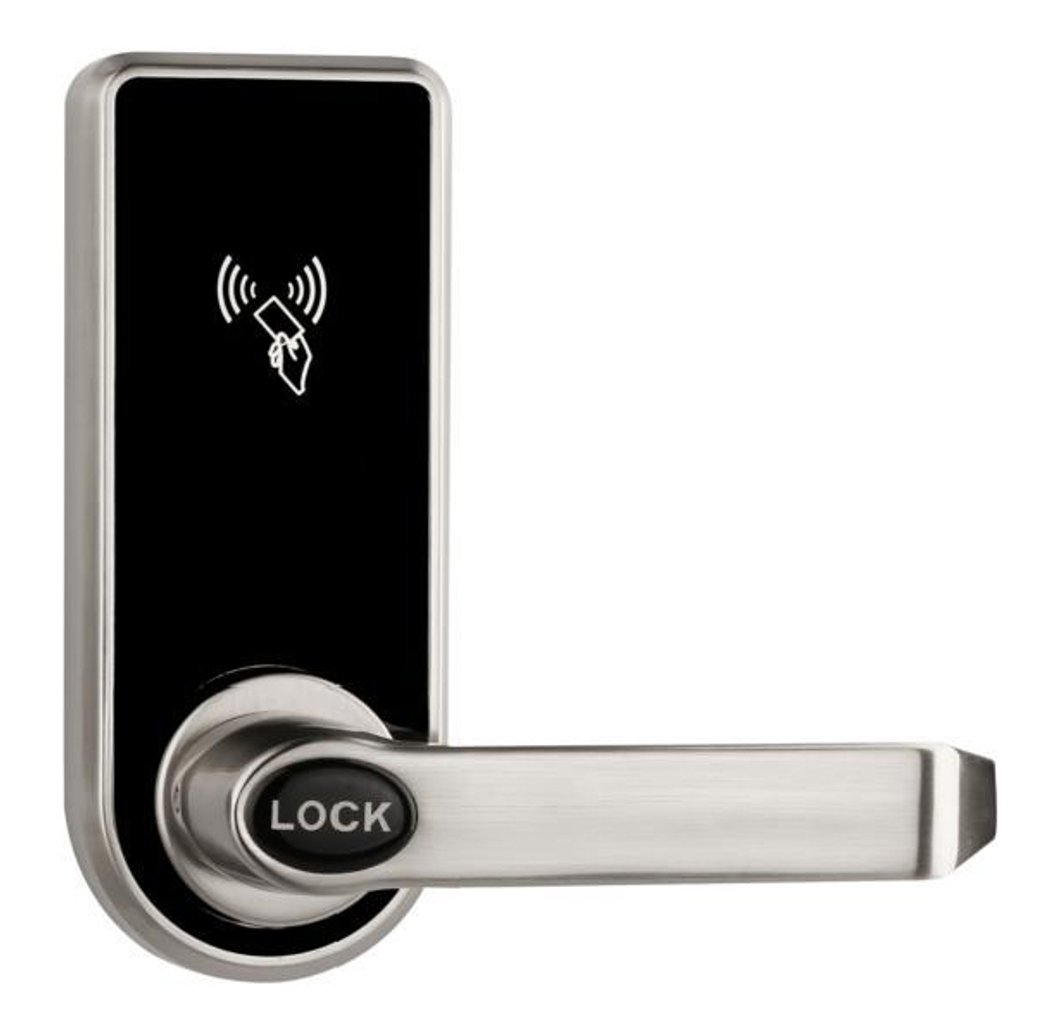
Kunci Pintar Hotel EK818 — Kunci Mortise Kartu RFID untuk Kamar Tamu
Kunci pintar hotel EK818: pembukaan kartu RFID dan kunci mekanik, panel paduan seng silver, single latch mini mortise, PCB sistem hotel atau stand-alone. 270+ model kunci hotel. CE RoHS. OEM/ODM.
Halaman ini sudah menunjuk ke halaman tersebut sebagai referensi yang direkomendasikan berikutnya.
Artikel blog terkait
2
Cara Memilih Kunci Pintu Sidik Jari: Panduan Kunci Biometrik
Panduan memilih kunci pintu sidik jari: jenis sensor, kecepatan pengenalan, akurasi, keamanan, baterai, sertifikasi, dan kunci biometrik untuk rumah dan bisnis.
Halaman tersebut mendukung konteks produk yang sama: Kunci Pintar Hotel EK818 — Kunci Mortise Kartu RFID untuk Kamar Tamu.
Panduan Memilih Smart Door Lock: Kunci Elektronik yang Tepat
Panduan pemilihan smart door lock untuk pembeli: metode pembukaan, konektivitas, baterai, keamanan, standar, dan retrofit untuk pintu rumah dan komersial.
Halaman tersebut mendukung konteks produk yang sama: Kunci Pintar Hotel EK818 — Kunci Mortise Kartu RFID untuk Kamar Tamu.
Rinci proyek hotel Anda bersama insinyur kami
Kirimkan jumlah kamar, jenis plafon, dan preferensi protokol Anda. Kami akan mengirimkan rencana sampel dan penawaran dalam 24 jam kerja.
- Beralih dari panduan umum ke diskusi produk atau aplikasi.
- Gunakan RFQ saat harga, gambar teknis, MOQ, atau jadwal peluncuran membutuhkan struktur.
- Jaga jalur kontak langsung tetap terlihat untuk klarifikasi cepat dan serah terima.