Guía de cerradura inteligente retrofit para puertas existentes
Guía práctica de cerradura inteligente retrofit: compatibilidad, instalación, credenciales, seguridad y cuándo conviene una actualización.
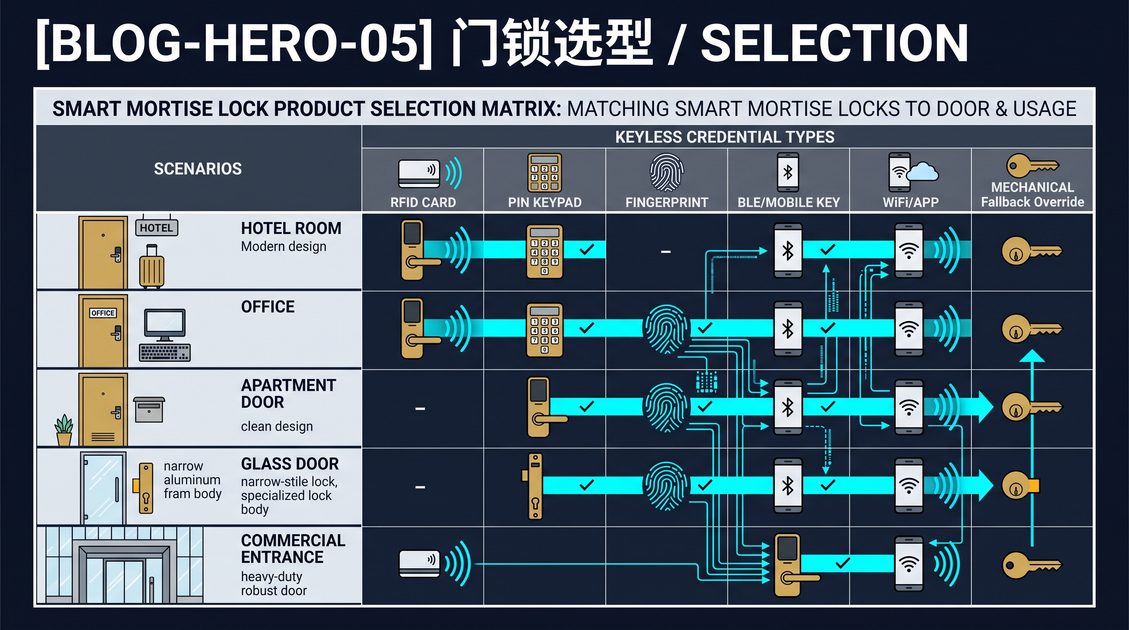
Una cerradura inteligente retrofit es una cerradura electrónica que moderniza una puerta mecánica existente, generalmente acoplándose sobre un cerrojo existente o dentro de una caja de embutir existente, de modo que el propietario obtiene acceso sin llave sin reemplazar todo el herraje de la puerta. El retrofit es la vía más común para conseguir una cerradura de puerta inteligente, porque la mayoría de las mejoras se realizan en puertas ya instaladas. Esta guía de cerradura inteligente retrofit explica los principales enfoques de retrofit, cómo confirmar que una cerradura se adaptará a tu puerta, las consideraciones sobre credenciales y energía, y cómo lograr que un retrofit sea seguro y reversible.
Guía de cerradura inteligente retrofit: principales enfoques de retrofit
Existen dos vías principales de retrofit. La primera es un cerrojo inteligente retrofit que se atornilla sobre un cerrojo existente y conserva el mecanismo de llave debajo; es rápido, mantiene la cerradura original y es una buena opción para una puerta cilíndrica norteamericana. La segunda es una cerradura electrónica de embutir que se inserta en una caja de embutir existente, preservando el juego de manijas y la apariencia; se adapta a puertas comerciales, hoteleras y europeas. Una tercera vía, menos común, es un cilindro inteligente o una cerradura inteligente que reemplaza solo el núcleo del cilindro.
Cada enfoque equilibra facilidad, apariencia y capacidad. El cerrojo de retrofit es el más simple y reversible, pero deja el cerrojo original en su lugar, por lo que el mecanismo electrónico va montado encima. El retrofit electrónico de embutir está más integrado, pero depende de que el hueco existente coincida con el nuevo cuerpo de la cerradura. La elección correcta depende de la estructura de la puerta, del herraje existente y de si el propietario prefiere un mecanismo totalmente electrónico o una mejora rápida sobre una cerradura que ya funciona.
Una cerradura inteligente retrofit mejora una puerta mecánica existente sin reemplazar todo el herraje, normalmente acoplándose sobre un cerrojo existente o dentro de un hueco de embutir existente. Las dos vías principales son: un cerrojo inteligente retrofit que se atornilla sobre un cerrojo existente y conserva la llave debajo, rápido y reversible pero con el mecanismo electrónico encima; y una cerradura electrónica de embutir que se instala en un hueco de embutir existente, más integrada y que preserva el juego de manijas. Un cilindro inteligente es una tercera opción que reemplaza solo el núcleo. La elección depende de la estructura de la puerta, el herraje existente y de si el propietario desea una mejora rápida o un mecanismo totalmente electrónico.
Guía de cerradura inteligente retrofit: confirmación de compatibilidad
Antes de hacer el pedido, mide el grosor de la puerta, el retroceso y la geometría del cerrojo o de la mortaja existente, y confirma que la cerradura acepta la mano de la puerta. Para un cerrojo de retrofit, verifica que la cerradura coincida con el espaciado del cerrojo y que el escudo exterior cubra los orificios existentes. Para un retrofit electrónico de embutir, confirma que el nuevo cuerpo quepa en el hueco, la placa frontal y el cerradero existentes, sin agrandar una puerta con clasificación de resistencia al fuego ni una puerta metálica. Un retrofit que requiera perforar una puerta cortafuego o de emergencia debe ser revisado por un profesional cualificado.
Confirma que el retrofit no comprometa la llave mecánica existente. Un fallo común del retrofit es una cerradura que se instala sobre un cerrojo pero no puede abrirse con la llave cuando falla la electrónica. Verifica que la llave mecánica siga siendo un respaldo funcional y que el retrofit preserve la salida de la puerta. Una cerradura inteligente retrofit debe facilitar la gestión de la puerta sin eliminar el respaldo fiable del mecanismo original.
Guía de cerradura inteligente retrofit: credenciales, energía y seguridad
Elige credenciales que se adapten a los usuarios. Un teclado, una tarjeta, una huella dactilar o una credencial móvil tienen diferentes implicaciones de conveniencia y recuperación, y la cerradura retrofit debe combinar una de ellas con la llave mecánica A retrofit smart lock is an electronic lock that upgrades an existing mechanical door, most commonly by fitting over an existing deadbolt or into an existing mortise pocket, so the owner gains keyless access without replacing the entire door hardware. Retrofit is the most common route to a smart door lock because most upgrades happen on doors that are already installed. This retrofit smart lock guide explains the main retrofit approaches, how to confirm a lock will fit your door, the credential and power considerations, and how to make a retrofit secure and reversible.
Retrofit Smart Lock Guide: The Main Retrofit Approaches
There are two dominant retrofit paths. The first is a retrofit smart deadbolt that bolts over an existing deadbolt and preserves the key mechanism underneath; it is quick, keeps the original lock, and is a good choice for a North American cylindrical door. The second is an electronic mortise lock that drops into an existing mortise pocket, preserving the handle set and appearance; it suits commercial, hotel, and European doors. A third, less common path is a smart cylinder or smart lock that replaces only the cylinder core.
Each approach balances ease, appearance, and capability. The retrofit deadbolt is the simplest and most reversible but leaves the original deadbolt in place, so the electronic mechanism rides on top. The electronic mortise retrofit is more integrated but depends on the existing pocket matching the new case. The correct choice depends on the door structure, the existing hardware, and whether the owner wants a fully electronic mechanism or a fast upgrade over a working lock.
A retrofit smart lock upgrades an existing mechanical door without replacing all the hardware, most commonly by fitting over an existing deadbolt or into an existing mortise pocket. The two dominant paths are a retrofit smart deadbolt that bolts over an existing deadbolt and keeps the key underneath, quick and reversible but with the electronic mechanism on top, and an electronic mortise lock that drops into an existing mortise pocket, more integrated and preserving the handle set. A smart cylinder is a third option that replaces only the core. The choice depends on door structure, existing hardware, and whether the owner wants a fast upgrade or a fully electronic mechanism.
Retrofit Smart Lock Guide: Confirm Compatibility
Before ordering, measure the door thickness, backset, and the existing deadbolt or mortise geometry, and confirm the lock accepts the door's handedness. For a retrofit deadbolt, check that the lock matches the bolt spacing and that the exterior trim covers the existing holes. For an electronic mortise retrofit, confirm the new case fits the existing pocket, faceplate, and strike without enlarging a rated or metal door. A retrofit that requires drilling into a fire-rated or emergency door should be reviewed by a qualified professional.
Confirm the retrofit does not compromise the existing mechanical key. A common retrofit failure is a lock that installs over a deadbolt but cannot be opened with the key when the electronics fail. Verify that the mechanical key remains a working fallback, and that the retrofit preserves the door's egress. A retrofit smart lock should make the door easier to manage without removing the reliable fallback of the original mechanism.
Retrofit Smart Lock Guide: Credentials, Power, and Security
Choose credentials that fit the users. A keypad, card, fingerprint, or mobile credential each has different convenience and recovery implications, and the retrofit lock should combine one of them with the retained mechanical key. Confirm the battery arrangement, the low-battery warning, and the emergency path, whether the mechanical key, a backup power terminal, or a secondary credential. A retrofit deadbolt that drains batteries quickly because it is an add-on mechanism needs a clear replacement plan.
A retrofit upgrade should genuinely improve security. Confirm the electronics cannot be bypassed, that the retained mechanism is still robust, and that the lock is certified and encrypted. A retrofit that only adds an app to a weak original lock may not meaningfully raise the security level. Test the complete assembly, the valid and invalid credentials, the mechanical key, power loss, and egress before relying on it daily.
Retrofit Smart Lock Guide: Installation and Reversibility
For a rental or a cautious owner, prefer a retrofit that is reversible and does not permanently damage the door. Keep the original hardware so the door can be returned to its mechanical state at move-out or resale. Follow the manufacturer's installation and torque instructions, and test that the door still closes, seals, and operates the original key. This retrofit smart lock guide is general information; confirm local fire, accessibility, electrical, privacy, and emergency-egress requirements with qualified professionals.
¿No sabe qué sensor se adapta a su proyecto?
Hable con nuestros ingenieros de aplicación mmWave para una consulta gratuita.
Especifica tu proyecto hotelero con nuestros ingenieros
Envíanos el número de habitaciones, tipo de techo y preferencia de protocolo. Devolveremos un plan de muestra y cotización en 24 horas laborables.
- Pase de la guía general a una discusión de producto o aplicación.
- Use RFQ cuando precio, planos, MOQ o calendario de lanzamiento necesiten estructura.
- Mantenga visible una ruta de contacto directo para aclaraciones rápidas y traspasos.